EXPLORING BAYS AND FIORDS OF SOUTH GEORGIA

MORE SEALS, PENGUINS, ALBATROSS AMID GLACIERS AND FIORDS
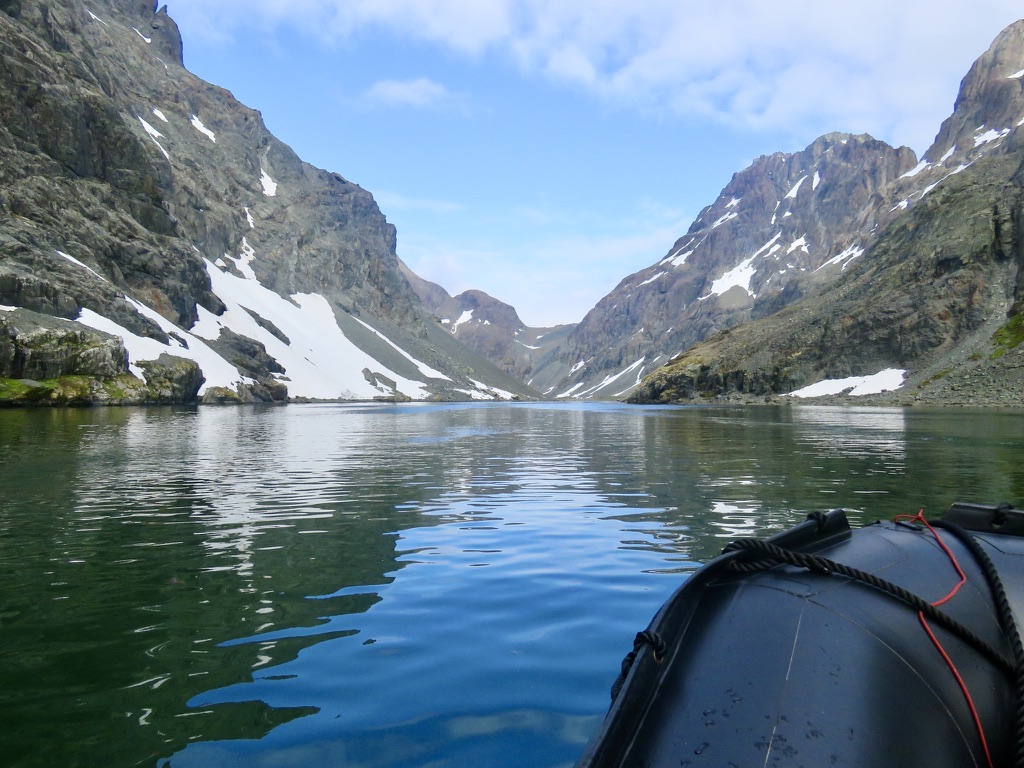
One of the exciting activities on an Antarctic expedition is exploring in the zodiacs. To the south of the island of South Georgia there are a few bays with spectacular backdrops. Amongst these are Golden Harbour which is a small bay that leads to the Bertrab Glacier. The bay is called as such because the cliffs around the bay shine yellow in the hour after sunrise and again before sunset. We were lucky to witness this and found the beach ringing with the cries of king penguins, gentoo penguins and elephant seals all of whom like to breed in the sheltered bay. Add to this the cries of the sooty albatross who come here every year to mate and raise their chicks.

At nearby Larsen Harbour we found our first Weddell seal – these seals are amongst the largest of the species and are commonly found on ice fastened to land. They gather in small groups around cracks and holes within the ice and in the winter they stay in the water to avoid blizzards with only their heads poking through breathing holes in the ice. When on land they are often found lying on their sides. Some populations breed on land, which is why we found a couple in South Georgia. Normally they live on the ice and around ice holes and cracks underwater. They forage and feed on fish, squid, octopus and prawns and can stay underwater for up to 45 minutes to an hour. They are placid and the more we heard about their habits and lives, the more fascinating they became especially as it is rare to see them on land.

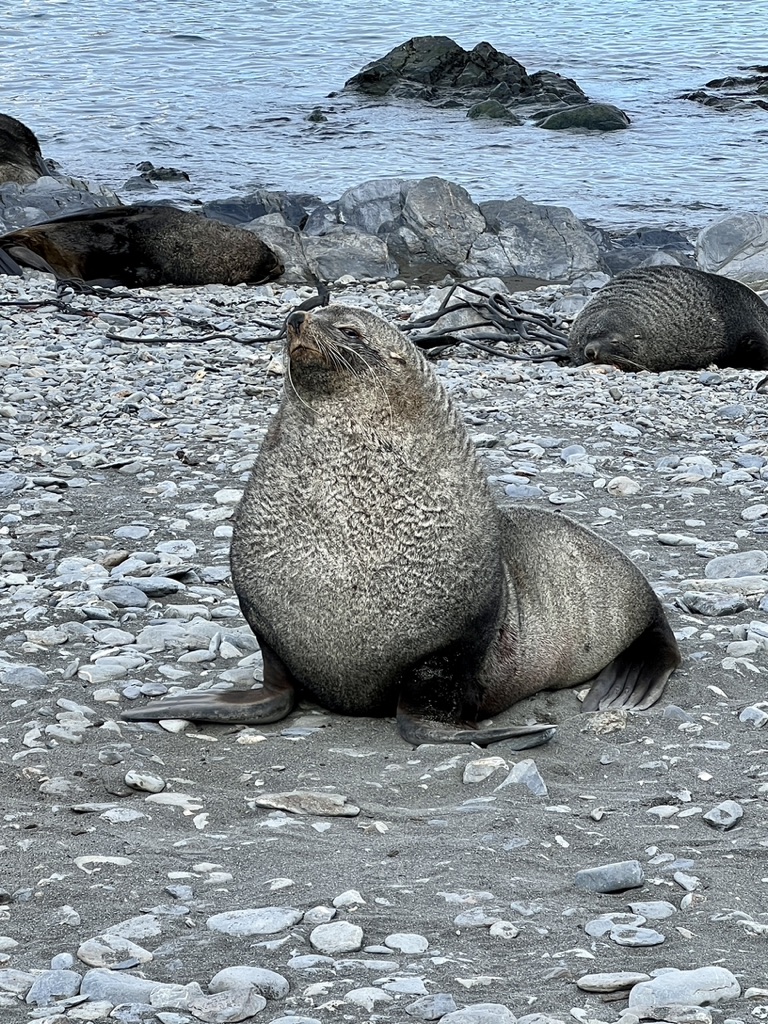
Having a snooze in the sunlight

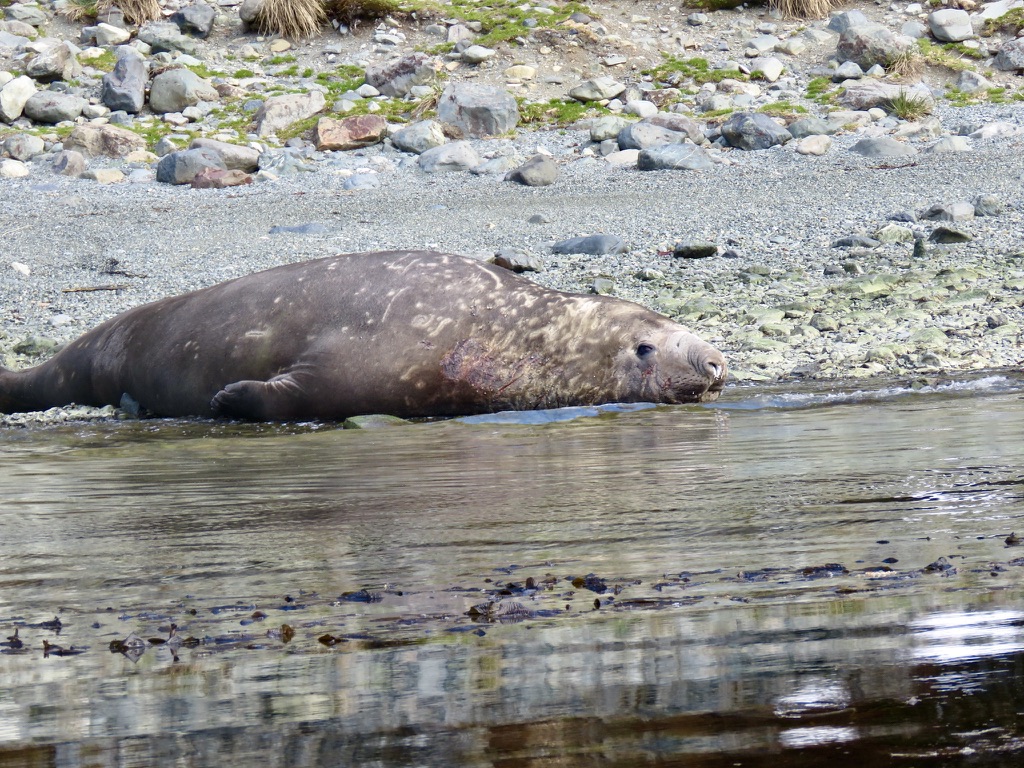
Living in harmony with the Weddell seals are the elephant seals – and these are also huge creatures and were just lying in the shallows and were not bothered by our zodiac or the little penguins close by.

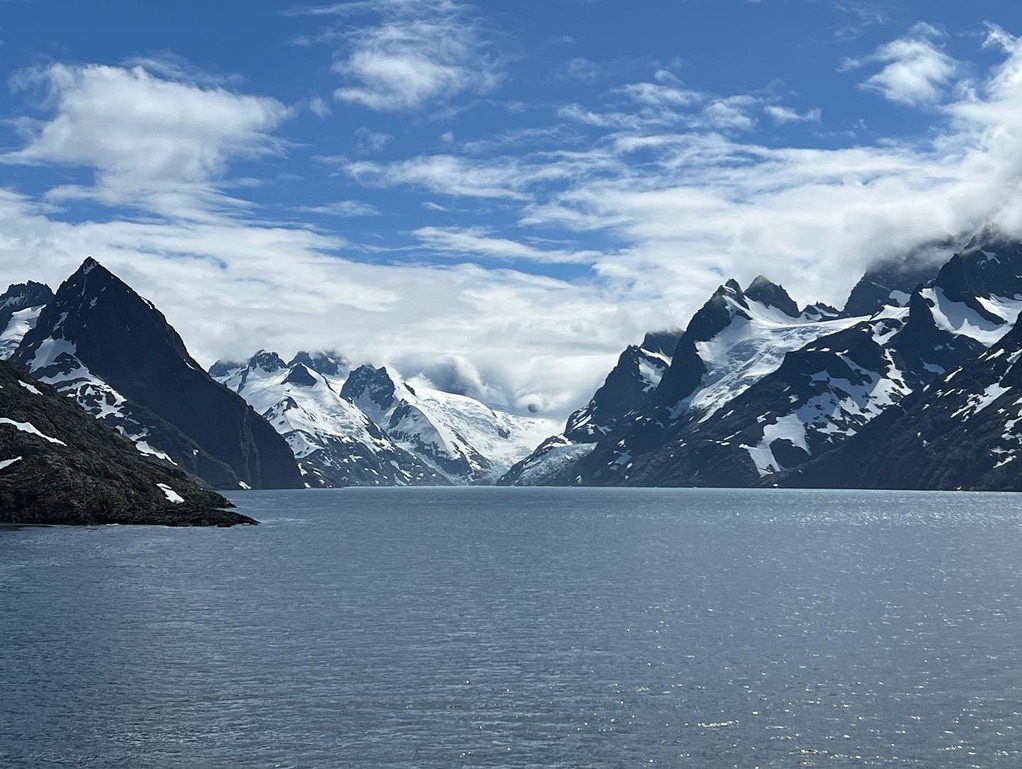
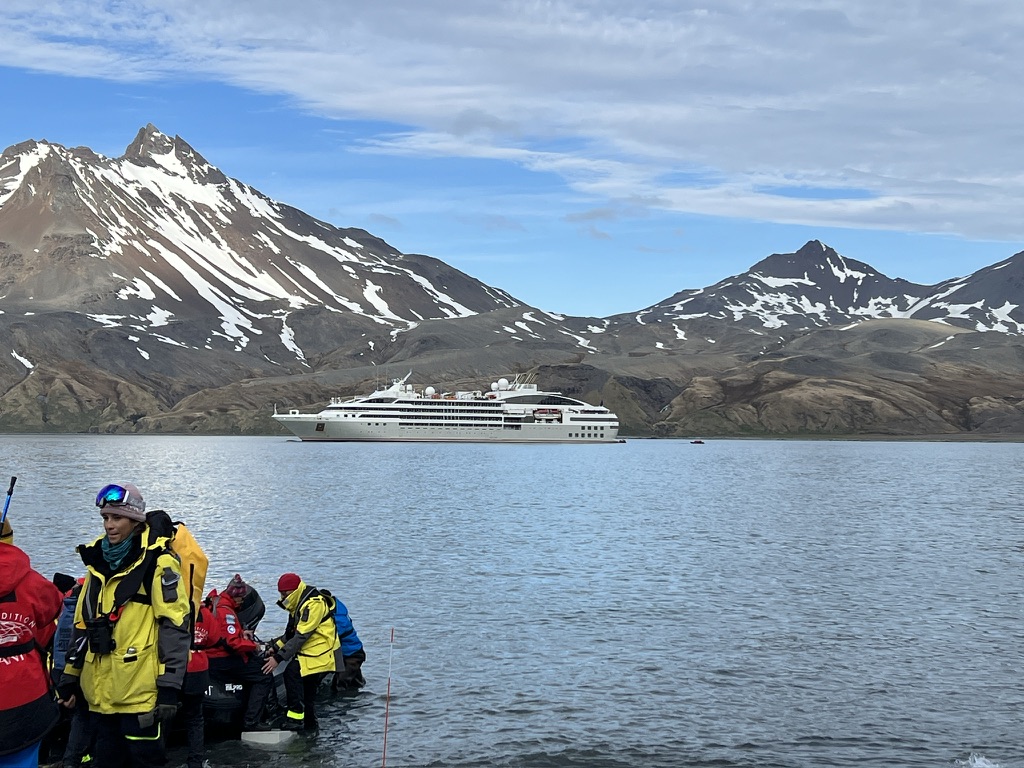
Approaching the Drygalski Fjord, the ship found safe anchorage and we set off for a trip in the zodiac getting close to the glacier and the waterfalls as well as the wildlife. The Fjord lies just a short distance from Cape Disappointment which was named by Captain James Cook when he rounded it in 1775 to learn he was circumnavigating an island and had not, after all, discovered the fabled southern continent. The fjord is 14 km long and sits above an important geological faultline. The mountains on the southern side are covered with the Risting and Jenkins glaciers which slowly pour into the head of the fjord.
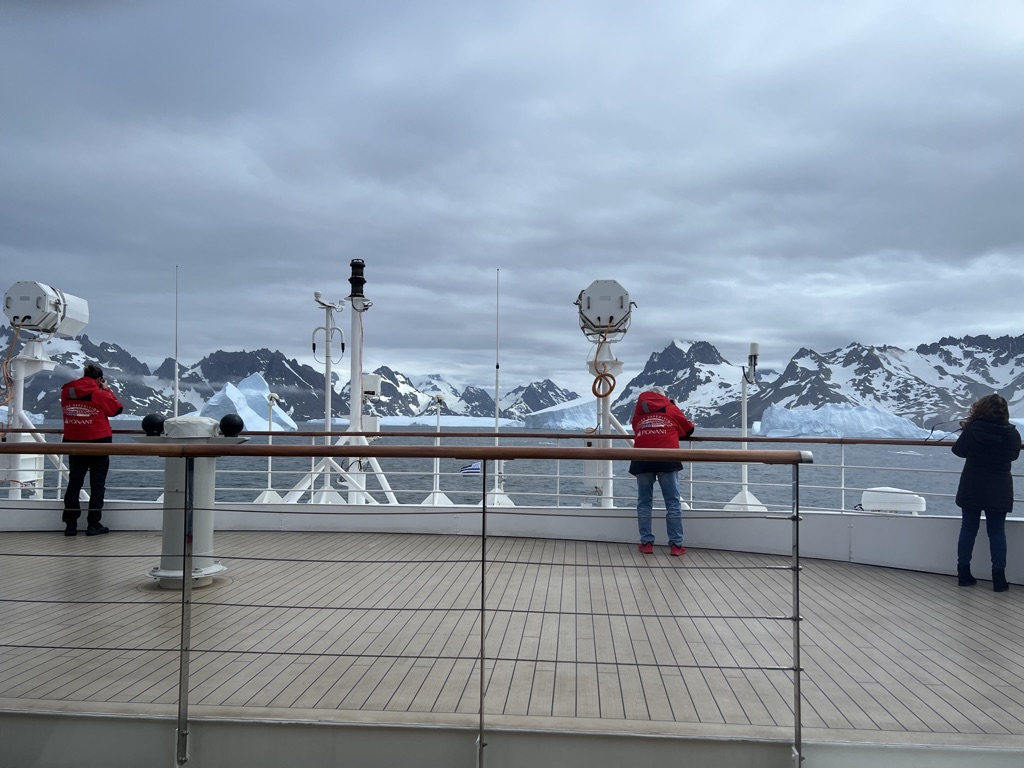
There is a feeling of amazement when riding in the zodiac among huge mountains, hearing the birds’ cries above and seeing the waterfalls fall into the fjord while on the other side, the glacier sits majestically. Our guide asked us to sit silently for several minutes to absorb the quietness and beauty all around. A roar of what sounded like thunder pierced the silence and then a small avalanche up in the mountains occurred with tons of snow tumbling down. This apparently happens regularly at this time of year, the start of summer and warmer temperatures after a long, cold winter.

At the mouth of the fjord was a large iceberg – one of many we encountered later in the trip but first we had to cross the infamous Drake Passage to reach the Antarctic Peninsula.

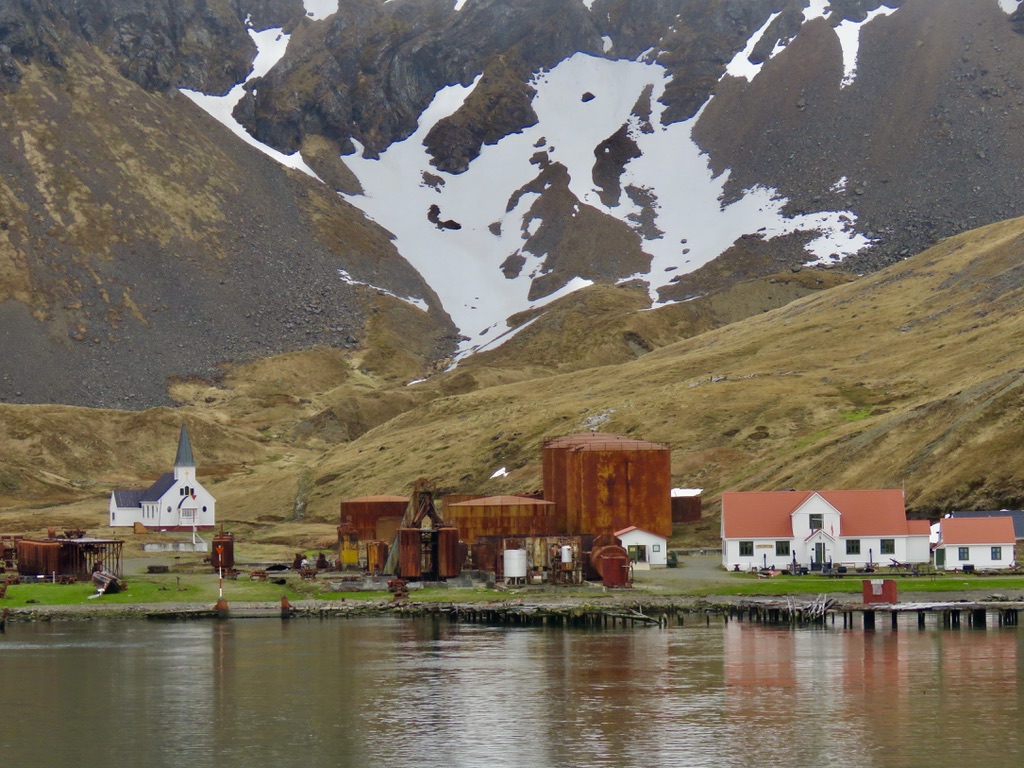
GRYTVIKEN STATION, SOUTH GEORGIA

THE FIRST WHALING STATION IN ANTARCTIC WATERS

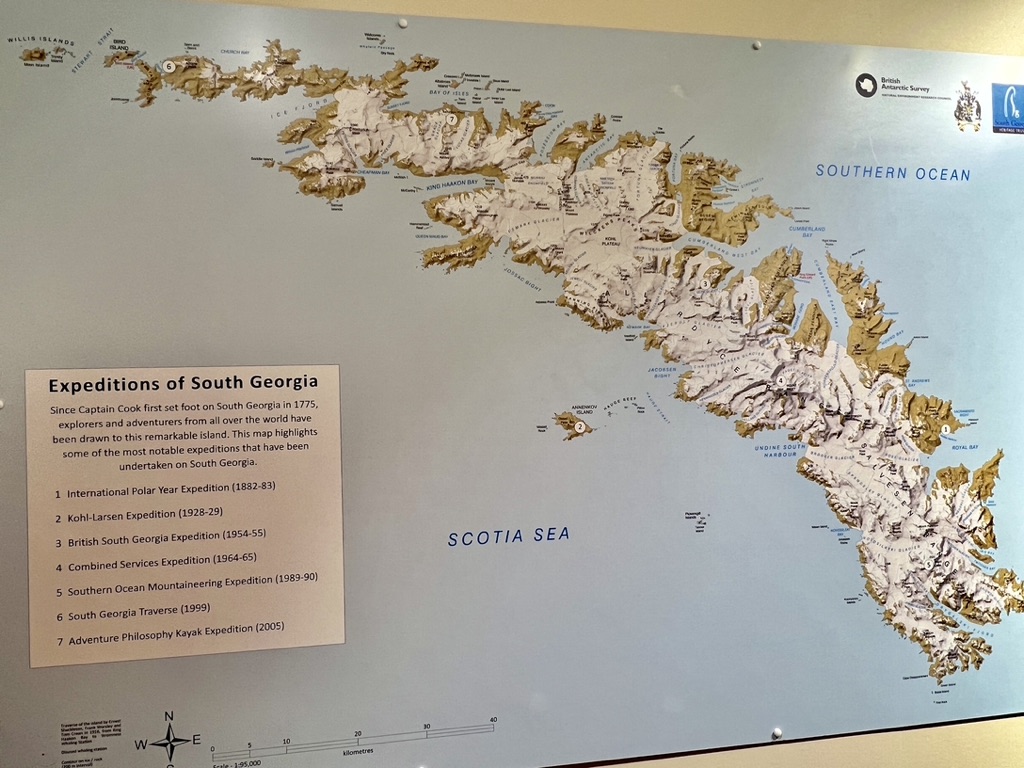
We landed at Grytviken on a cold but bright morning. It is the largest settlement on the island and was formerly a whaling station and is now declared an ‘Area of Special Tourist Interest’ (ASTI). Located at the head of King Edward Cove within the larger Cumberland East Bay it is considered the best harbour on the island. Today there is a small group of people who live there, mostly scientists and Museum conservators, and they tend to stay on six month secondments. The British Antarctic Survey applied fisheries research station is here as well as the Marine Officer, the Government’s sole representative. The Marine Officer’s duties include those of Harbor Master, Customs and Immigration, Fisheries Officer and sub-Postmaster. Quite a busy role for the incumbent especially at the height of the tourism season. Previously, however, it was the hub of whaling in Antarctic waters and was founded by Norwegian Carl Anton Larsen in 1904. Conditions were harsh and there are countless tales and fascinating insights into life at that time now displayed in the Museum.

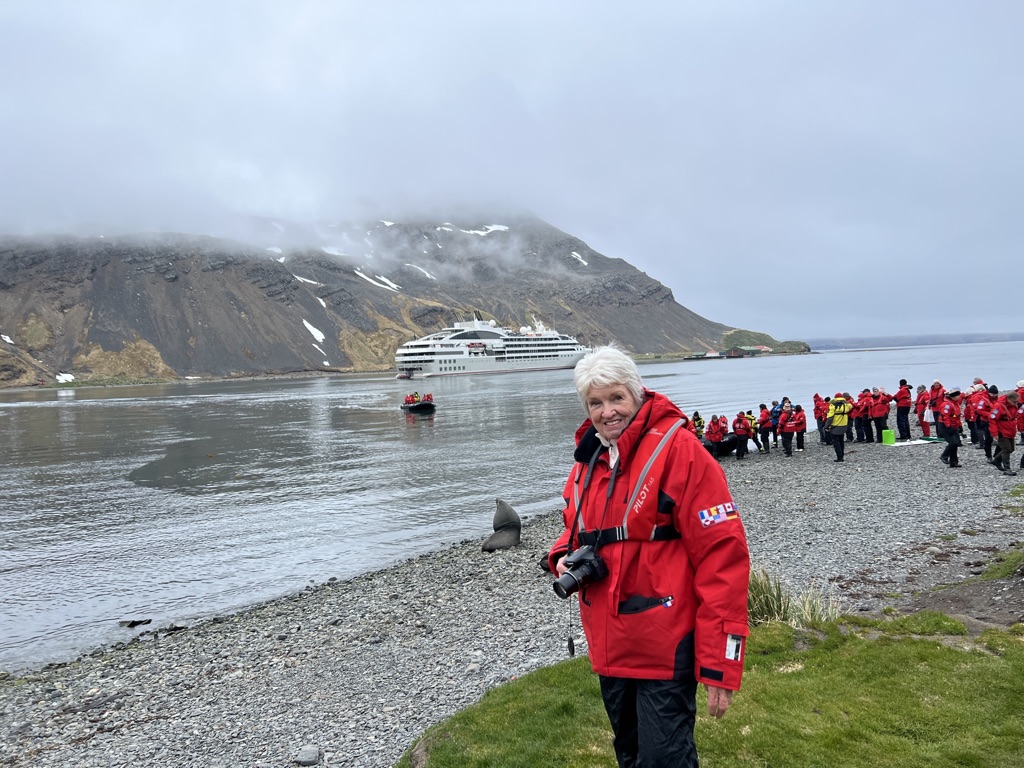
We reached the shore by zodiac – again after the mandatory decontamination session as per the IAATO regulations. The beach was rocky and we were greeted by huge seals basking on the rough stones and who appeared to be unconcerned by the arrival of aliens on their shore!

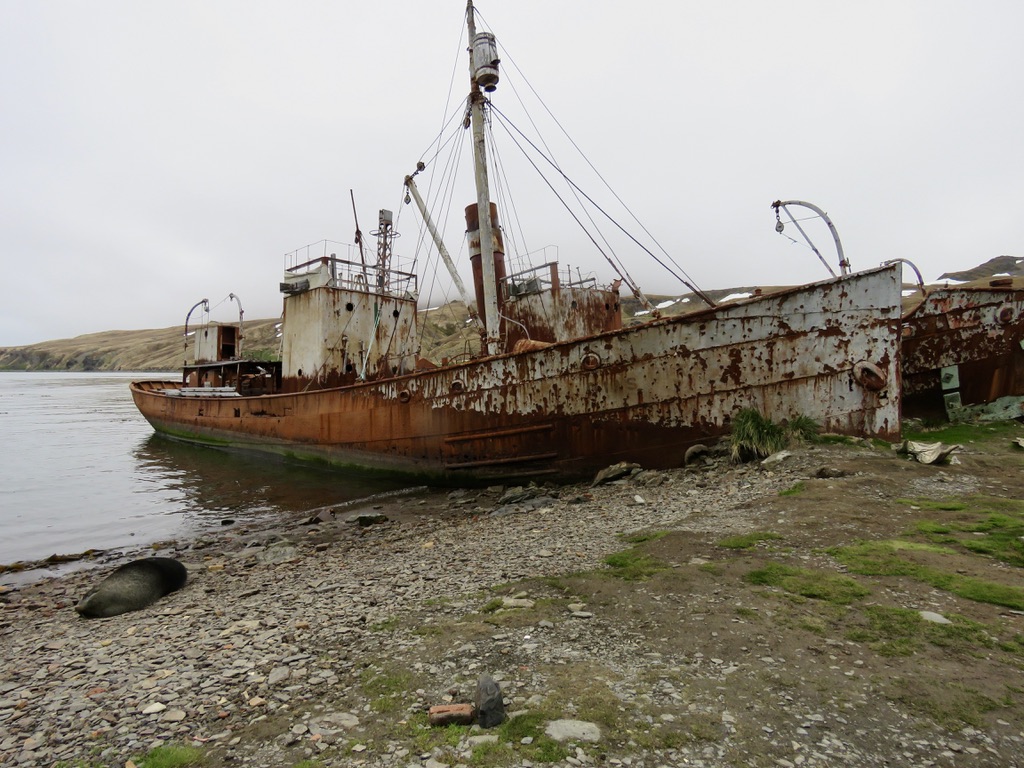
A couple of rusty old whaling ships lying at the edge of the shore reminded us of what this place was once.

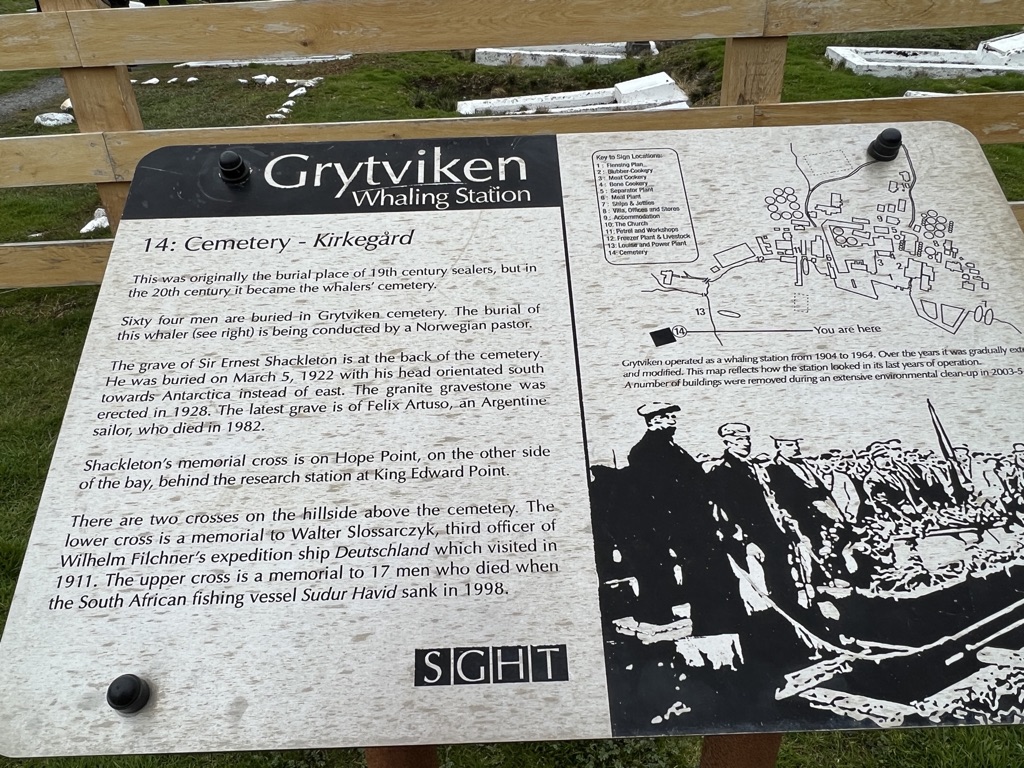
Then it was a short hike up to the cemetery which tells the story of the brave men who lived and died here. Most famous was, of course, Ernest Shackleton who died at Grytviken on January 5th 1922 and is buried here facing the bay. We had had lectures and a film about Shackleton’s life and being here brought it all to life.

Shackleton planned to cross Antarctica from a base on the Weddell Sea to McMurdo Sound via the South Pole, but the expedition ship – the Endurance – was trapped in the ice off the Caird coast and drifted for 10 months before being crushed in pack ice. The members of the expedition then drifted on the ice floes for another 5 months and finally escaped in boats to Elephant Island in the South Shetland Islands, where they survived on seal meat, penguins, and their dogs. Shackleton and five others sailed 1,300 km (800 miles) to South Georgia in a whale boat, which took 16 days before landing on the southern side of the island. The crew then made the first crossing of the island to seek help and after four months, Shackleton succeeded in rescuing his crew from Elephant Island – and not one of the crew of Endurance died. A remarkable feat in unbelievable circumstances. In 1921, Shackleton attempted a fourth expedition with the goal of circumnavigating the continent. He died here in Grytviken at the outset of the journey, and it is believed the strain of the expeditions themselves and the exertion in raising funds wore out his strength, and he died of a heart attack.

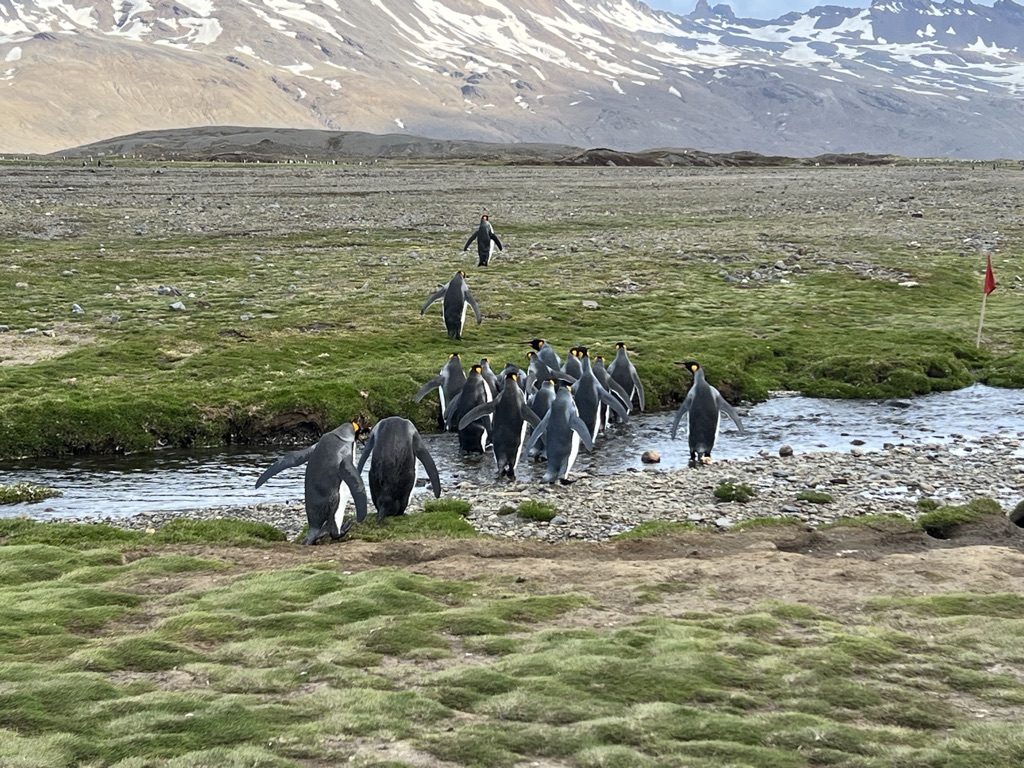
Along the side of the cemetery was a large sheet of snow and ice and here a few King Penguins were having a leisurely wallow dipping their feet into the stream alongside.

Then we walked a short distance to the Museum to learn more about this fascinating little settlement. I talked with one of the conservators who was a young girl from Shetland, in Scotland. This was her fourth stay on the island and she was delighted because it was summer (November) here but winter in Scotland and she had timed her secondments to be such and thereby had missed two winters in a row! All the same, it can’t be easy to stay in a such a remote place for six months at a stretch with a bunch of strangers for company. Ultimately some would become lifelong friends, I am sure.

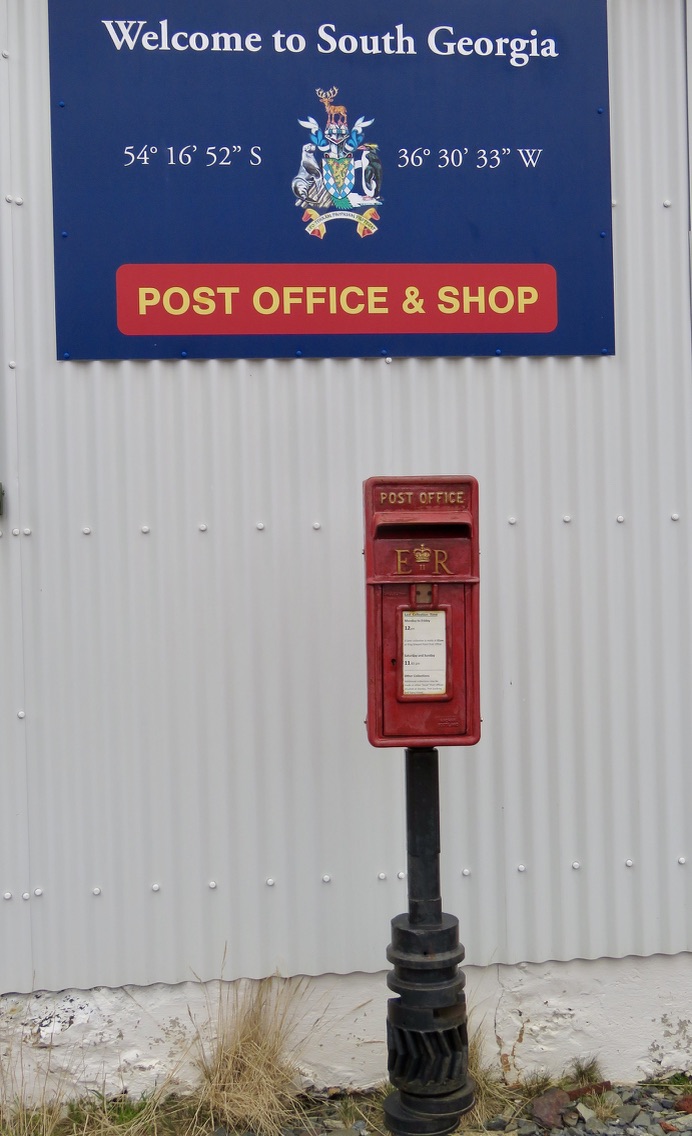
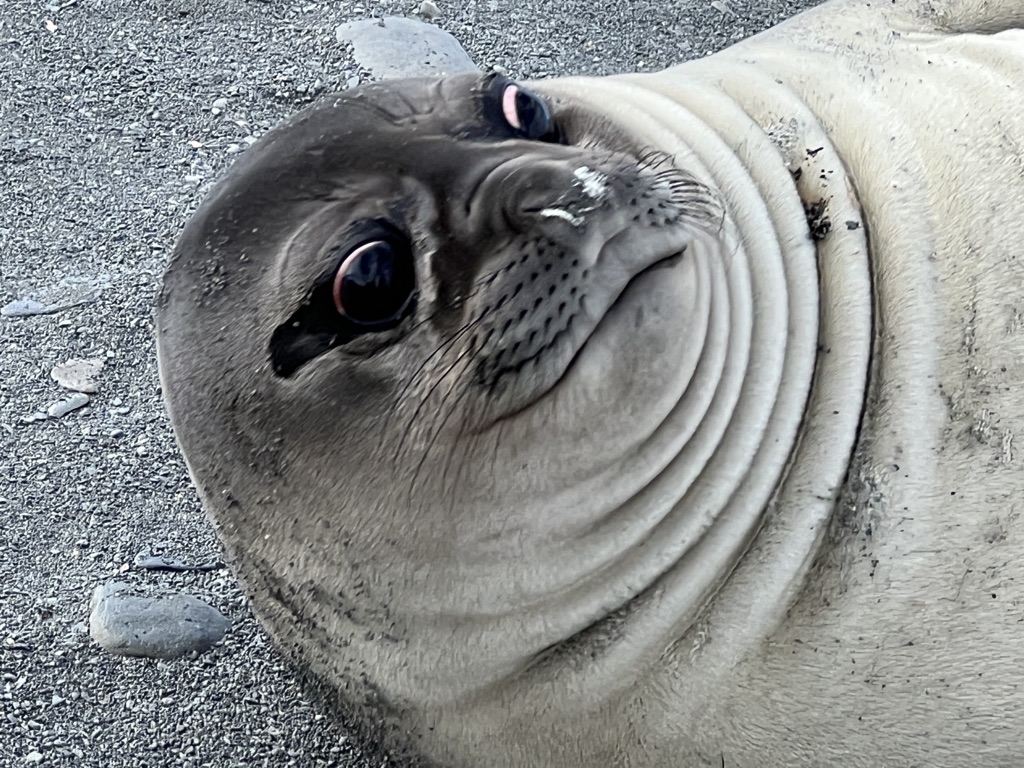
There is a shop and a Post Office and we were able to buy postcards and mail them from here thus having a unique postmark! The shop sold souvenirs as well as woollen clothing and books. We were told they would accept cash or credit cards and so went with cash but were unlucky – that day they only took credit cards! So no souvenirs for me just a lot of memories and heaps of photos of a rather large baby seal blocking the doorway of the shop – so we had to walk around the back!

What a magical day! We immersed ourselves in history, mingled with the wildlife, met some locals and drank in the scenery. More adventures awaited us and we have learnt that no two days are the same!

SOUTH GEORGIA AND PENGUINS

WILDLIFE AND HISTORY COMBINED

Our first glimpse of penguins in their rookery was three days after we left South America. What a sight it was along with the noise of their chatter and an odour which I didn’t find offensive at all! We had reached South Georgia, a region formed by an underwater mountain chain that extends from the Andes to the Antarctic Peninsula.

Our three days at sea were productive. We settled in and found our way around the ship which was Ponant’s ‘Le Lyrial’ – and had a total of 120 passengers on this voyage. It was small enough to easily find our way to either of the restaurants, the library, observation lounge, spa, gym and photography studio. Our suite was very comfortable with a lounge and bedroom plus bathroom and balcony area. We were on Deck 6 and close to both the lounge/bar and the casual restaurant.

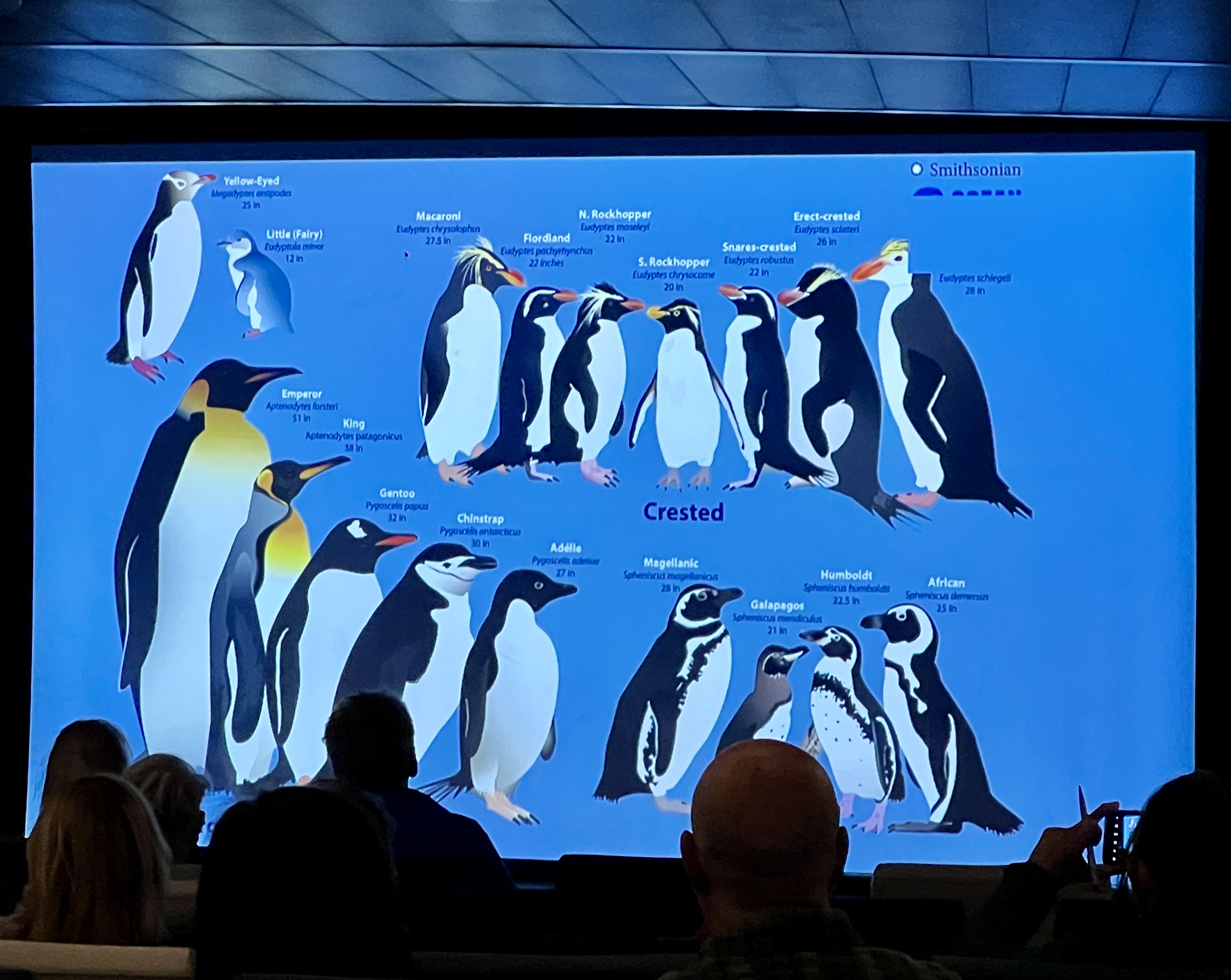
Each day there were a couple of lectures – both in French and English – and these varied from wildlife talks, history and general information regarding the area to geology and iceberg formation and so on. Our Expedition leader was John Frick, an American who has spent decades in and around the Antarctic region and his knowledge knows no bounds. His expedition team presented lectures according to their own speciality and one of the first talks was on Penguins and the different types varying from the tiny Fairy up to the Emperor. We would be encountering Gentoo, Chinstrip, Adelie and King penguins on this trip if we were lucky!

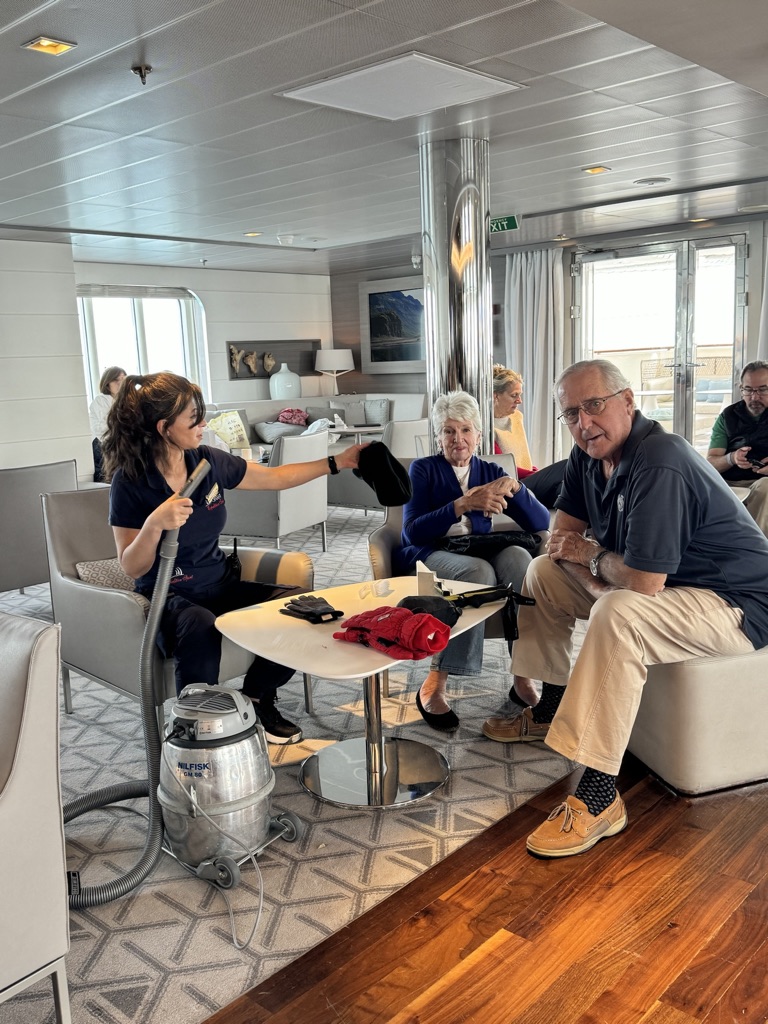
It was also an opportunity, whilst at sea, to introduce the passengers to the rules and regulations applicable to all visitors to Antarctica according to the Antarctic Treaty and the International Association of Antarctic Travellers (IAATO). Attendance was mandatory and we discovered the strict Biosecurity measures which take place at every stop in Antarctica. This involves vacuuming all outerwear, including gloves, parkas and hats, inspection of boots and the scrubbing of boots in soapy disinfectant each time we reboard. It seemed a lengthy process at first but soon became second nature. Inspection officers came aboard in South Georgia and randomly selected a few passengers to double check! Fortunately we were not ever in that group – to be selected and found to have a speck of fibre or a hair or piece of grass on your clothing or boots would be embarrassing to say the least!

Our first landing was Fortuna Bay in South Georgia, but just before entering the bay we spotted our first iceberg of the trip!

Then we sailed into the bay and landed on the plain to be greeted by fur seals, penguins and hundreds of birds. This was quite unlike anything I had ever seen and once ashore, walking amongst the wildlife who showed no fear of us humans was an unbelievable experience. This is a pristine land and it was fantastic to be wandering amongst these creatures in the bright sunshine and sharing, for just a moment, their lives in this place.

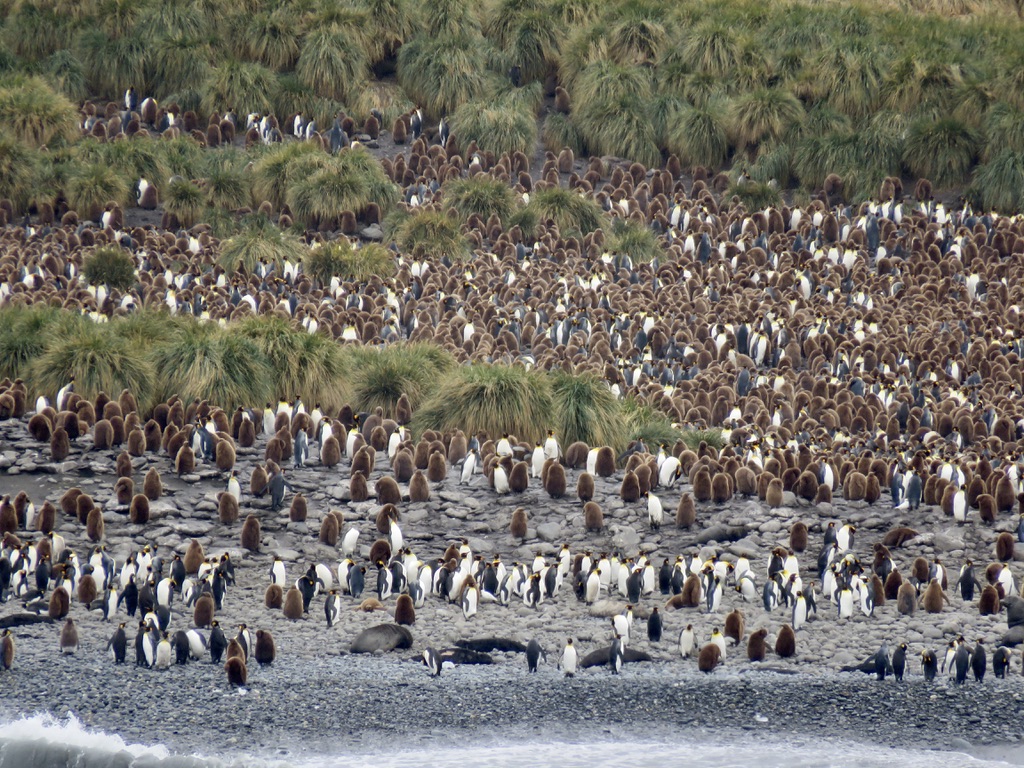
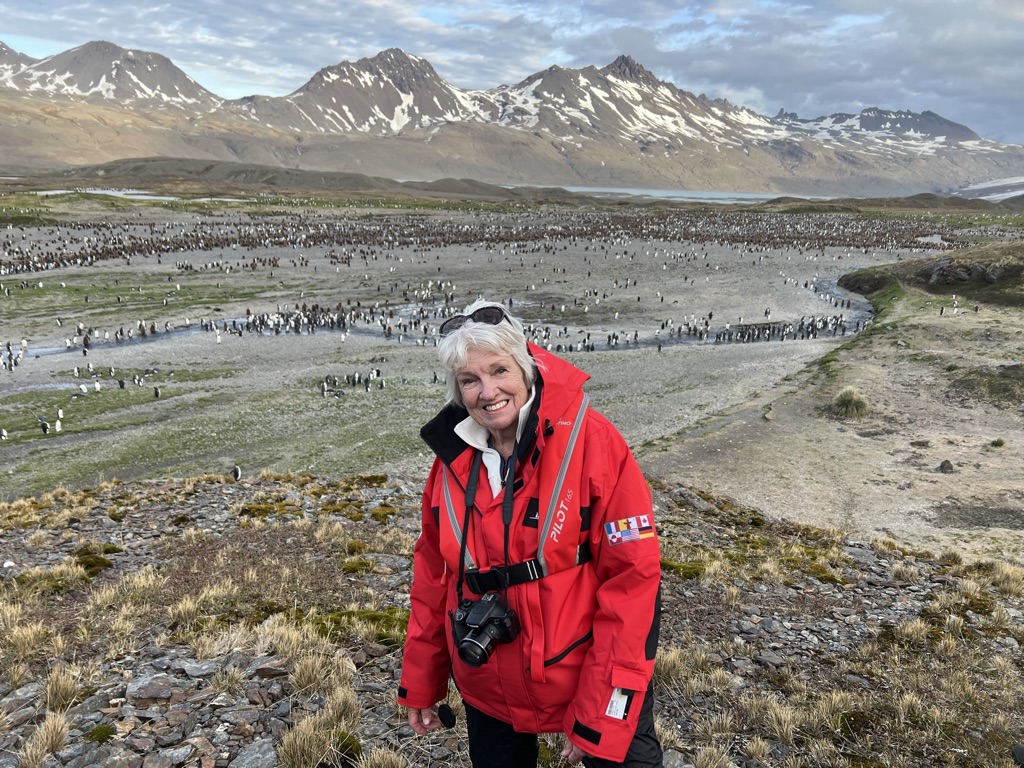
There was a hike to the top of a hill where the views were amazing – thousands of penguins all grouped together in the rookery – some sleeping, some playing, some wading across tiny streams and nearly falling in! They are hilarious to watch. The babies are covered in a brown fur like down which falls out once they reach a certain stage in maturity. I could see hundreds of young ones – some quite large and obviously about to change from baby to adult (or teen?).

What an exhilarating day! I had never imagined a trip to Antarctica would be like this. Like everyone else, I had seen pictures and films of the wildlife of this area but it was all snow and ice. To be here, on an island, with nothing but penguins and seals, tussock grasses and wildflowers, pebbles and rocks and bright sunshine was truly out of this world. And, did I mention, I have fallen in love with penguins!

ADVENTURE TO ANTARCTICA

URUGUAY THE GATEWAY TO A DREAM

Since our trip to Greenland and the Arctic, we have harboured a dream to go to the other side of the globe where, instead of villages, communities, bears and unique wildlife we would be in a pristine environment where nature abounds and penguins, icebergs, seals, glaciers and rocky beaches are unparalleled. Our dream was realised in November when we flew over the Andes into Uruguay to start our journey.

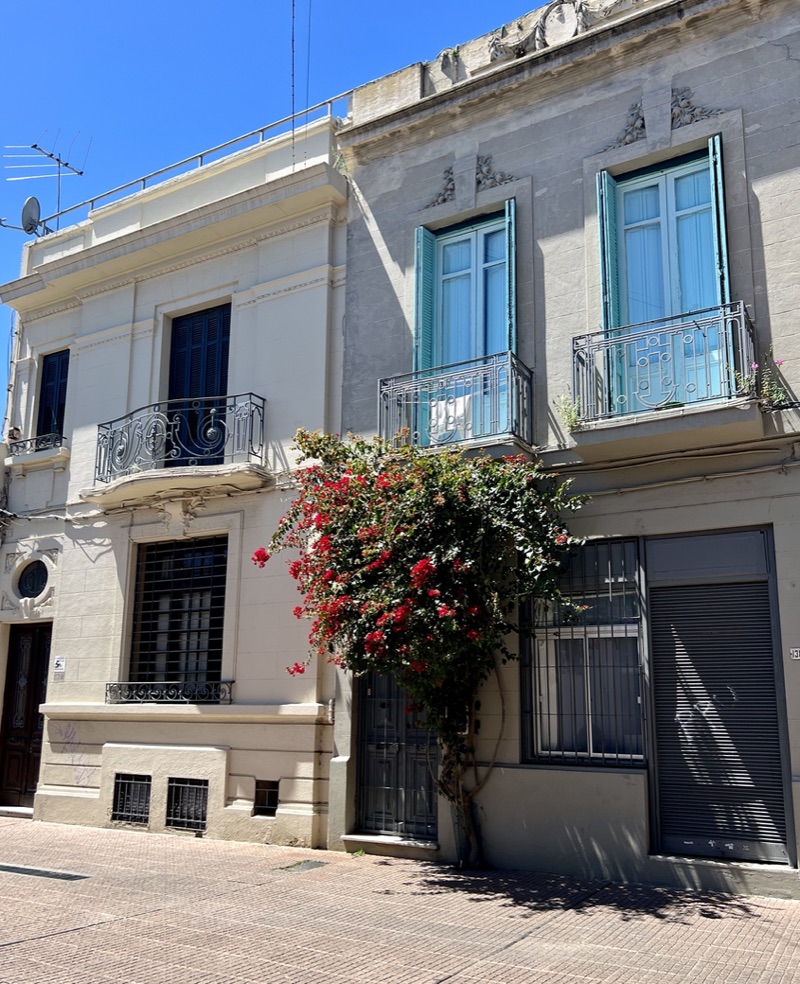
Montevideo, the capital and largest city of Uruguay, offers a unique and charming atmosphere. The well-preserved old town in the Ciudad Vieja exudes a sense of history, while the rest of the city and its beachside cafe culture create a laid-back and distinctive experience. We stayed in La Rambla – a suburb by the bay and found it was easy to walk to shops and restaurants and a short cab ride took us to the City Centre.

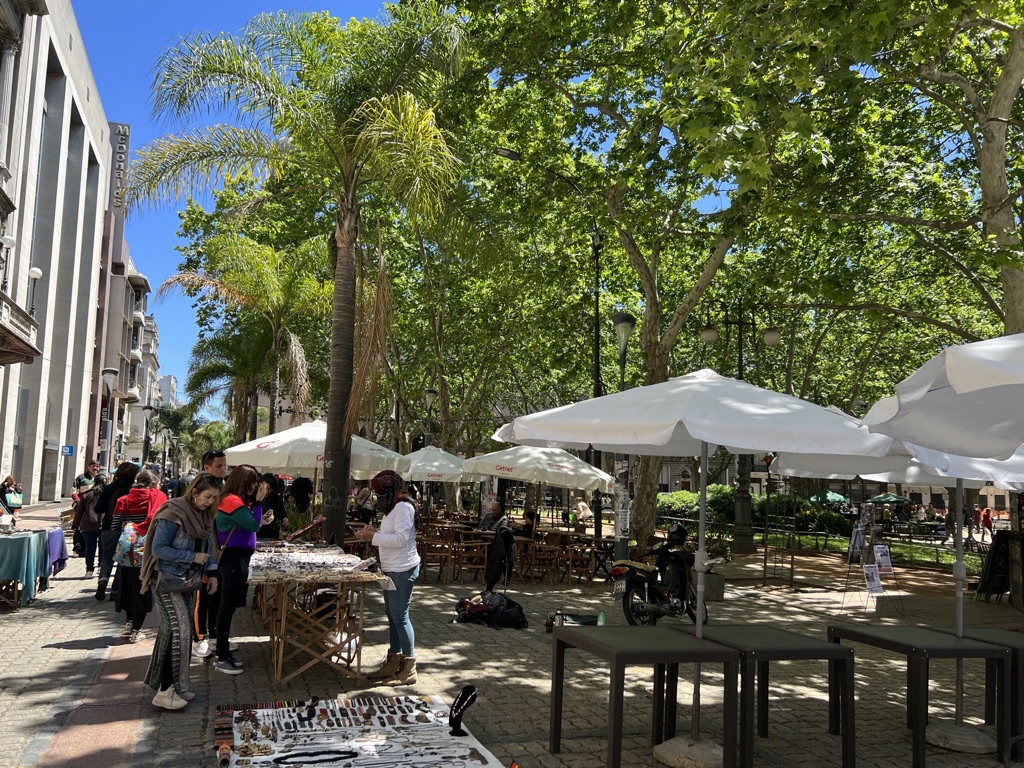
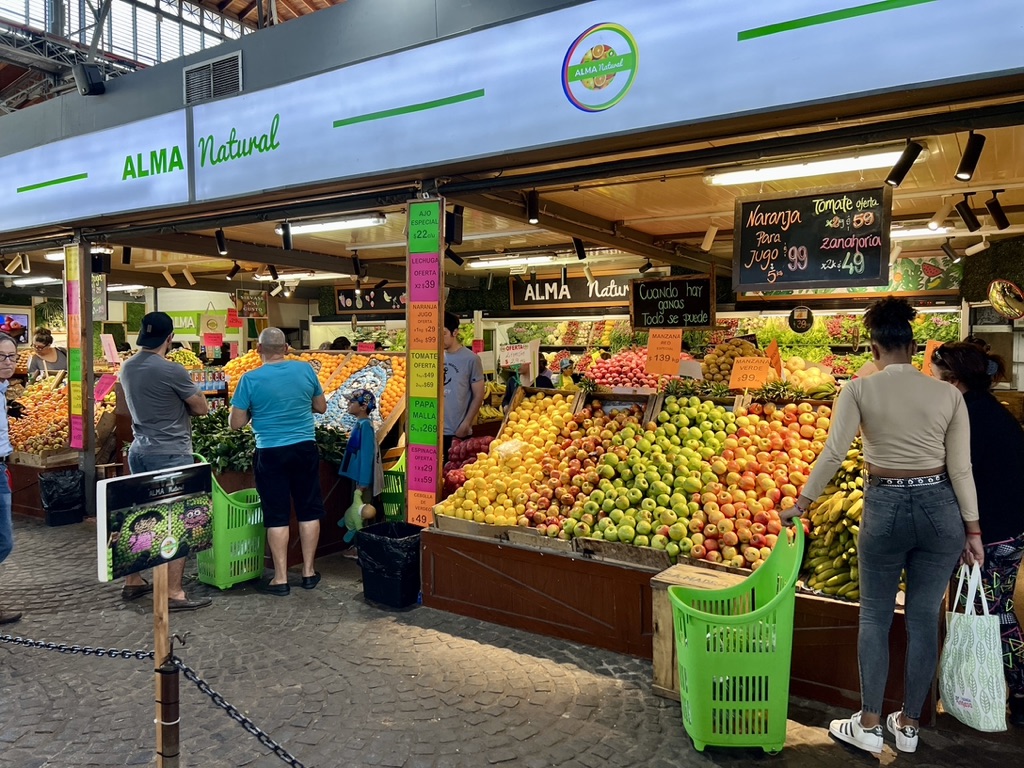
Making the most of our time here before we joined our ship for the cruise, we opted to do a half day City Tour which gave us an insight into the history of the region and life today. The city revolves around the Plaza de la Independencia, once home to a Spanish citadel. The plaza leads to Ciudad Vieja with art deco buildings, colonial homes and landmarks. I loved the intricate doorways of some buildings and beautiful flower baskets hanging in the windows. We wandered around outdoor market stalls filled with handmade souvenirs as well as art and later went to a huge market where everything was on sale from food to clothing and handbags. Cannabis beer was intriguing – and No – I didn’t try it!

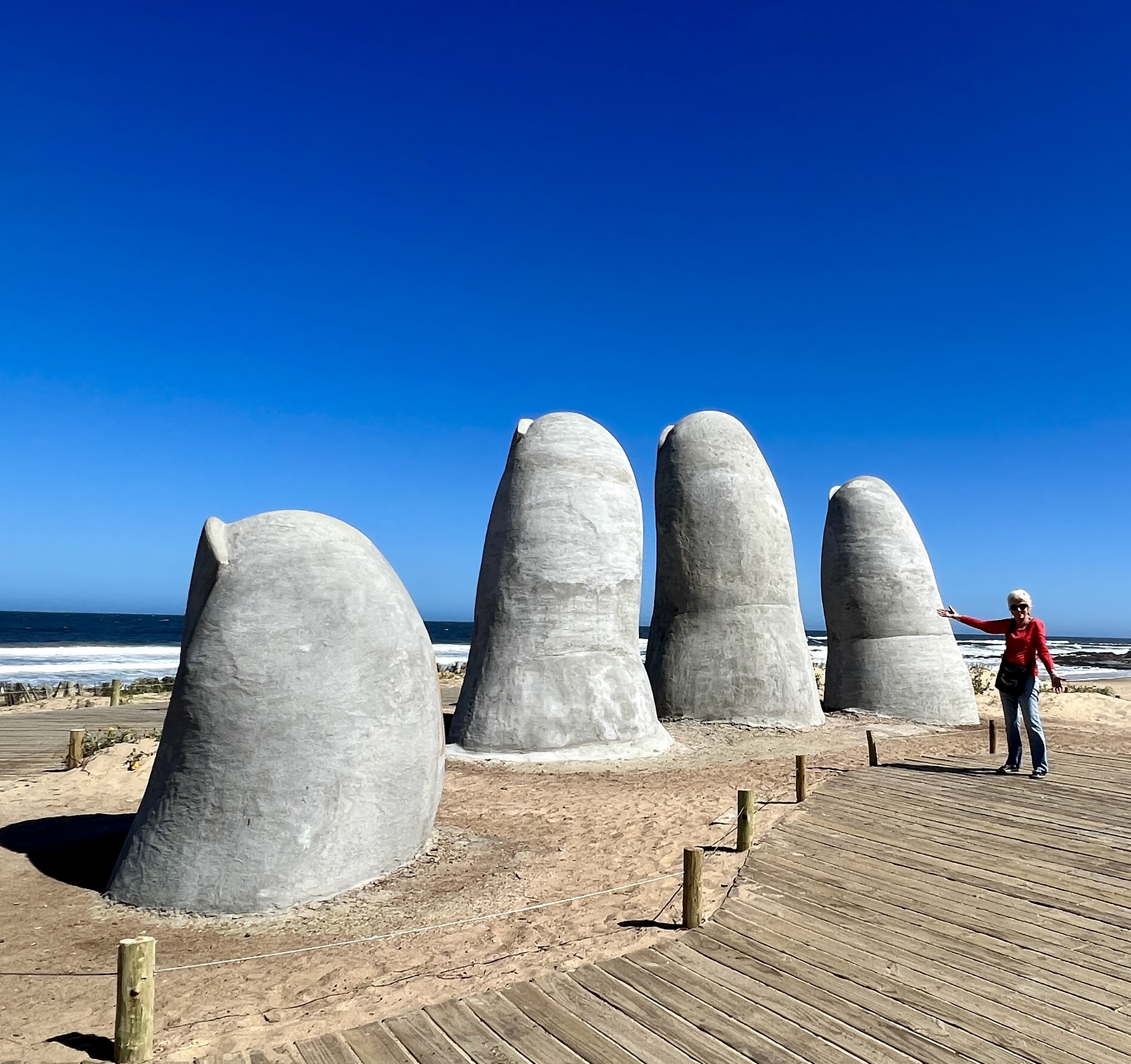
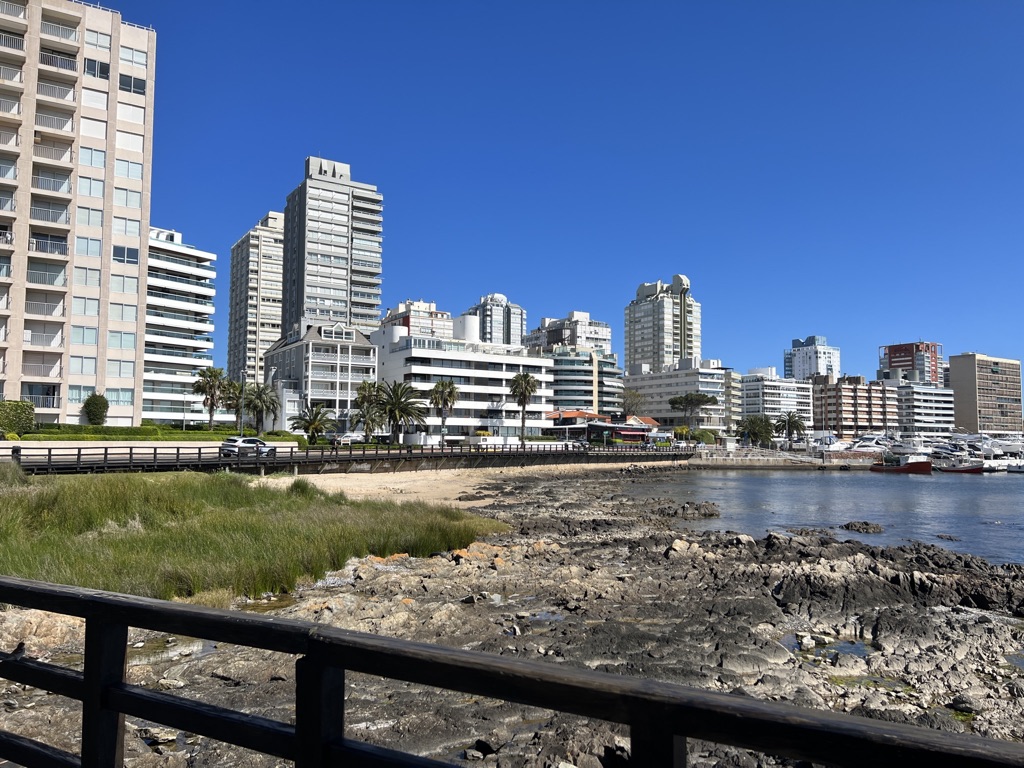
We went on a day trip to Punta del Este known as the ‘Surfers’ of the country. This is about an hour and a half’s drive from Montevideo. I wanted to go because a cousin recently visited as part of the Round The World Clipper Yacht Race. It looked an interesting town with the reputation of being the resort for many of Latin America’s jet set with high end shops, fabulous restaurants and apparently a brilliant night life. What we found was actually a quiet seaside town with lots of empty apartment blocks and closed up stores. This may have been because it was November and presumably out of season but it didn’t detract from the charm. The most famous landmark is La Mano – The Hand – which is a sculpture depicting five human fingers partially emerging from the sand.

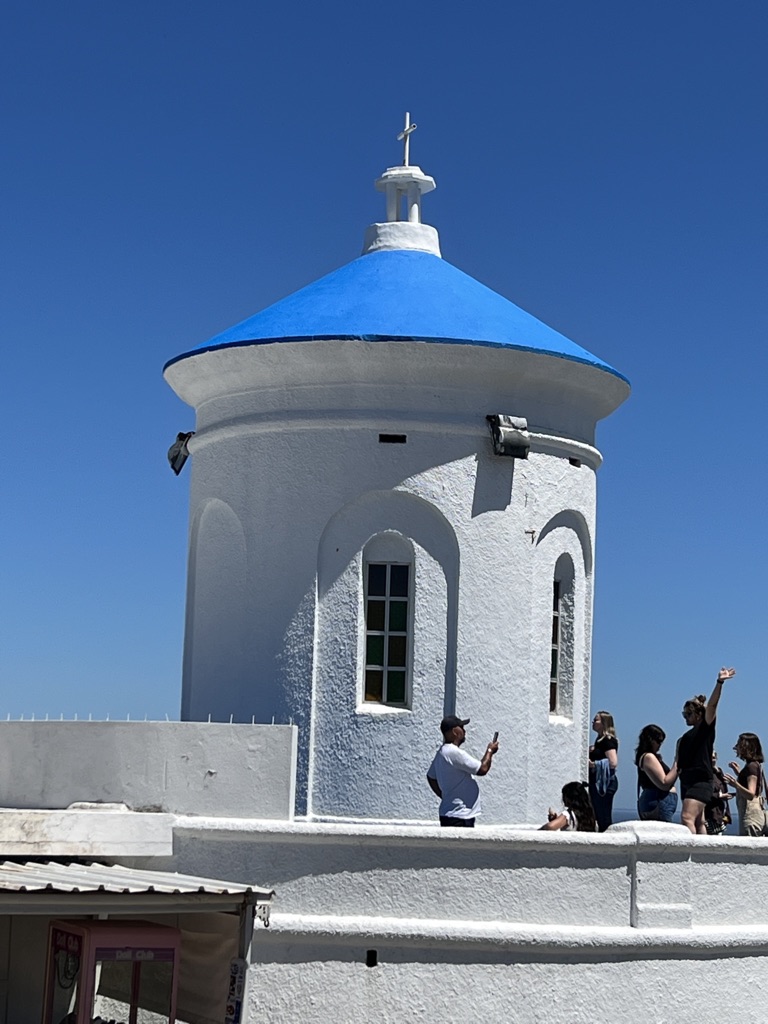
On the way to Punta, there was a stop at Piriapolis known for its belle époque–style buildings and the harbor. The visit included going up to Cerro San Antonio, a hill with a small whitewashed chapel and a lookout point plus a coffee shop and souvenirs. The Chapel was charming and would not have looked out of place in the Greek Islands!

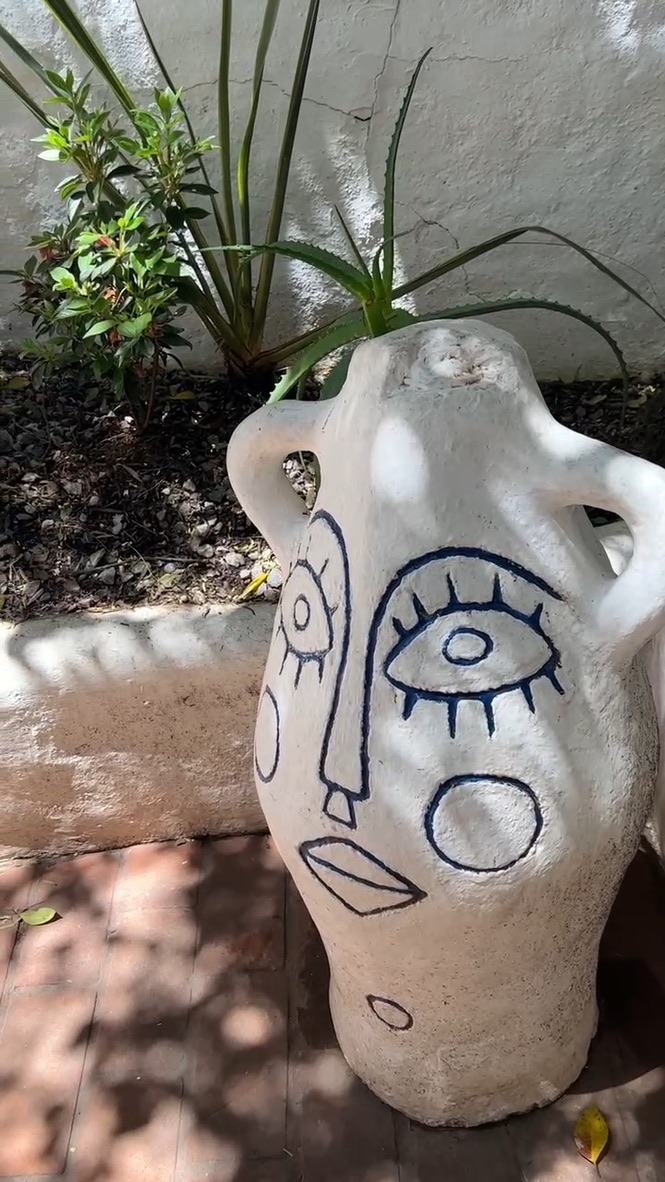
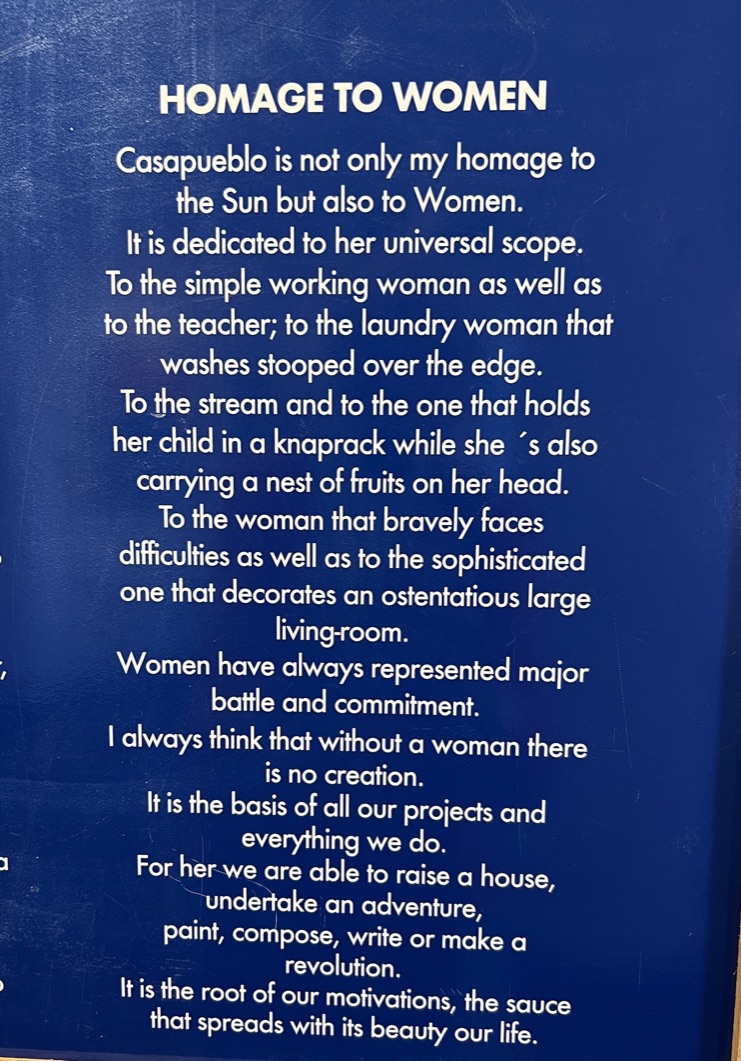
Another intriguing stop was at Casapueblo in Punta Ballena about 8 miles from Punta del Este. This was the home of well known artist Carlos Páez Vilaró. As well as being a painter, he was known as a sculptor, potter, muralist, writer and composer. His work was unknown to me but I quickly became a fan. The building is of whitewashed cement and stucco and has no straight lines. It has thirteen floors and many terraces all of which look over the Atlantic Ocean. It evolved over many years and was the gallery as well as the home of the painter. Now it incorporates a hotel, museum and gallery as well as a coffee shop. The one poignant piece of history to me was that it is also a tribute to  Carlos Miguel, the artist’s son, who was one of the sixteen survivors of the Uruguayan flight which crashed in the Andes in 1972. That story is told in detail and the artist himself mounted many search and rescue efforts before they were found two and a half months after the crash.


Two days later it was finally time to pack up and make our way to the port to join our small luxury ship, Ponant’s Le Lyrial, to cruise to South Georgia and the Antarctic Peninsula. We felt refreshed and ready for another adventure after our stopover where we found the locals were friendly and welcoming, the city oozed charm and history, and we relished being by the ocean and yet close to city vibes. We will return one day!

LAST DAY IN BHUTAN

DAY SEVEN – DRUKGYAL DZONG AND A TRADITIONAL FARMHOUSE VISIT

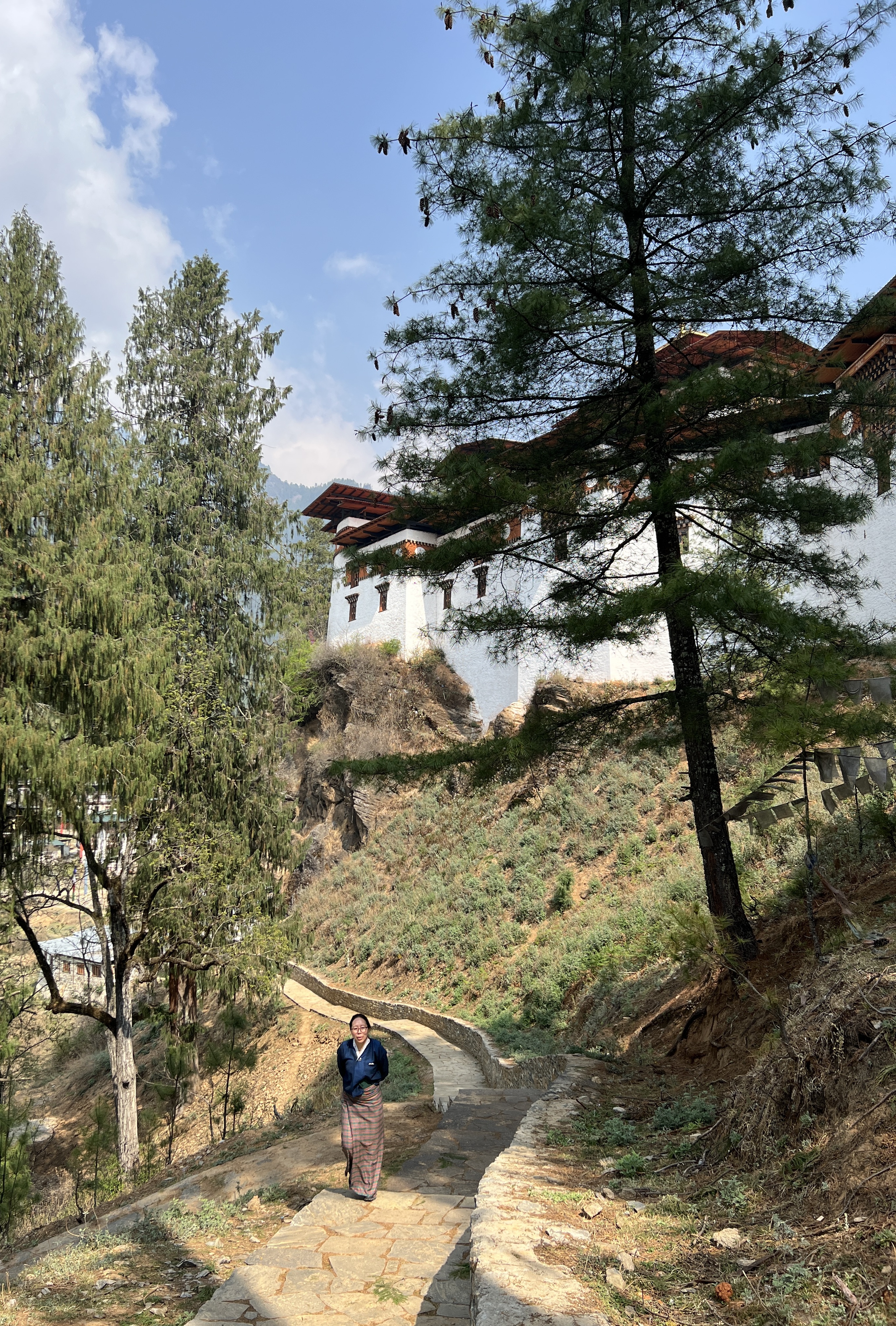
Our last day and we had the option of walking up to the famous Tiger’s Nest or a drive to the countryside and a visit to a farmhouse which is also used as a Homestay for visitors. We opted for the latter and drove out to another important landmark in Bhutan, Drukgyal Dzong which is heritage listed by UNESCO and was built around 1649. It was completely destroyed by fire in 1951 and lay in ruins until 2016 when the King announced that restoration would begin in 2016 to commemorate the birth of the Prince.

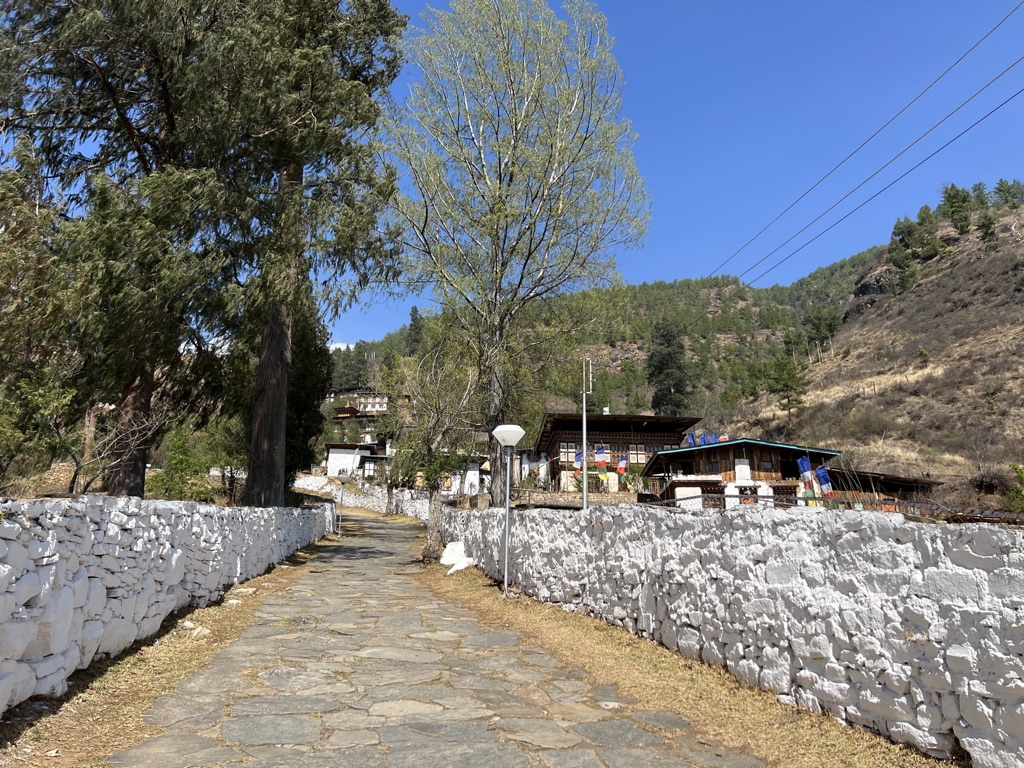
We stopped at the local village and walked up a tiled path to the Dzong but as it was still under renovation we were unable to go inside. The views were lovely and there was a sense of peace and serenity. The fortress was built to repel the invasion by Tibet at that time. Modern Bhutan was once part of Tibet and a succession of wars and invasions followed for years before Bhutan gained sovereignty. The Dzong was used after the war as a trading post and rice was sent to Tibet and salt and tea were imported.

On the way to ur farmhouse visit we stopped at the area where tourists begin the walk up to the Tiger’s Nest. There were crowds of people and many opted to go on the backs of ponies – not something I was totally in agreement with – thinking of the ponies rather than the tourists. However, again the tourist dollar reigned supreme.

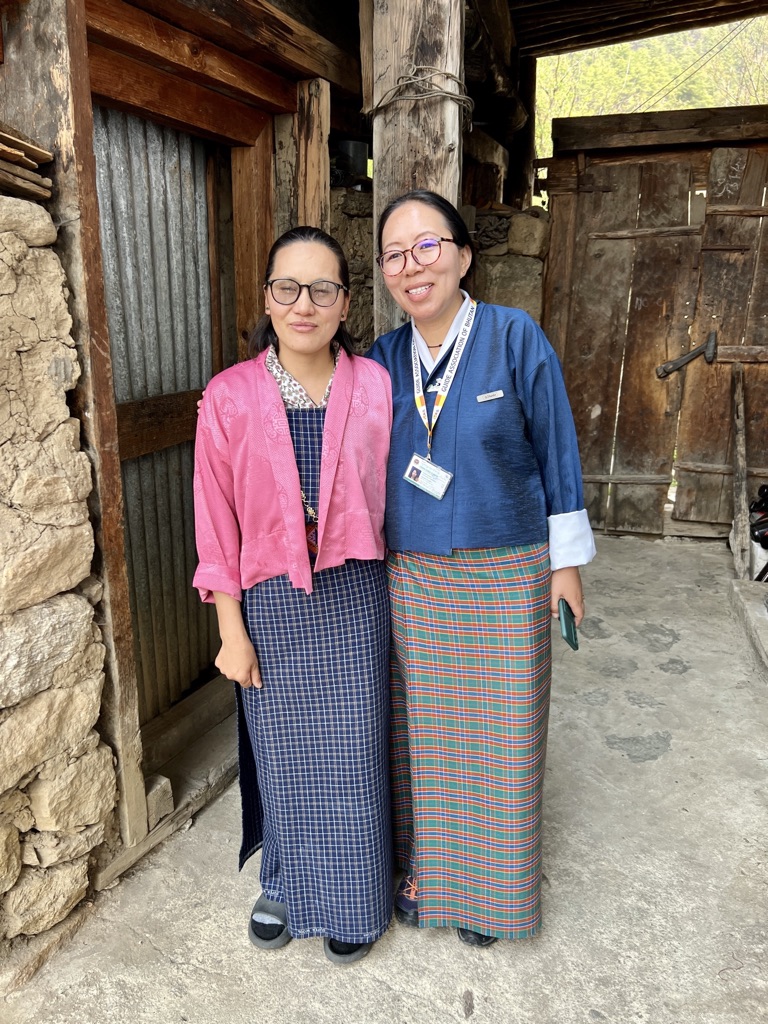
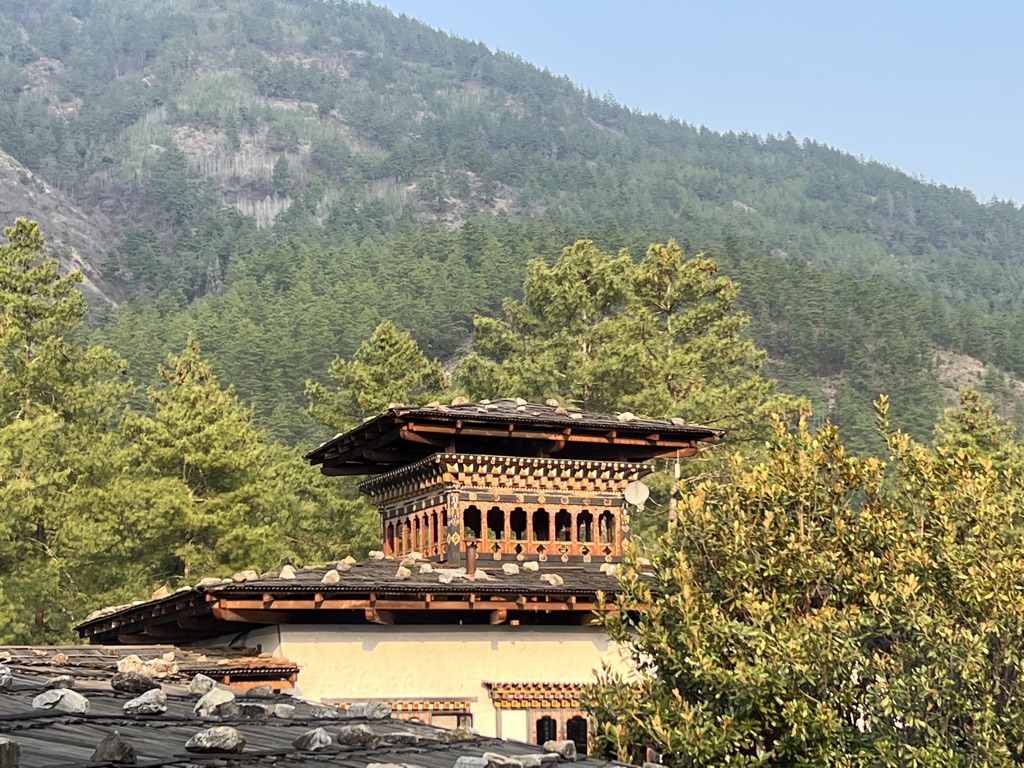
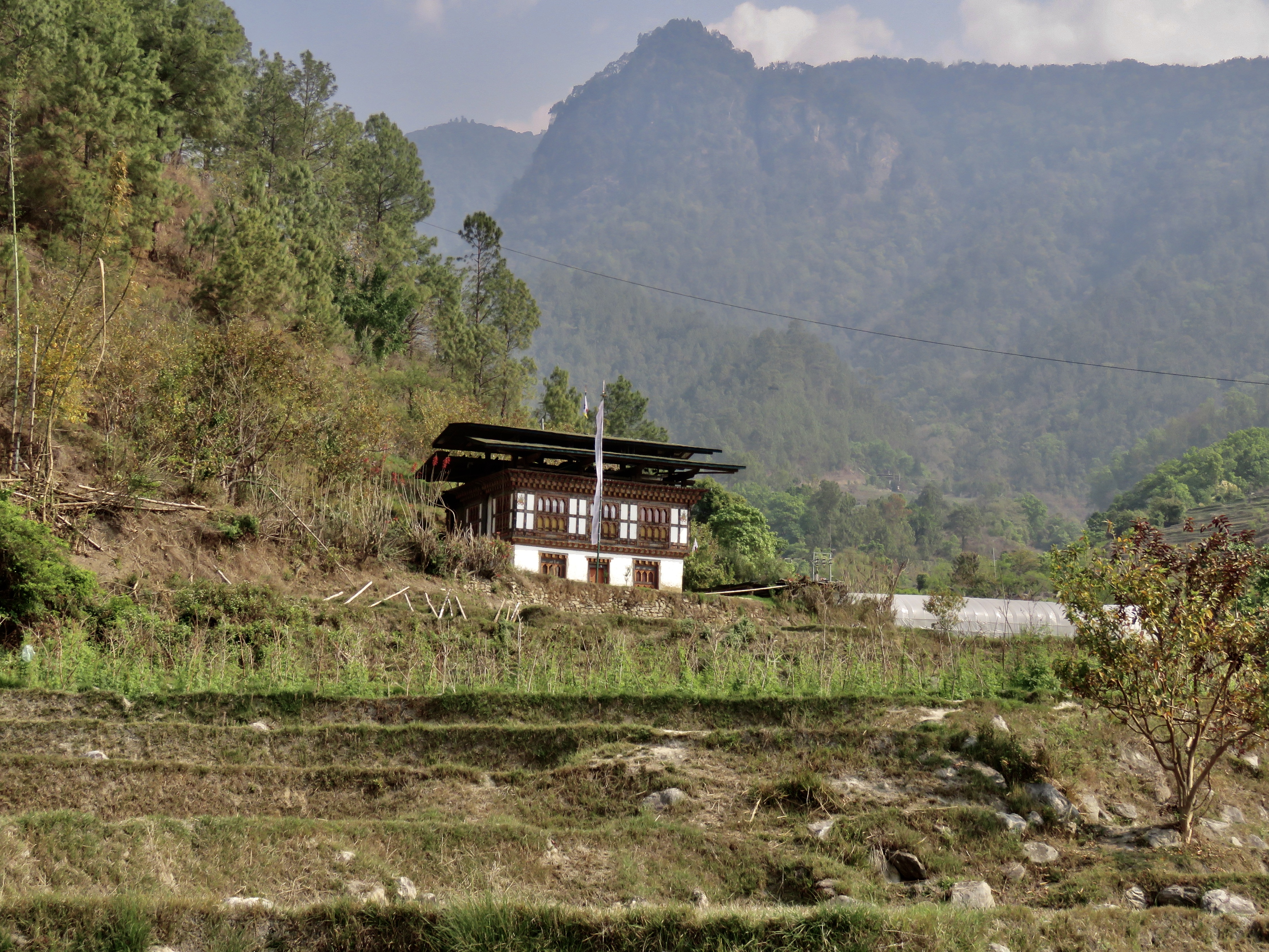
Something far more appealing to me was an introduction to a family who lived in a typical farmhouse close to the Tiger’s Nest area. Our hostess spoke excellent English having worked for some years with the Aman Hotel group. Through her experience she knew that some visitors might prefer to have a traditional Homestay with a family rather that stay in a western style hotel so she opened her home a couple of years ago and is accredited with the Government as a legitimate host.
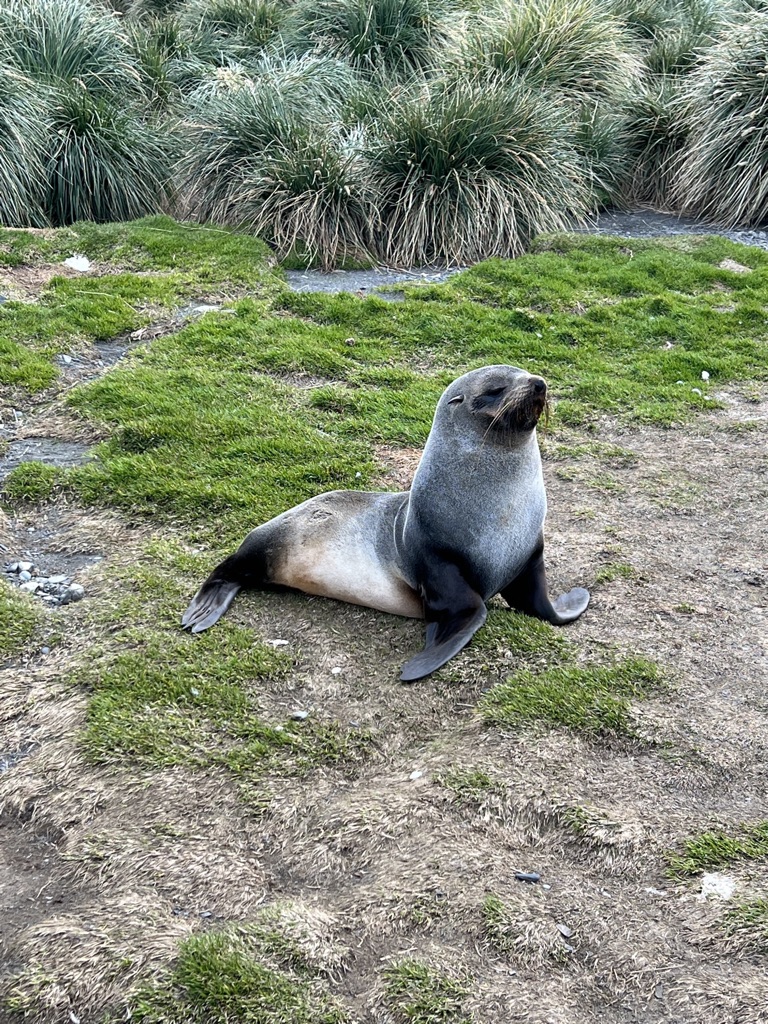
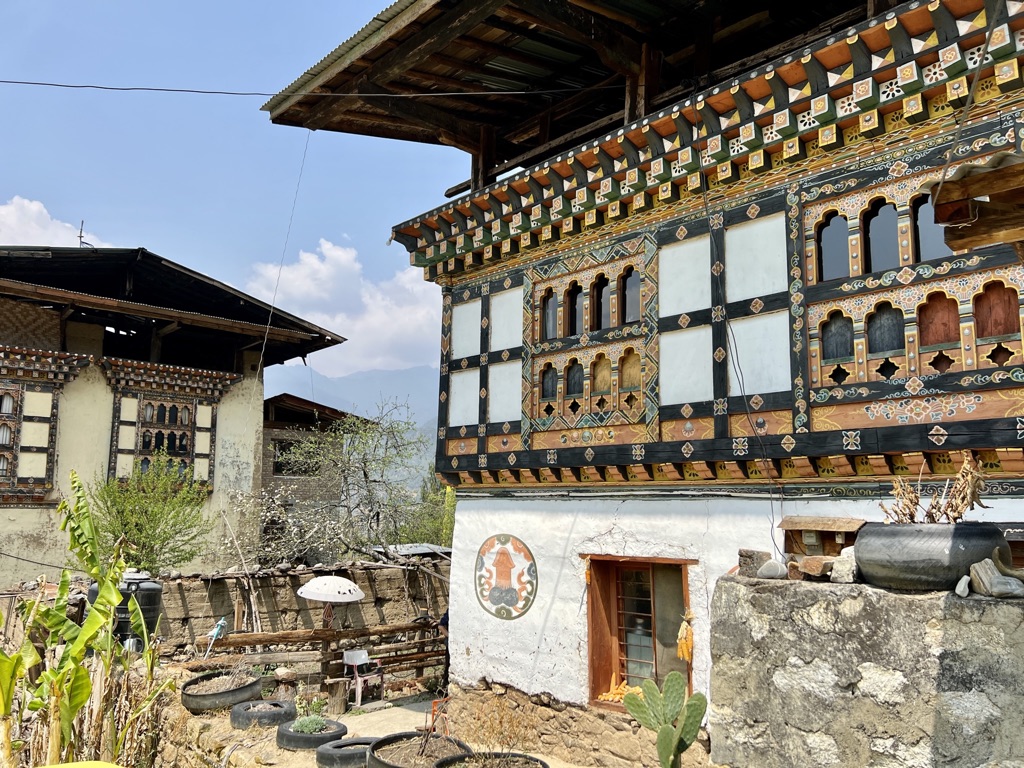
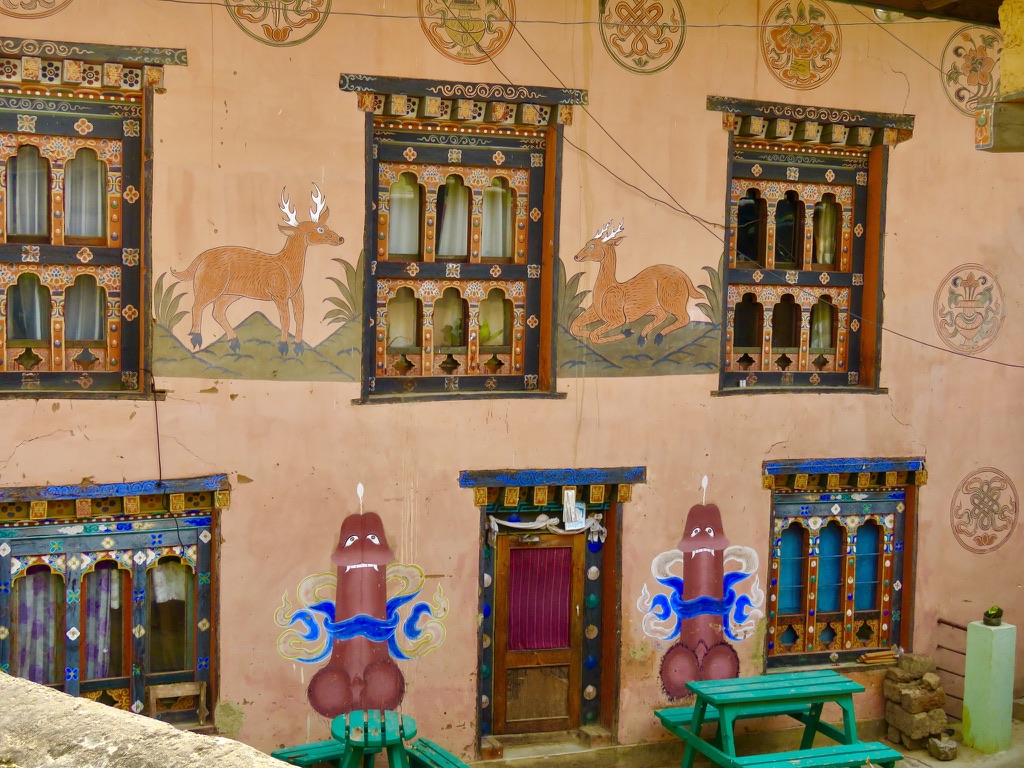
The farmhouse – note the phallus painting on the wall

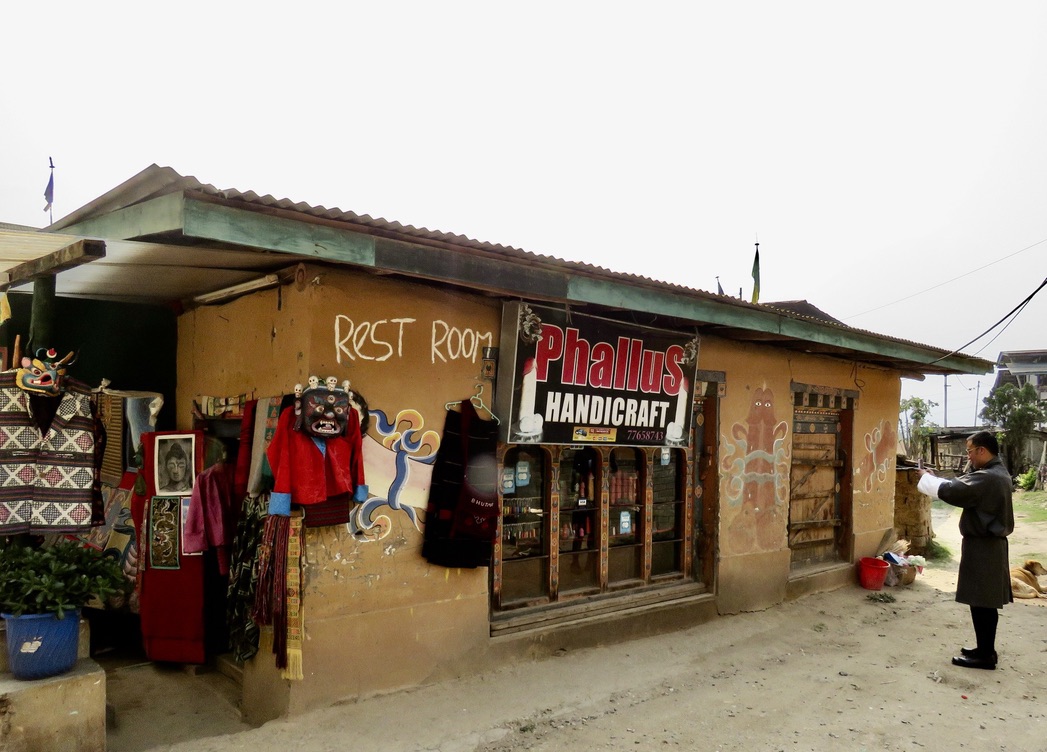
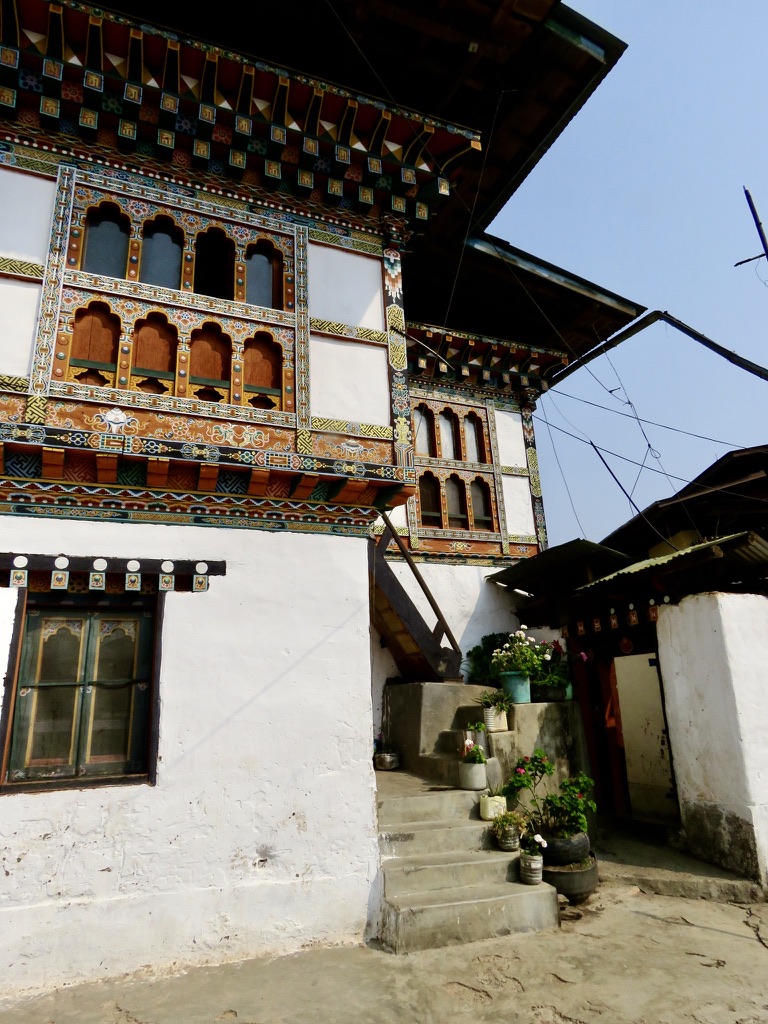
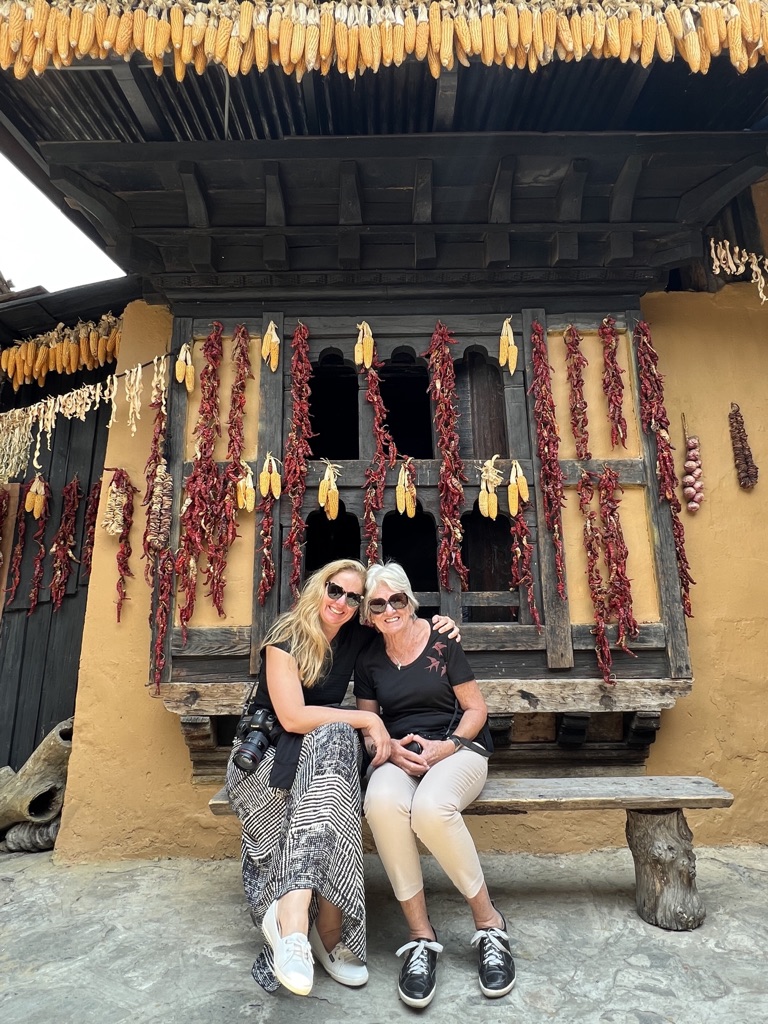
Corn and chillies were drying in the sun at the entrance to the house and pots of herbs were growing on the wall opposite. As with traditional houses this one was elaborately decorated with paintings and carvings. We noticed the phallus painting at the entrance such as we had seen at the Divine Madman’s village yesterday but that was many kilometres away and proved that this god is revered all over the country.

We climbed a ladder to reach the upstairs area where guests are accommodated. The large kitchen was downstairs and several family members were there chatting and cooking.

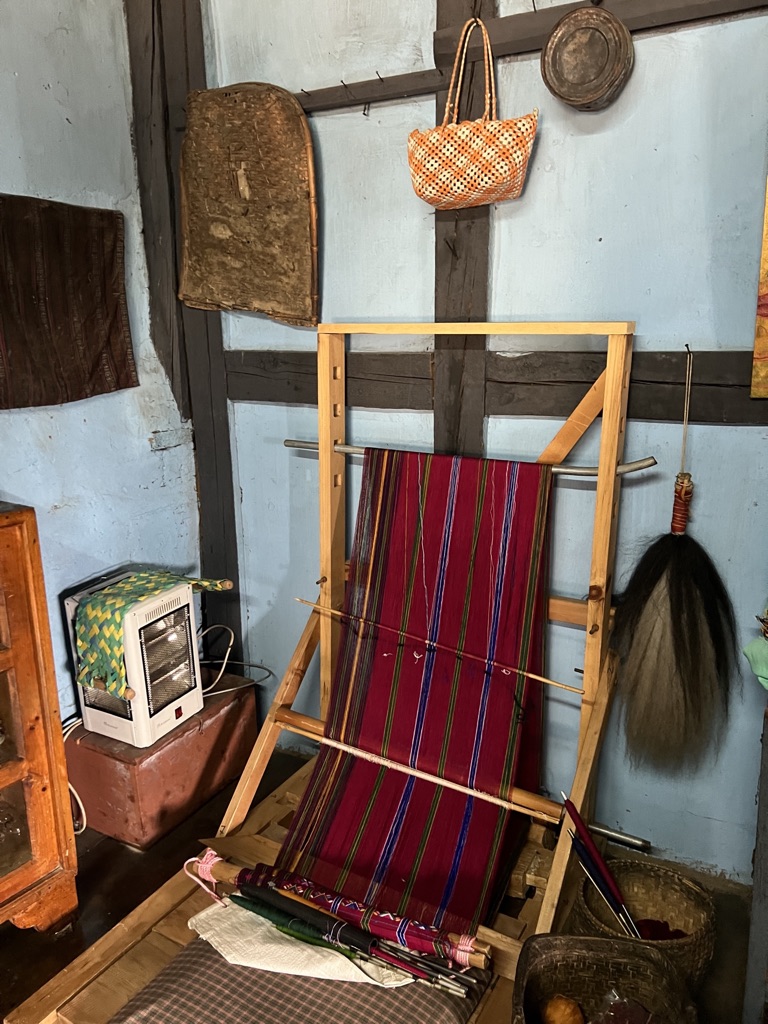
Very ornately decorated, the upstairs area was comfortable and a large loom with a weaving work in progress was against one wall.

There were no chairs and tables – cushions on the floor and a tray serving as a table were placed for our use. The windows were small to keep the heat in during the long winter days and nights and everyone slept in the same room on the floor on futon style mattresses which are rolled during the day.

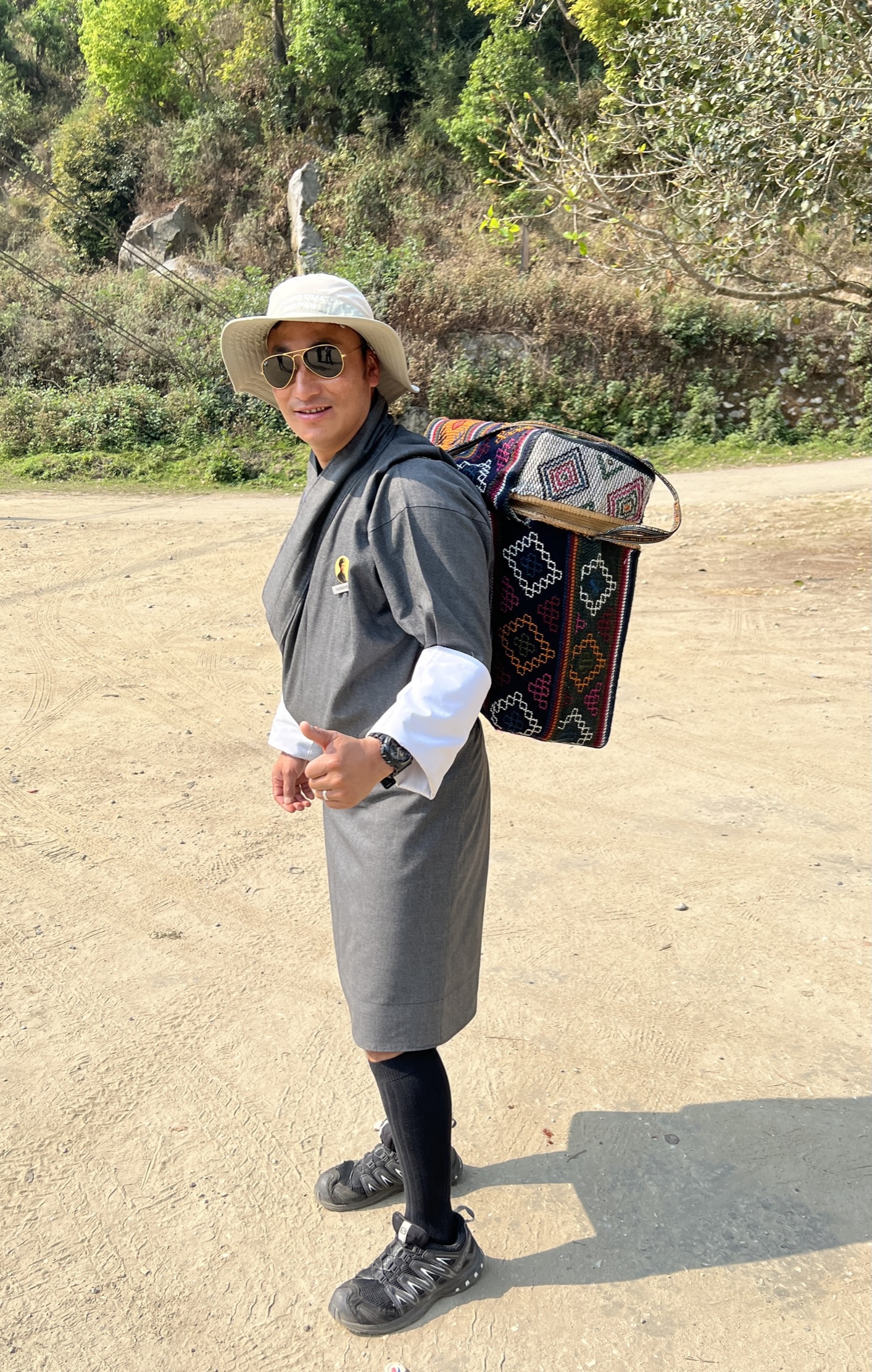
Chencho had come prepared with his famous ginger tea and delicious snacks consisting of banana bread, cookies and roasted nuts. He immediately sat on the floor and prepared our little feast under the watchful eye of our hostess.

Hot stone baths are well known in Bhutan and here was no exception.

It is interesting to note that one of the ancient names for Bhutan is Menjung, which means “The Land of Medicinal Herbs”. The history of medicine in Bhutan dates back to Tibet in the 7th century, and has borrowed heavily from Indian Ayurvedic practices. 

Bhutanese hot baths are not like the other hot baths around the world. It uses Menchu, which means medicinal water. Menchu consists of fresh water and Artemisia absinthium (wormwood) leaves. The combination is heated with river stones that have been roasted over a fire until they are burning hot. To increase the temperature of the water, more heated stones are added into the main tub through a chute.

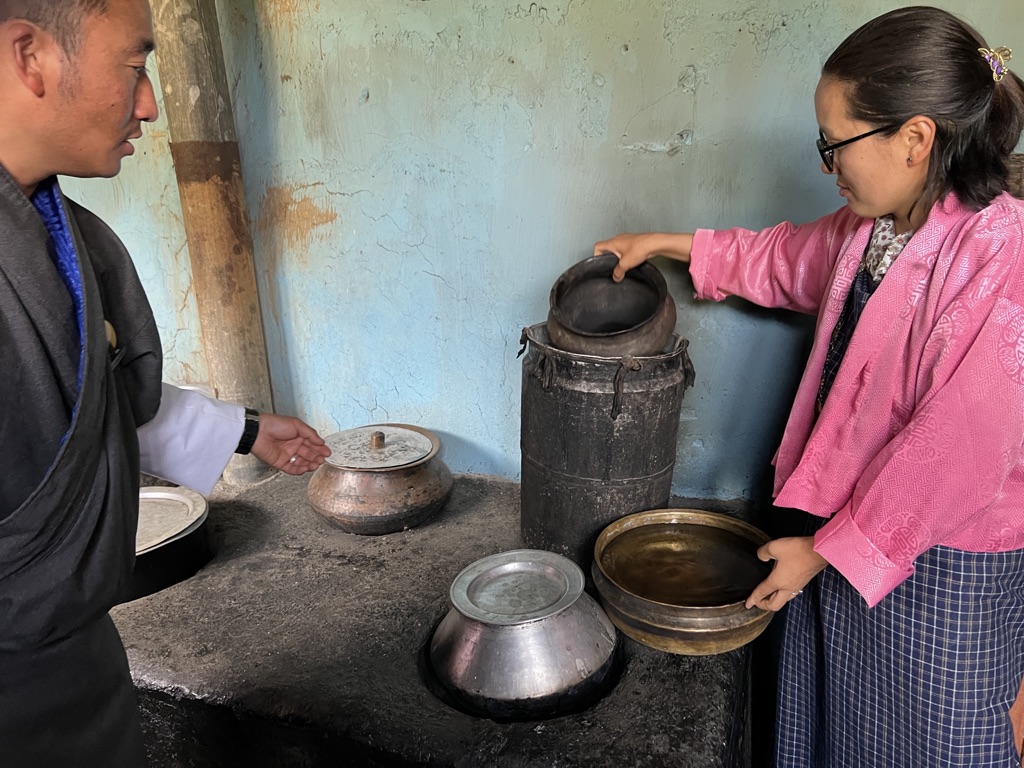
At this farm, stones are fetched manually from the riverbed nearby and placed in a wooden tub on the ground floor after they have been heated and then copious receptacles of water are heated and poured into the bath. This can only be used a couple of times before the whole process starts again!

It was a fascinating insight into the lives of farming people. Apart from Homestay this was a working farm growing crops in particular corn and chillies.

Sonam and our hostess

Thus ended our last day in Bhutan. We had an amazing dinner that night and reflected on all we had experienced in the past week. The memories are indelible and I will forever remember the beautiful dogs and the endless prayer flags, prayer wheels, the red and saffron robed monks, the temples, architecture, landscapes and the happiness of the people. And it goes without saying we will not forget Chencho and Sonam – our wonderful guides. “Log jay gay – Tashi Delek”

MORE OF BHUTAN

DAY SIX – BACK TO PARO AND FUN AND GAMES

Time to retrace our steps back to Paro and see more of everyday life in this beautiful country.

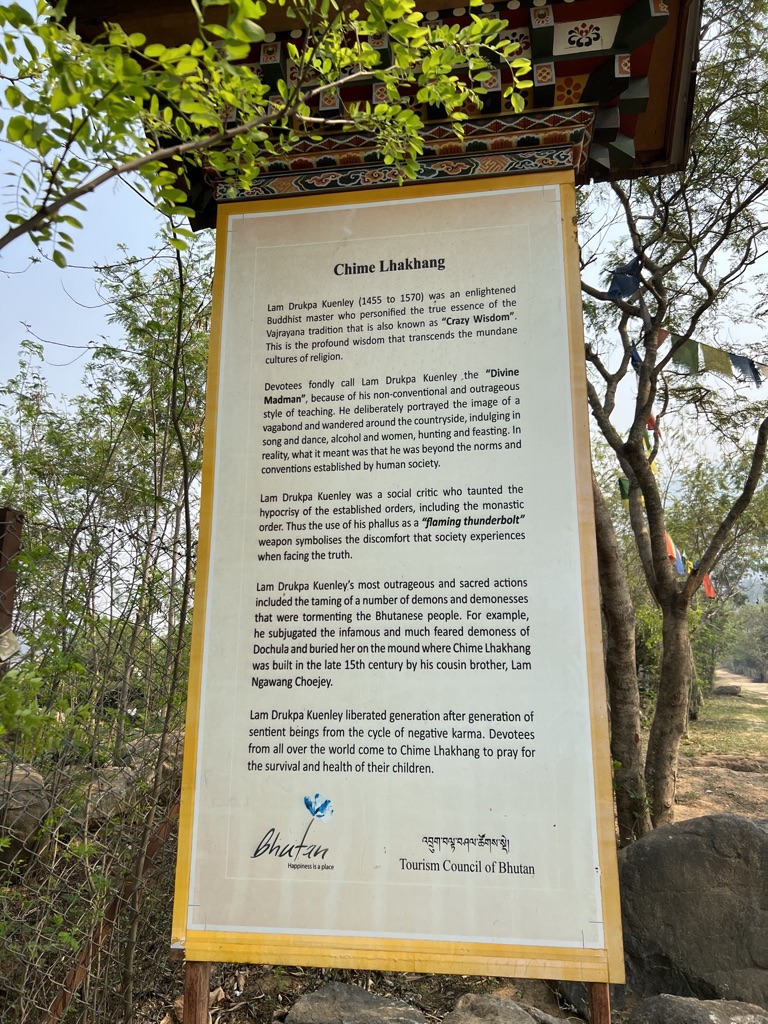
We set off early through winding mountain roads and stopped in the Divine Madman’s village primarily to see the painted houses and see how much the people revere this god. To us westerners the worship of the “flaming Thunderbolt” seems a little shocking and quite bizarre but during our drives around this western region we came across many houses with the art in different villages and towns. Clearly this is accepted and no one thinks anything of it. This is the god of fertility and so it is quite natural.

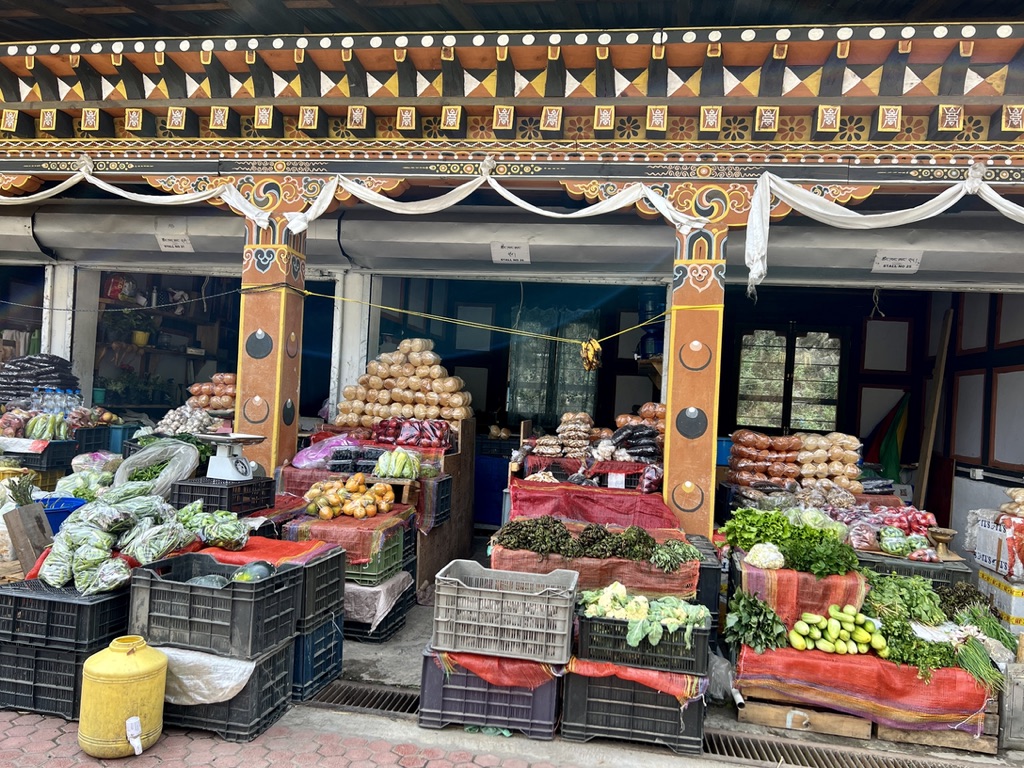
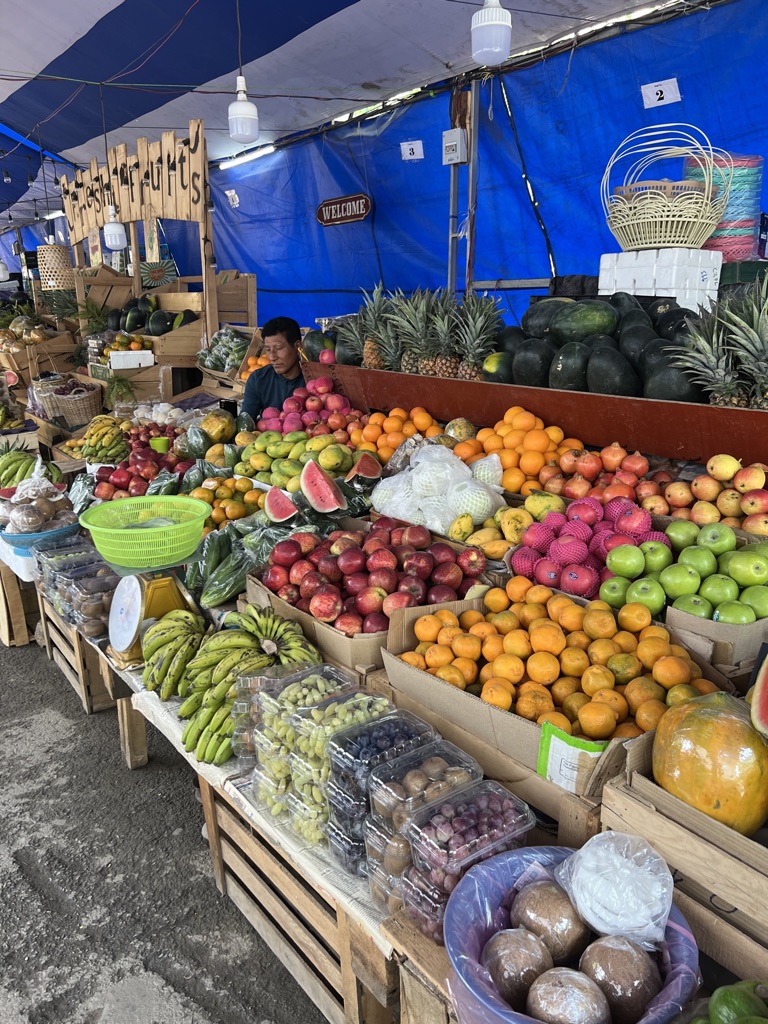
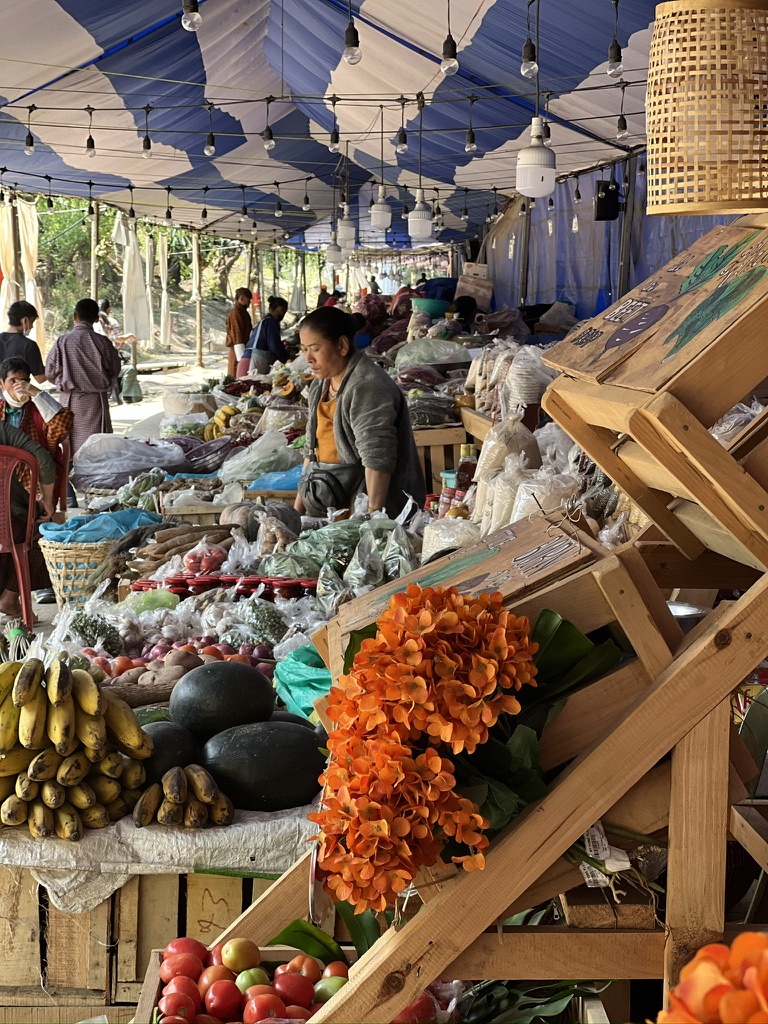
Once again we drove up to the Dochu La pass but this time the view was marred by smoke from the forest fires – deliberately lit by farmers to improve the soil. However driving through the forests of cypress pine and spruce amidst tiny waterfalls and memorial chortens was just as breathtaking. Once over the Pass we saw several traditionally built roadside markets. Obviously the farmers do well with the local travellers who stop to buy the fresh and very colourful produce. The variety was staggering much of which I had never seen before.

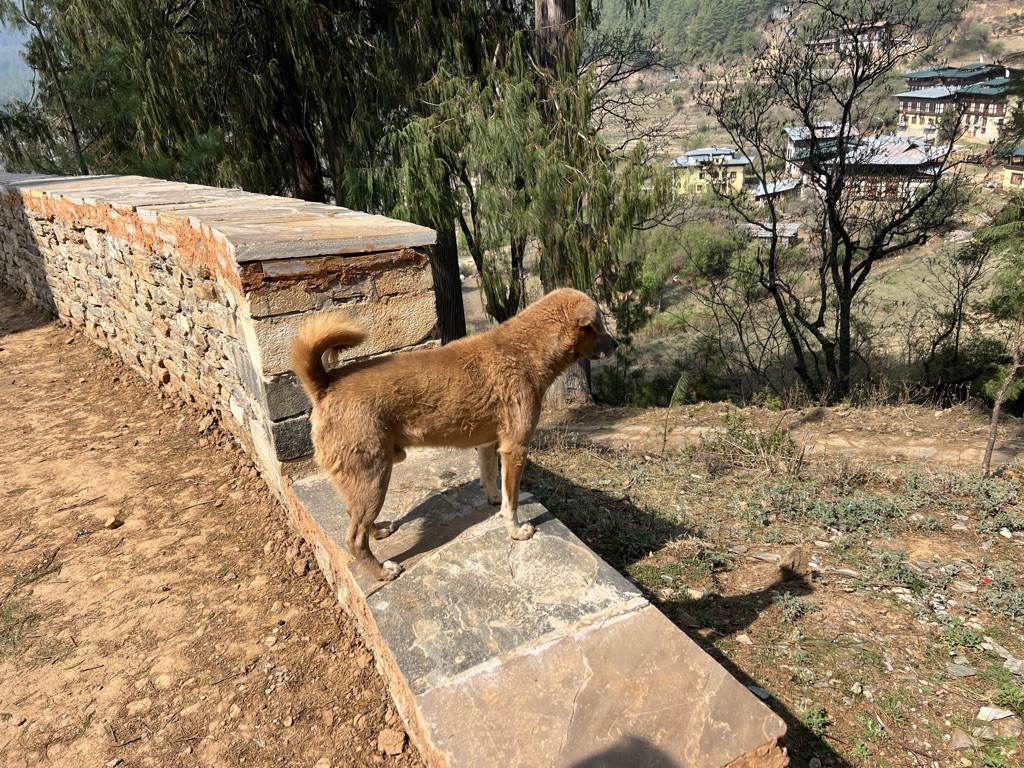
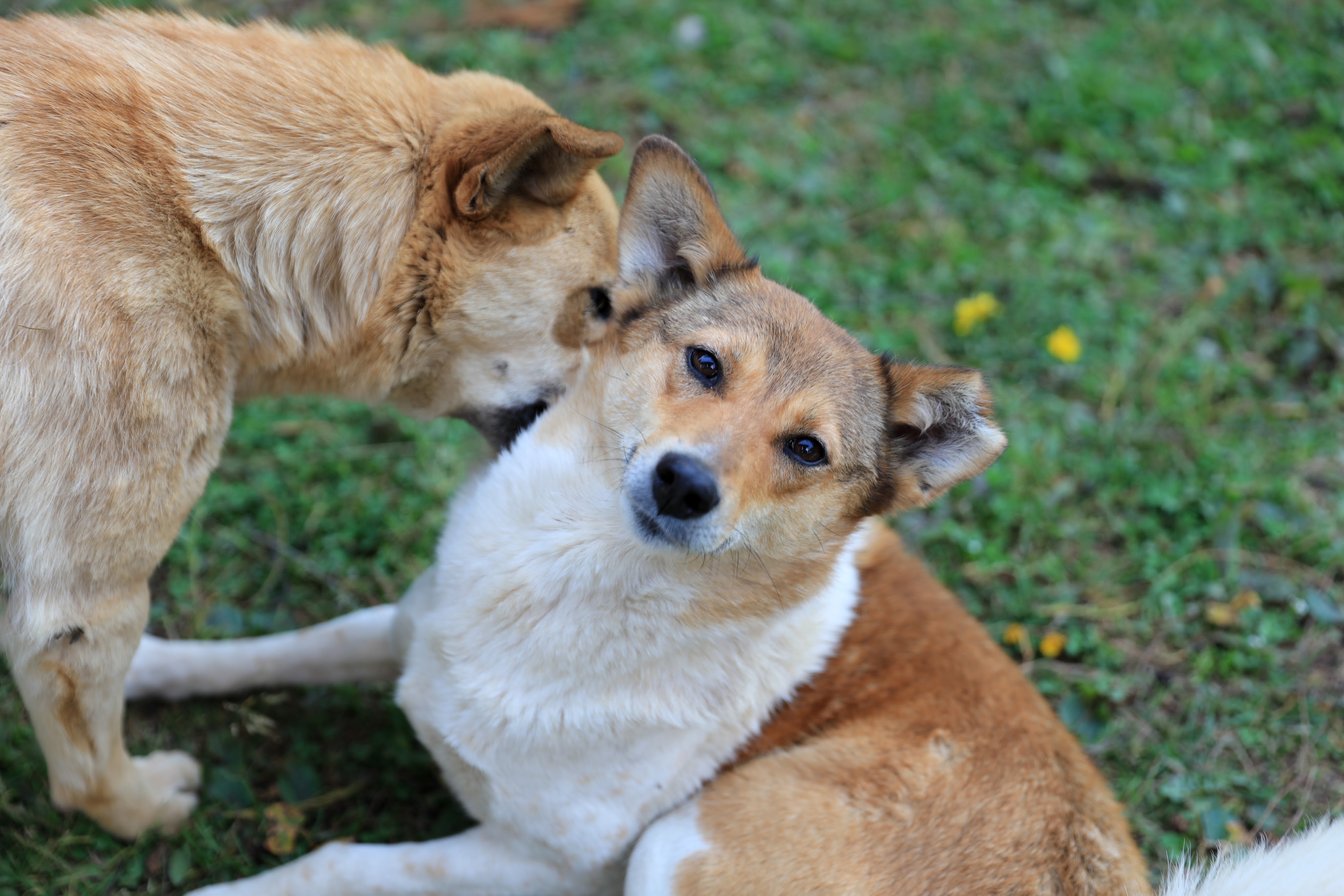
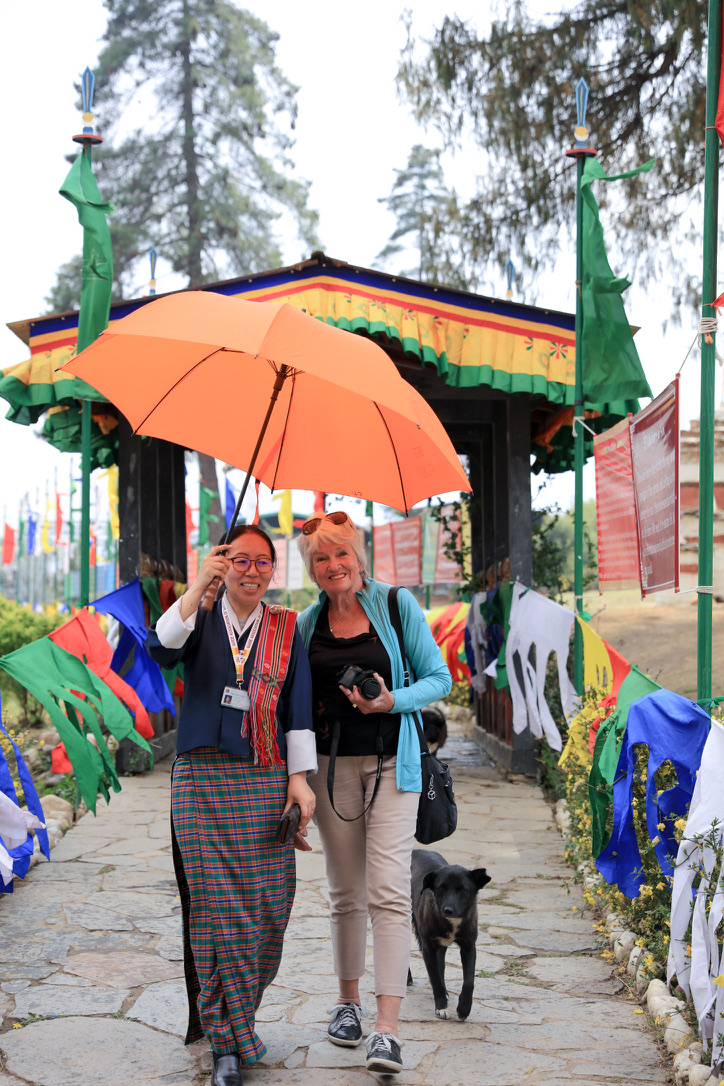
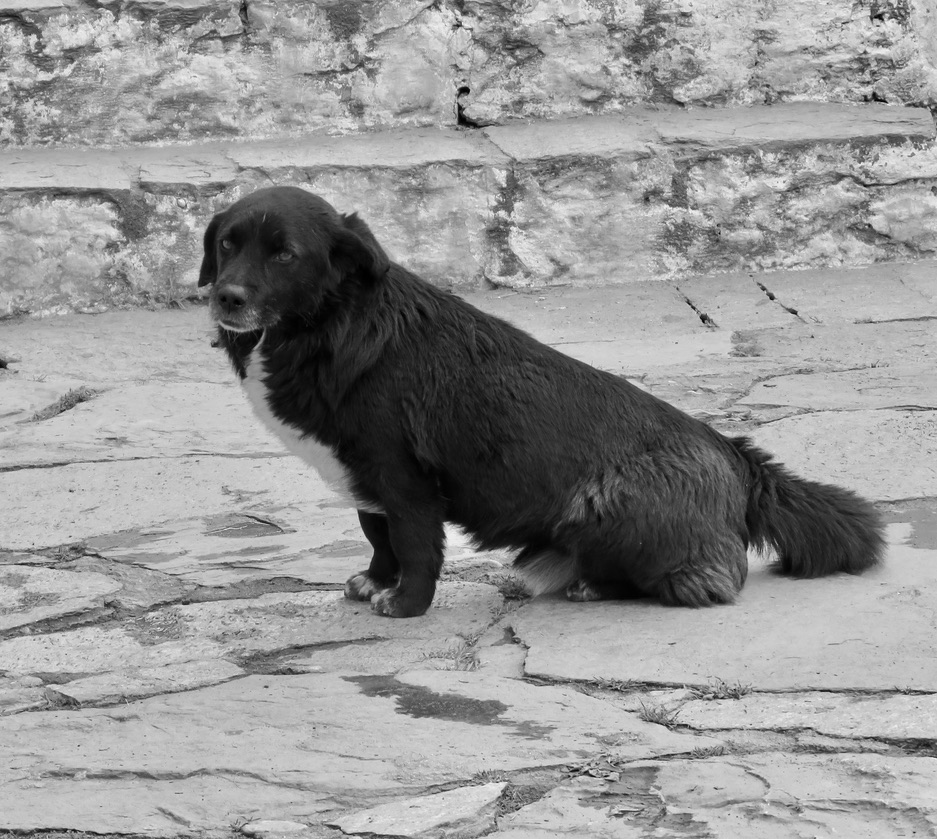
By the time we reached Thimphu it was time for a break and where better than a stop at the Ludrong Memorial Garden which is an oasis in the middle of the city. There we found walking trails, gazebos and bridges, ponds and ornamental gardens, woodlands and lots of picnic areas. The local population come here for family time on weekends and holidays and the dogs in this area are very well looked after!

The National Textile Museum was our next visit. Located in a modern building, the museum is under the royal patronage of the Queen Mother and was opened in 2001 and gradually added to since that time. Showcasing the beautiful Bhutanese textiles and the traditions of weaving and embroidery, it is fascinating to see the weaving techniques – demonstrated by a weaver of great skill – and the styles of local dress for both men and women. No photography is allowed but there is a gift shop and, of course, I bought a scarf as a souvenir!

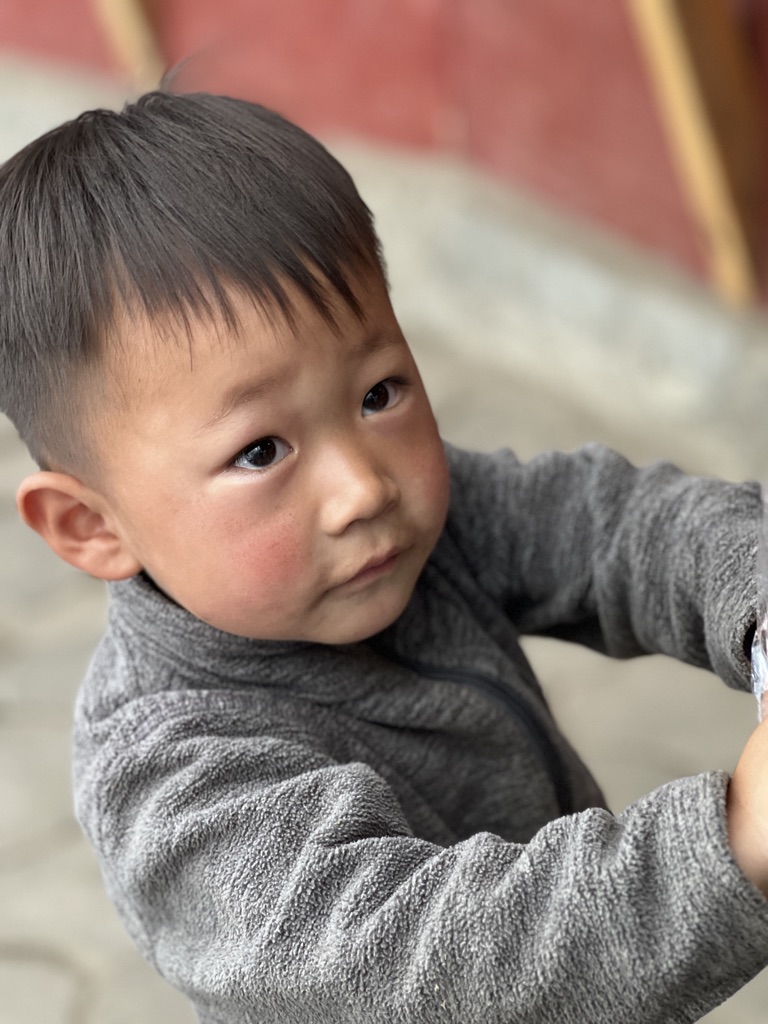
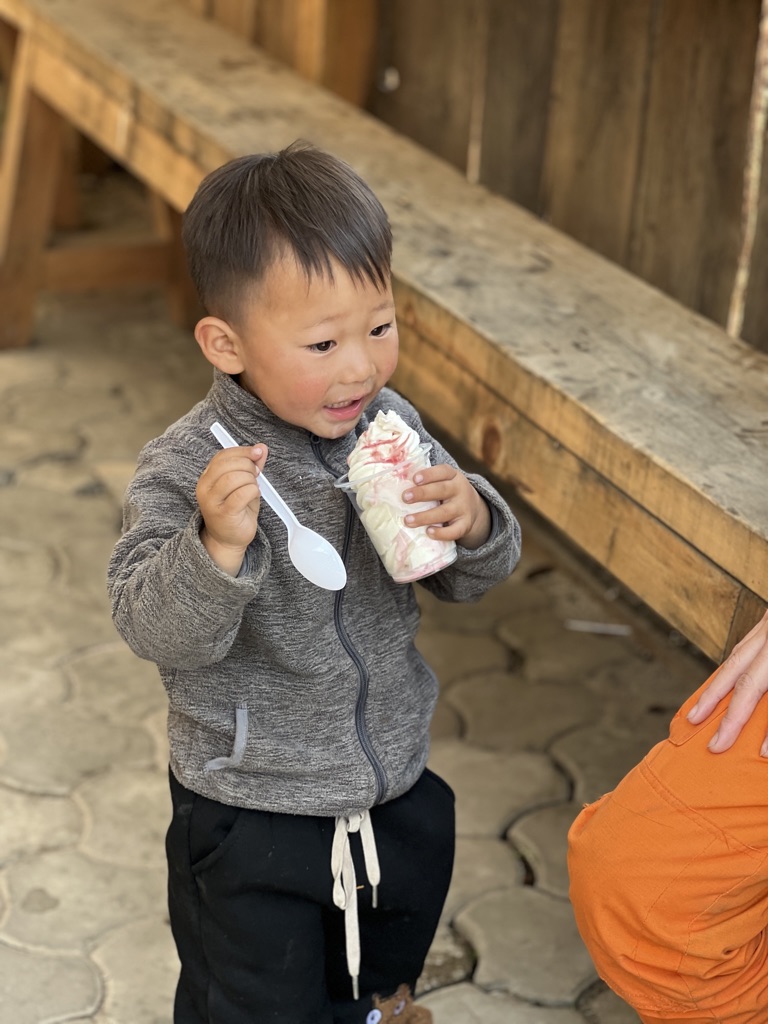
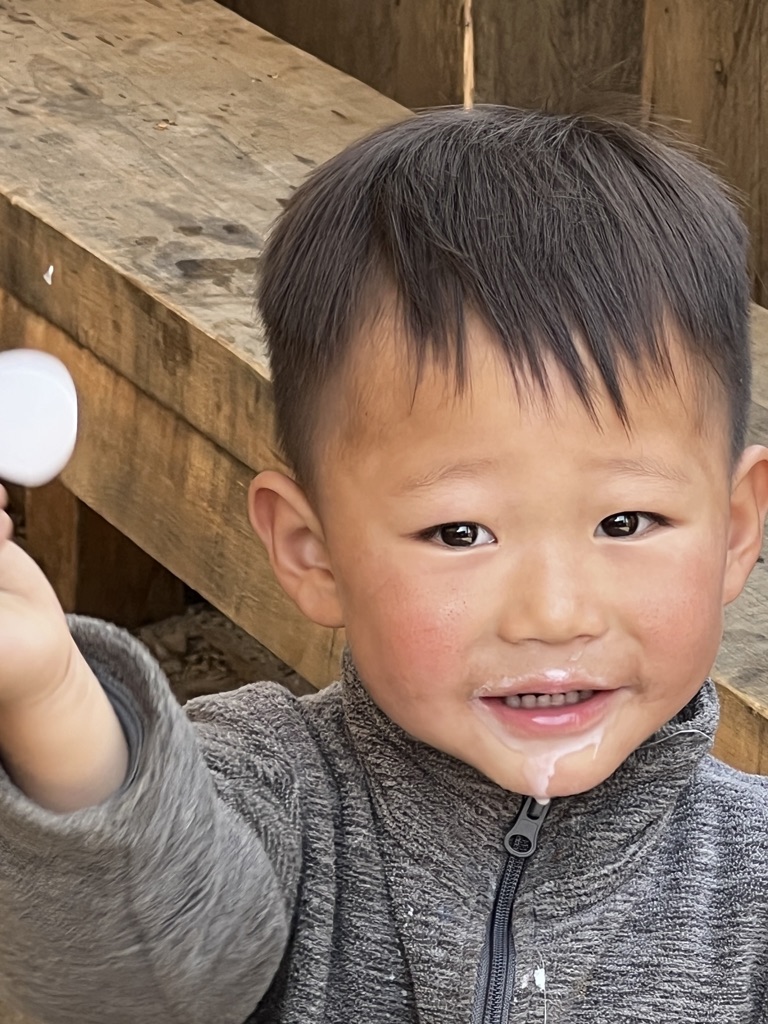
Before we hit the road back to Paro we went to the weekend market. People from surrounding villages start arriving on Thursday evening and come to buy and sell produce, ranging from dried chillies and yak butter to textiles and bamboo products. The market continues until Sunday afternoon. Here again was such an enormous variety of produce it was mind boggling. Small food stalls and cafes were inside where we could have lunch. We met a little boy, obviously the child of one of the stall holders, who followed us around and in the end asked for an ice cream. How could you refuse such an appealing little face? We got permission from a parent and then he indulged in a very messy fashion!

The market is held in a large open space which is undercover and is divided into sections according to the product.

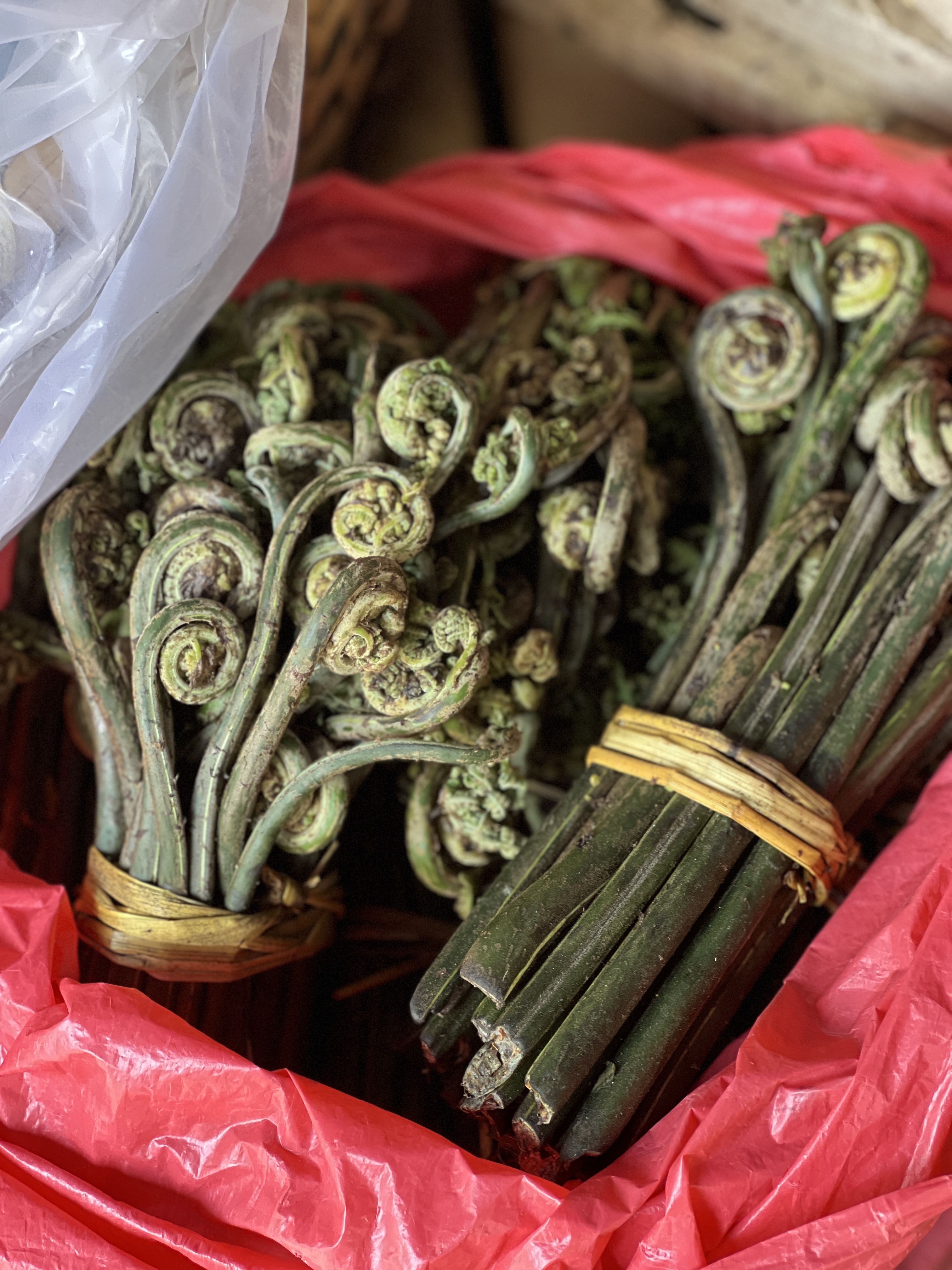
One of my favourite vegetables in Bhutan was fern – cooked in a variety of ways. Here were huge bundles of it ready to take home.

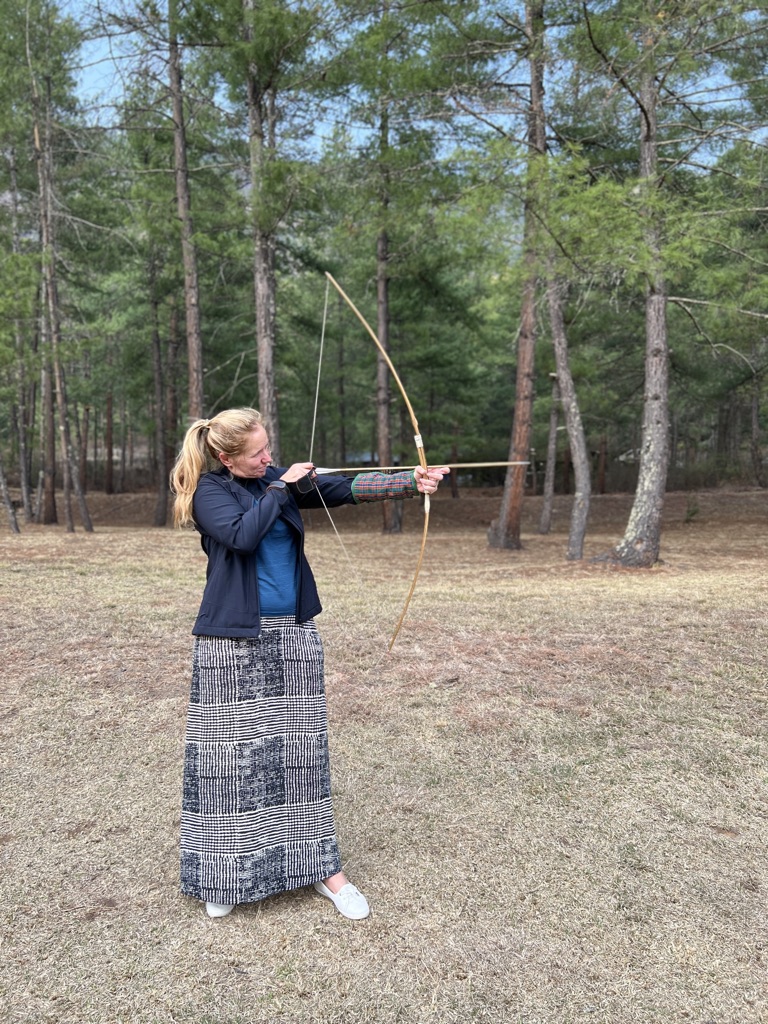
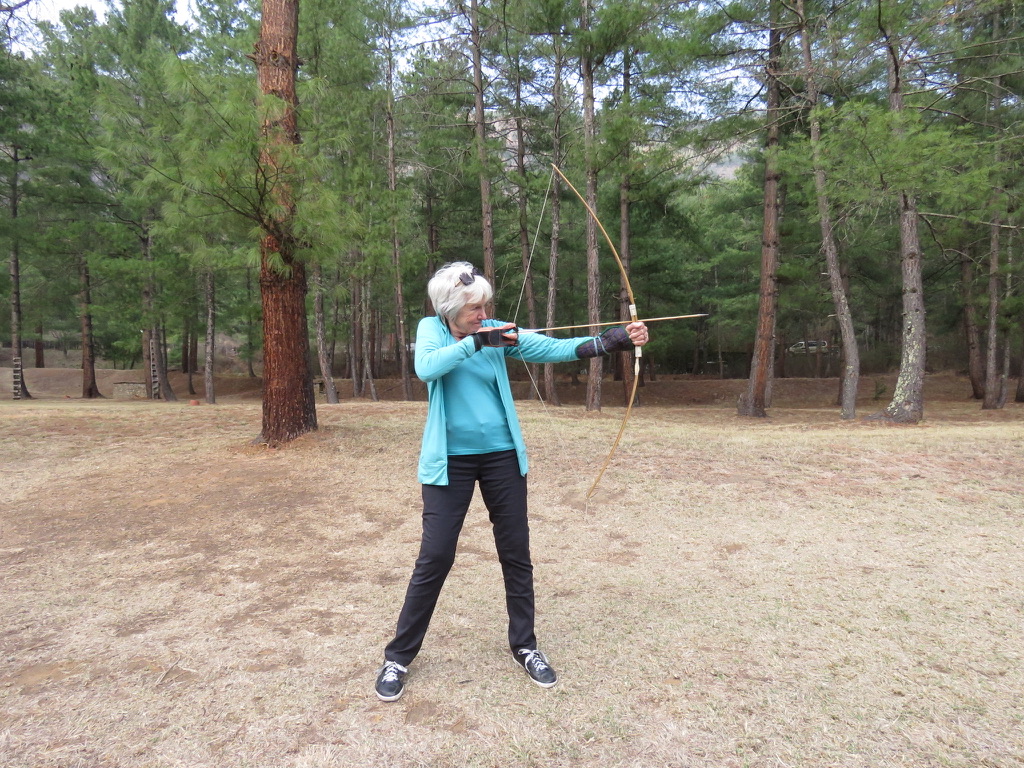
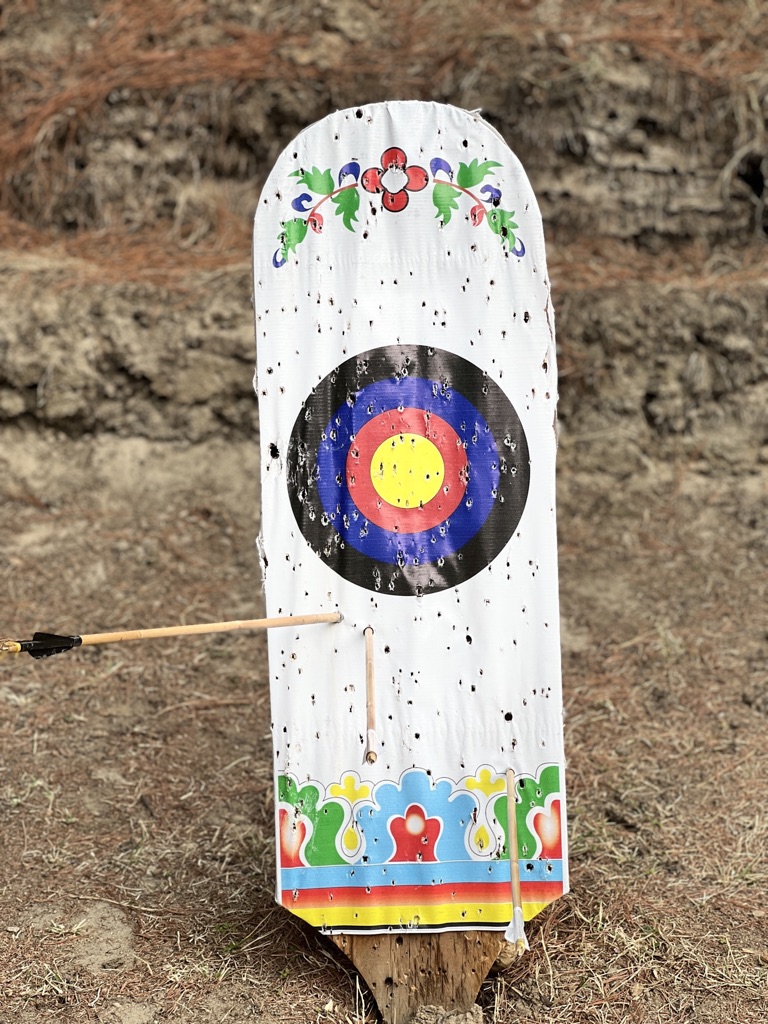
Archery is a National sport in Bhutan and people partake for fun and physical exercise. It is said that it builds concentration and is important for socialization and mental development. Bhutan has competed in the Olympics since 1984 and maintains an Olympic team. Every village has an archery field and our hotel, Como Uma Paro, is no different. That afternoon we tried our hands in this very unusual sport using traditional equipment. Bows are made of bamboo and arrows are reeds or bamboo. The target is normally 100 – 145 metres away but in our case it was somewhat closer. I managed to hit the target but it wasn’t quite bullseye!

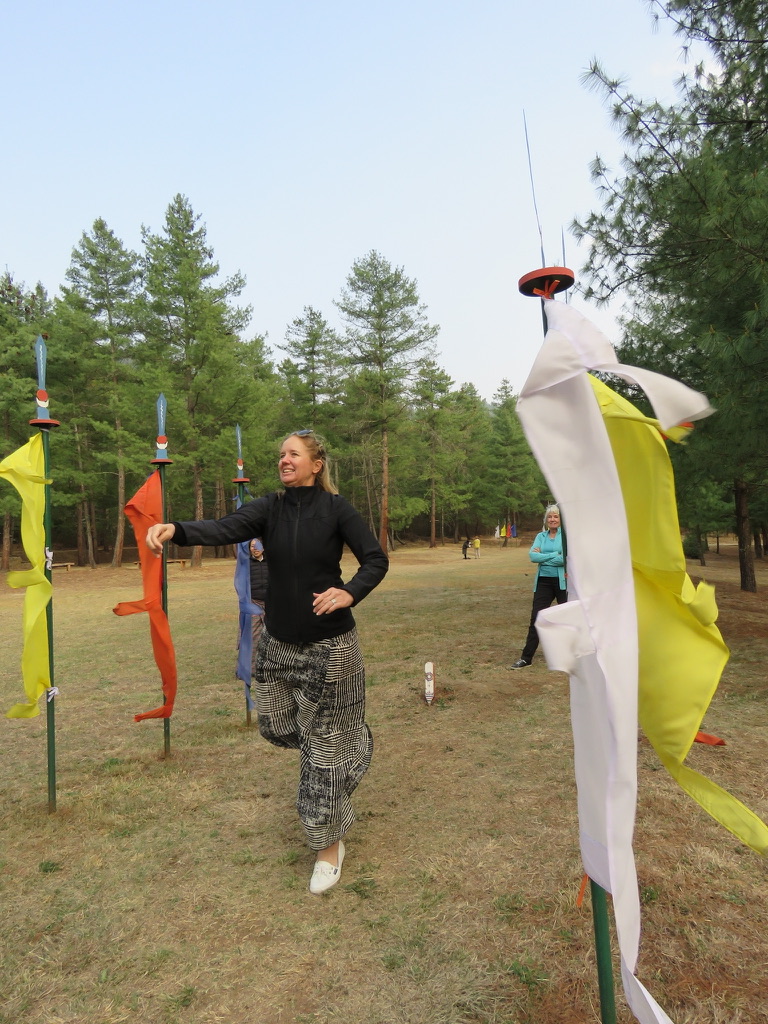
The other fun game they play is dart throwing, Khuru in Dzongkha, which involves throwing darts outdoors some 15 to 20 metres away. The darts are wooden sticks with a pointed end and the target is a wooden post. Once thrown the competitor turns around and tried to hit the target on the opposite end. I had no luck at all but Jacqui was a natural!

Time to call it a day and prepare for our last day of adventure tomorrow.

PUNAKHA VALLEY, BHUTAN

DAY FIVE : A PATH TO ENLIGHTENMENT

CHIMMI LHANKHANG, SANGCHEN DORJI NUNNERY, NALANDA TEACHING MONASTERY

One of the reasons we wanted to spend time in Bhutan was in order to visit teaching institutions and some of the well known temples with fables attached. Today we were not disappointed. Our drive to the first temple was through lush fields, rice paddies, orchards and forests. Chimmi Lhankhang is a 15th century fertility temple dedicated to Drukpa Kuenley, a Tibetan Buddhist saint who is probably better known as the “Divine Madman”. We had already heard the story of this saint who went about the country dressed as a vagabond, indulged in alcohol and women, feasted and danced and generally behaved inappropriately. He was totally unconventional and disliked the hypocrisy of order – particularly monastic orders – and so used his phallus as a “flaming thunderbolt” weapon to challenge society and its discomfort in facing the truth. There are countless stories about his travels and deeds – all of them quite fantastic – but he liberated generations from negative energy and to this day many couples come to the temple to be blessed and to pray for their children. His bizarre and unorthodox teaching ways endeared him to the people and he is now the patron saint of Bhutan and considered one of the greatest spiritual teachers.

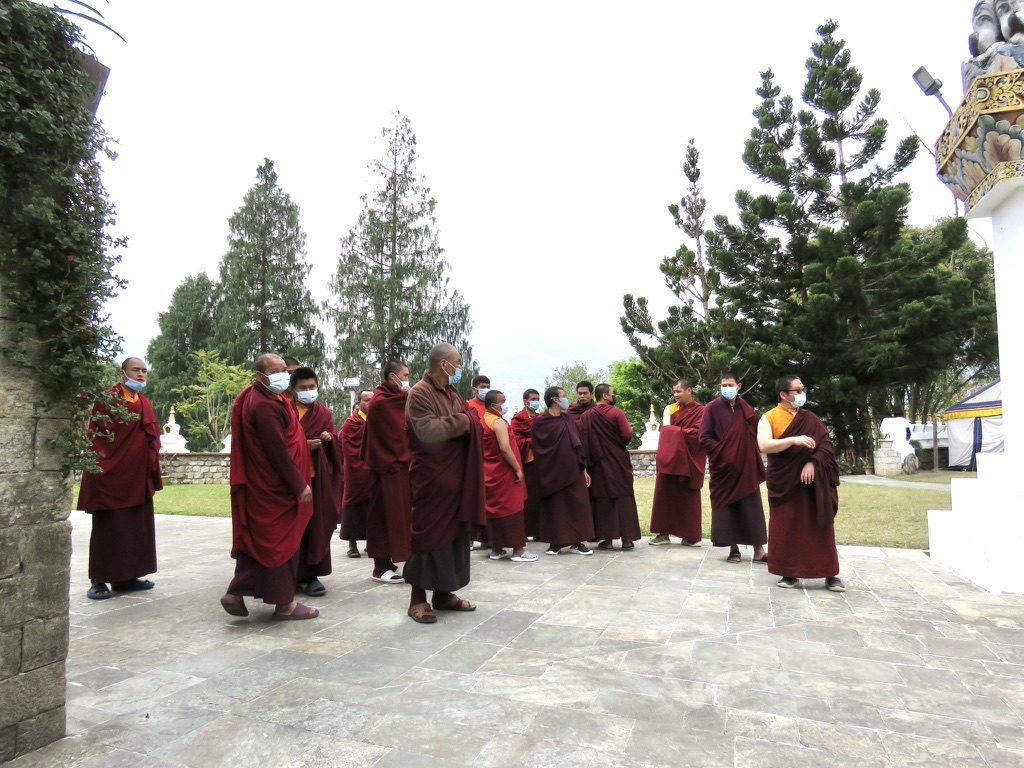
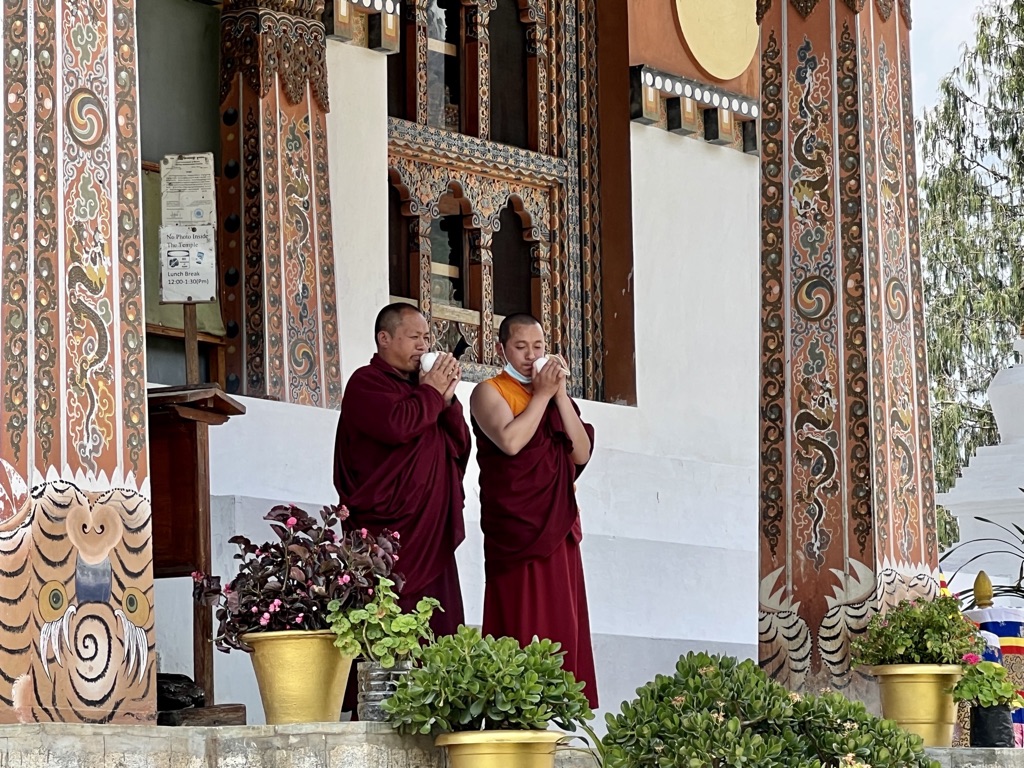
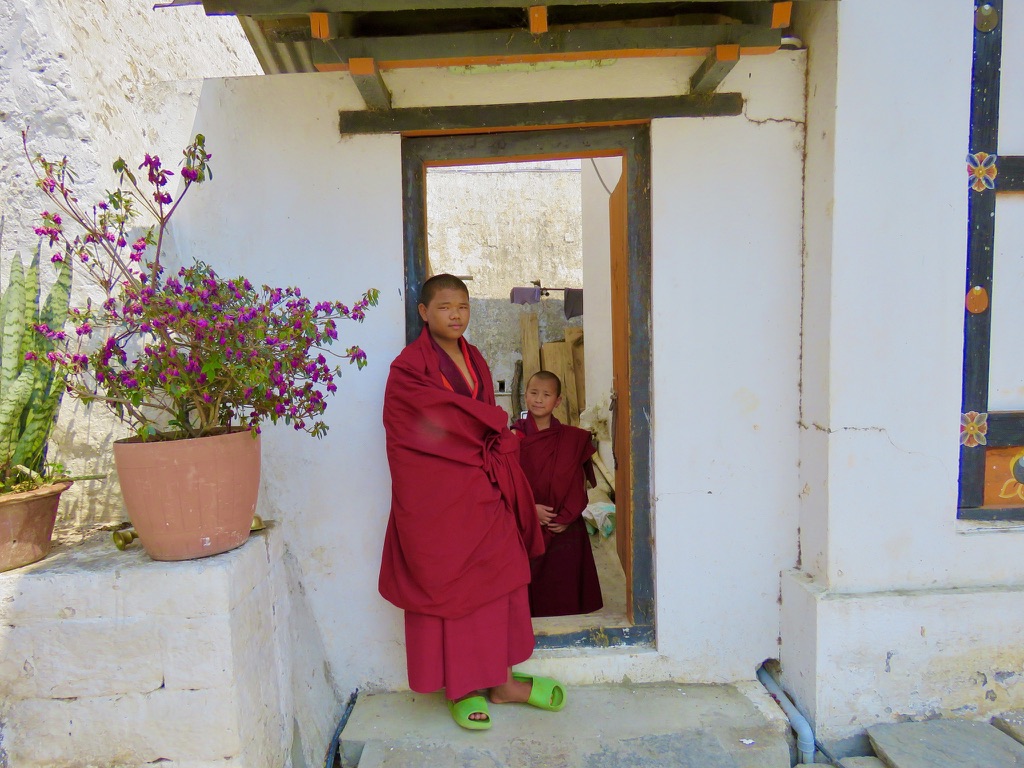
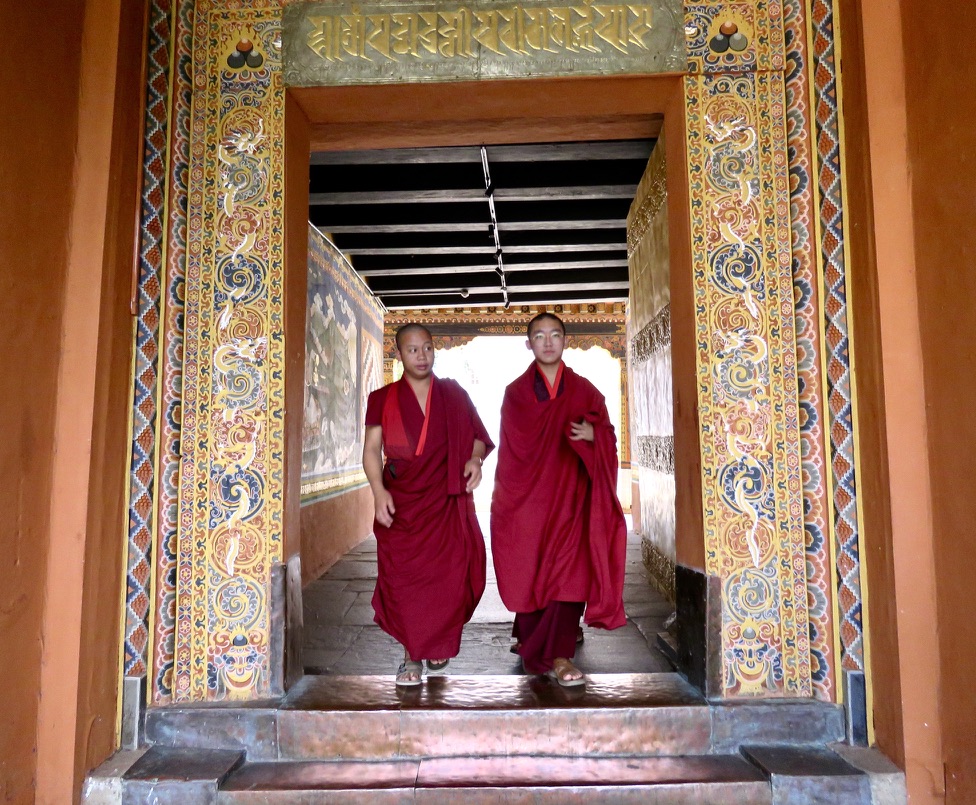
When we arrived at the temple we were greeted with the hollow sounds of trumpets – these long instruments are used by monks and nuns as a call to prayer. We walked the long path to the temple gates and found student monks practising on their instruments. Dressed in crimson and saffron robes they made an arresting sight in the temple garden – the stupas glistening in the early morning sunlight.

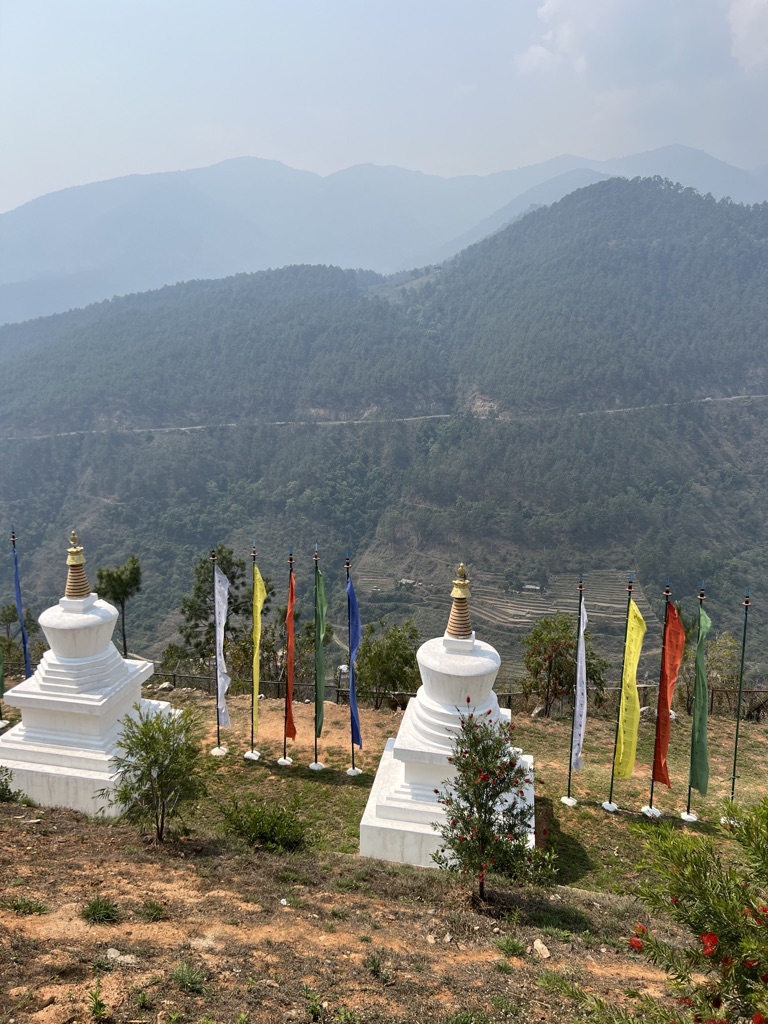
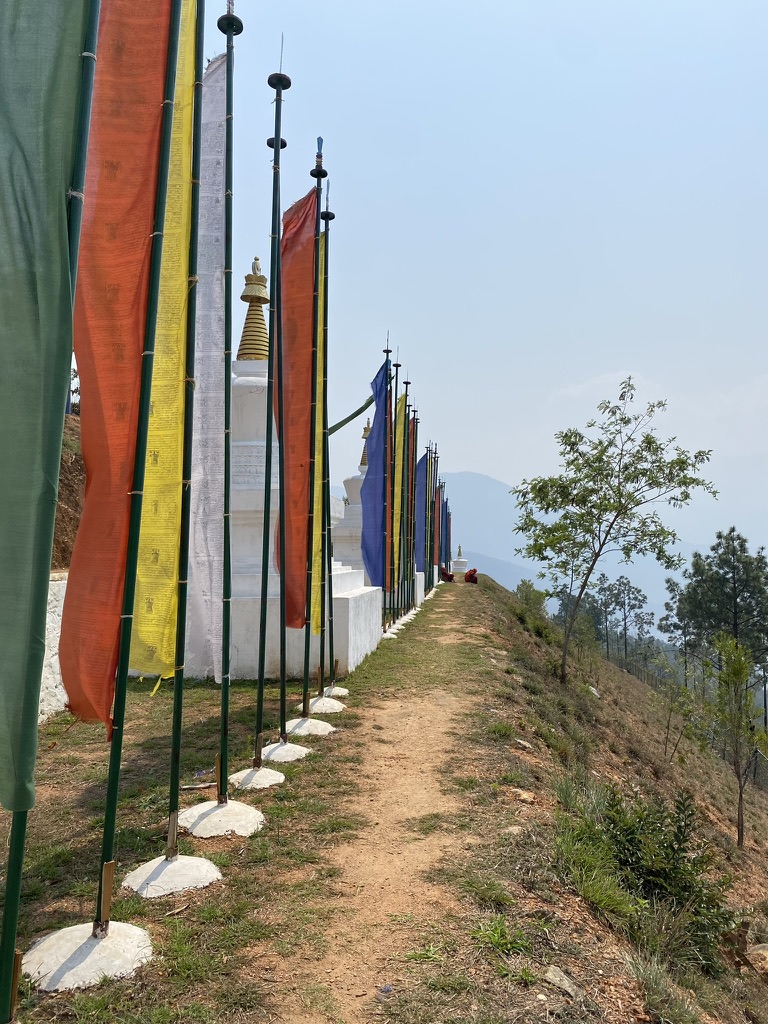
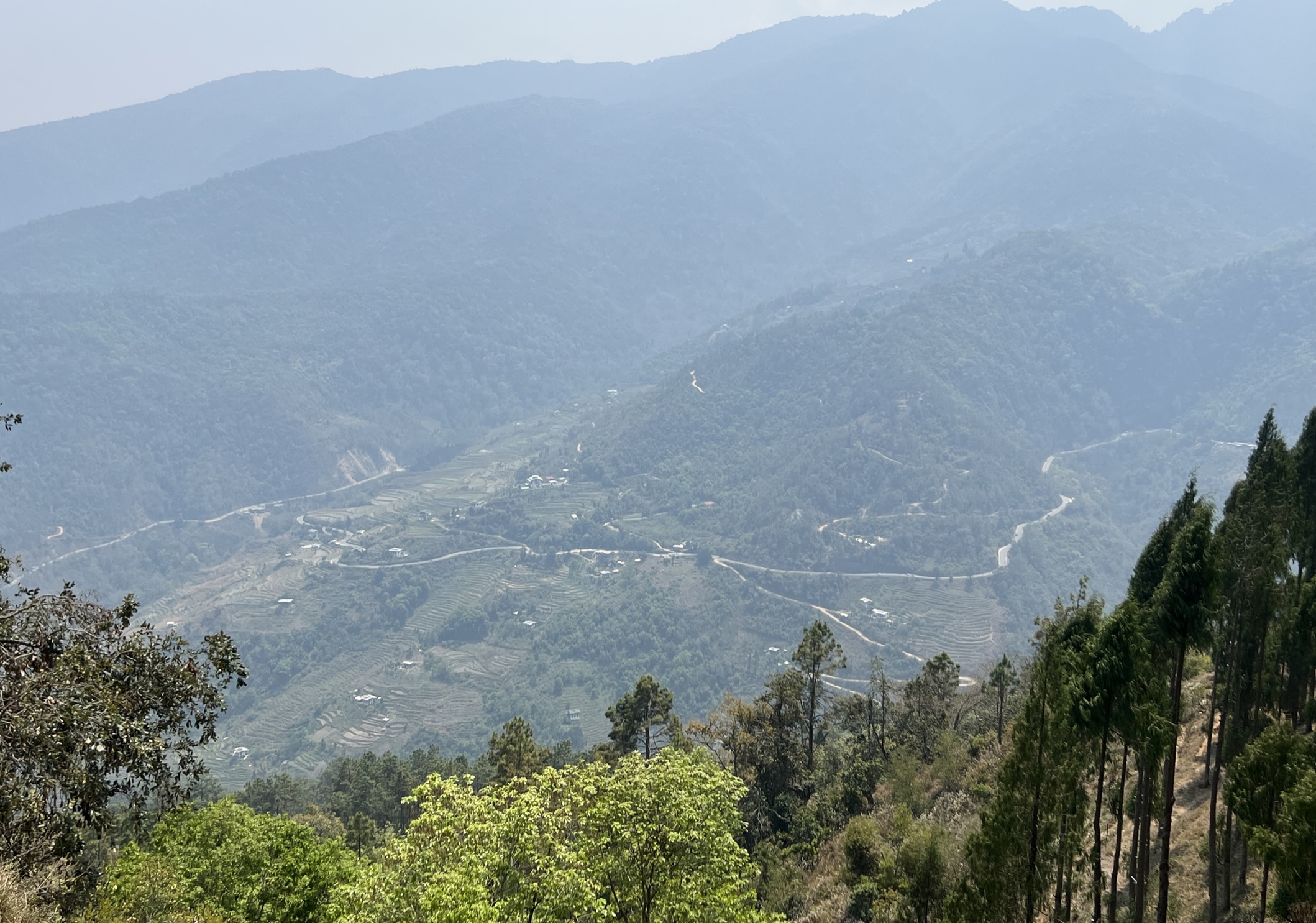
Across the valley we went to another place of peace and contemplation. This time it was the Sangchen Dorji Lhuendrup Nunnery. Situated on the edge of the mountain, the complex overlooks the Punakha valley and has stunning views. A large prayer wheel overlooks the hills and coloured prayer flags were fluttering in the breeze.

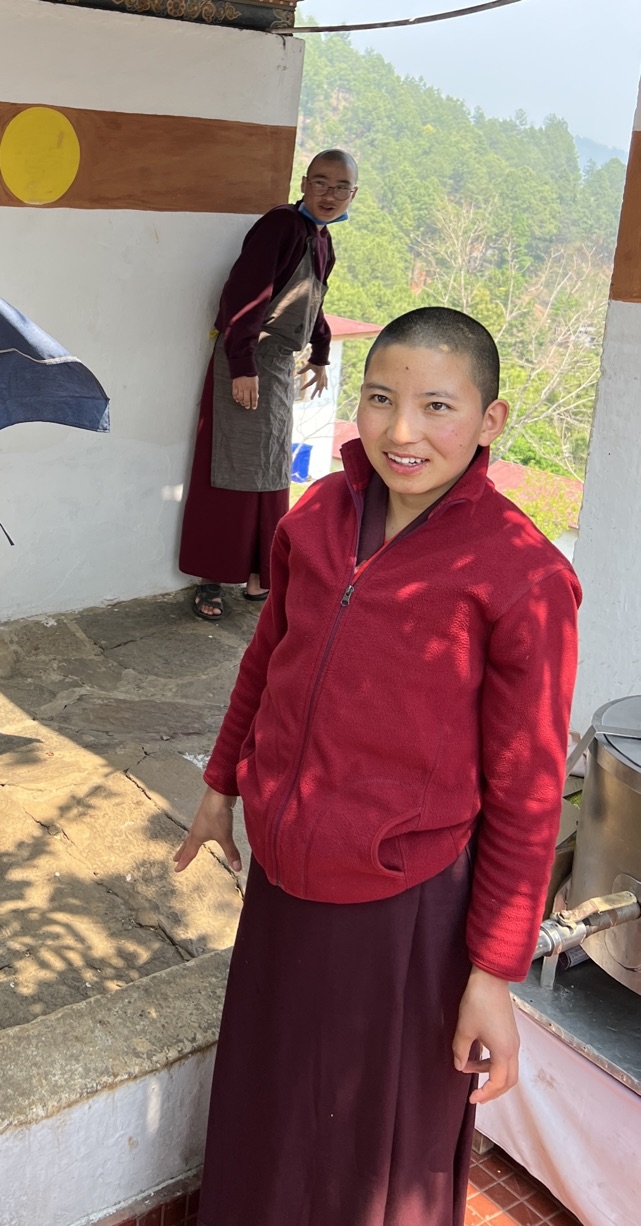
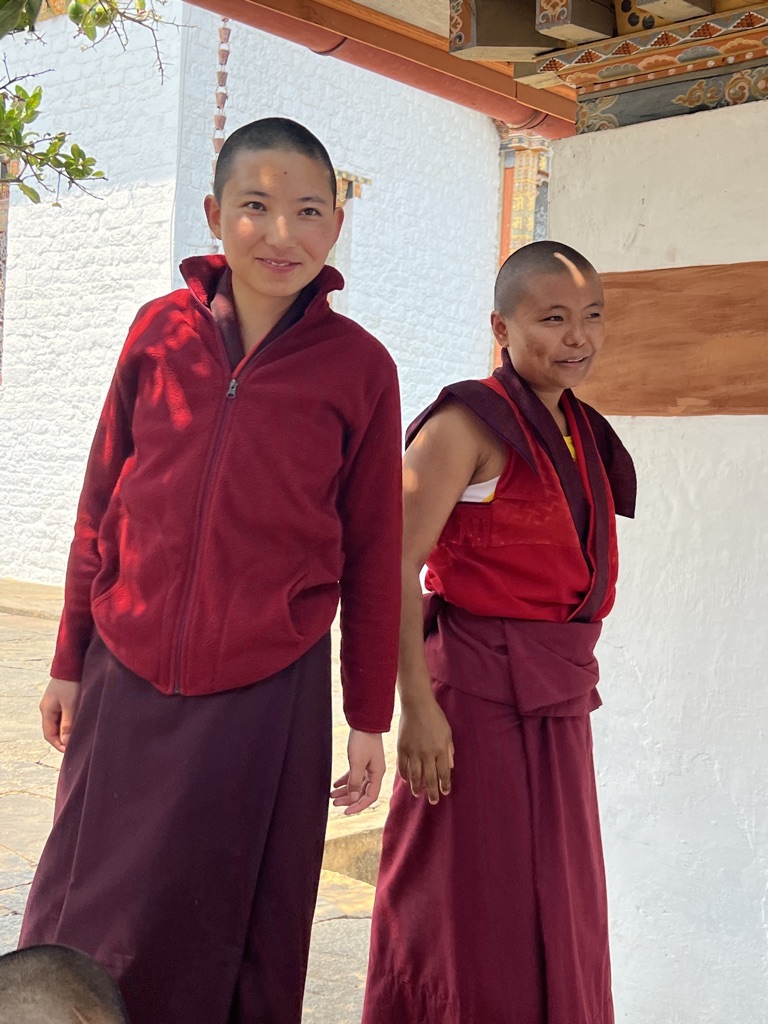
Along with teaching a spiritual life, the nuns are also taught many life skills such as tailoring, embroidery, thangka painting and statue making. Many of the women go onto normal lives with families or teaching others. It seemed to me that they were happy to devote several years of their lives in the nunnery and later make a decision about how to spend their time. When we arrived a group of nuns were having a mid morning break and making a very spicy chilli lime drink with fresh limes, chilli paste and betel leaves. It was overpowering and quite disgusting but they laughed at our distaste and added more chilli paste to the concoction!

As at Chimmi Lhankhang, we found a couple of nuns practising their call to prayer on the trumpet like instruments. The courtyard was vast and the sound echoed throughout.

We were unable to access the library and teaching rooms as they were being used but we chatted to the nuns outside and wandered through the beautiful gardens full of rose bushes and other flowers. It was so neat and orderly.

After a picnic lunch we drove to the Nalanda Buddhist Institute which has an interesting history and is now a “shedra” which means teaching monastery. It was founded in 1757 by Gyalwang Shakya Rinchen Rinpoche who is considered the reincarnation of Rechung Dorje Drakpa, a student of 11th century Tibetan Buddhism. Today the student monks range in age from 8 – 28 years and upon entering the school, some had reached a certain education level whilst others had had no education at all. Here they learn Buddhist philosophy, how to play ritual instruments and the making of ritual cakes called tormas.

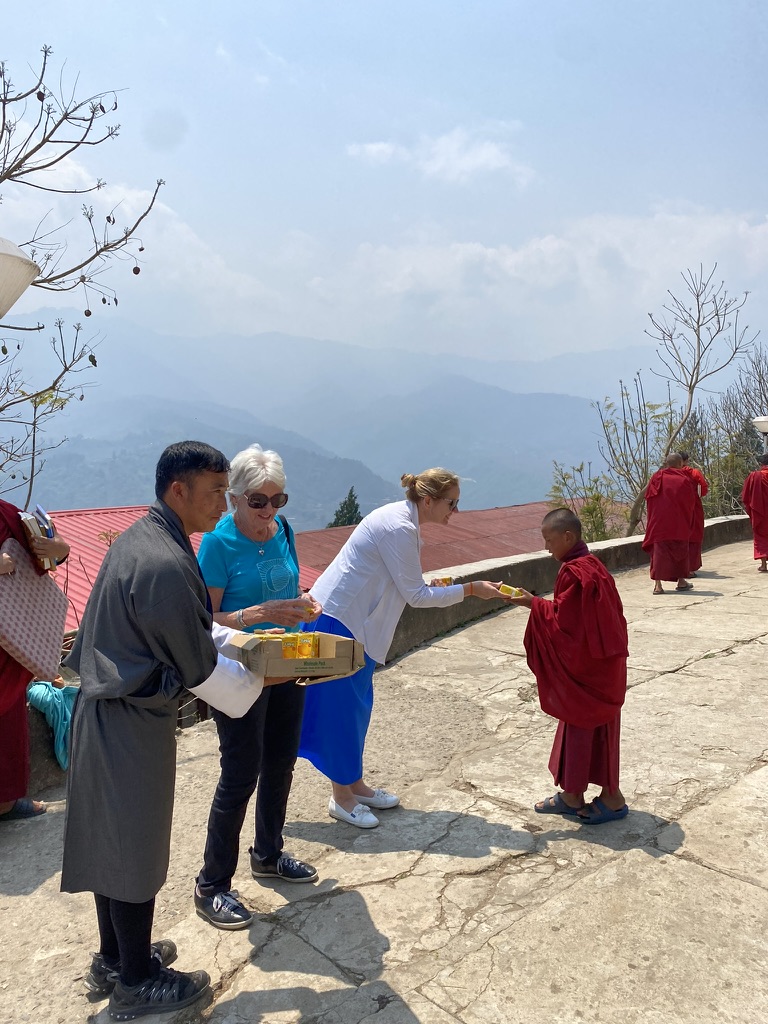
We met many of the students and offered them a traditional offering – in this case a small popper juice which the little ones loved – and then went into the temple climbing to the upper floor. The room overlooked the valley and was filled with statues and images of various gods. The altar was literally overflowing with offerings including some very elaborate cakes. These, we were told, are the ritual cakes and the young monk we spoke to was very proud to claim that he had made that particular cake. I was surprised that he spoke English so well and he told me that he loved to practise speaking and that they have English lessons every day from 7 – 8 pm. Subjects such as Buddhism, health and disease and basic science are taught in English. The next surprise we had was that there is a computer laboratory there and students are taught the basics of computer science and software although there is no internet connection there – yet!

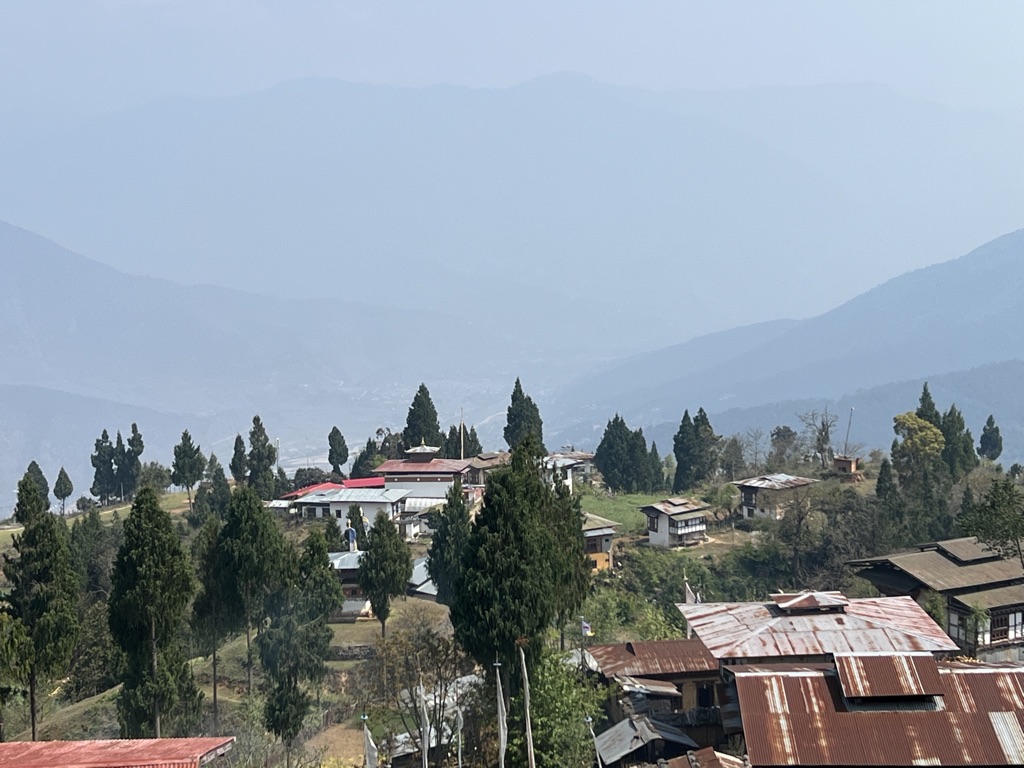
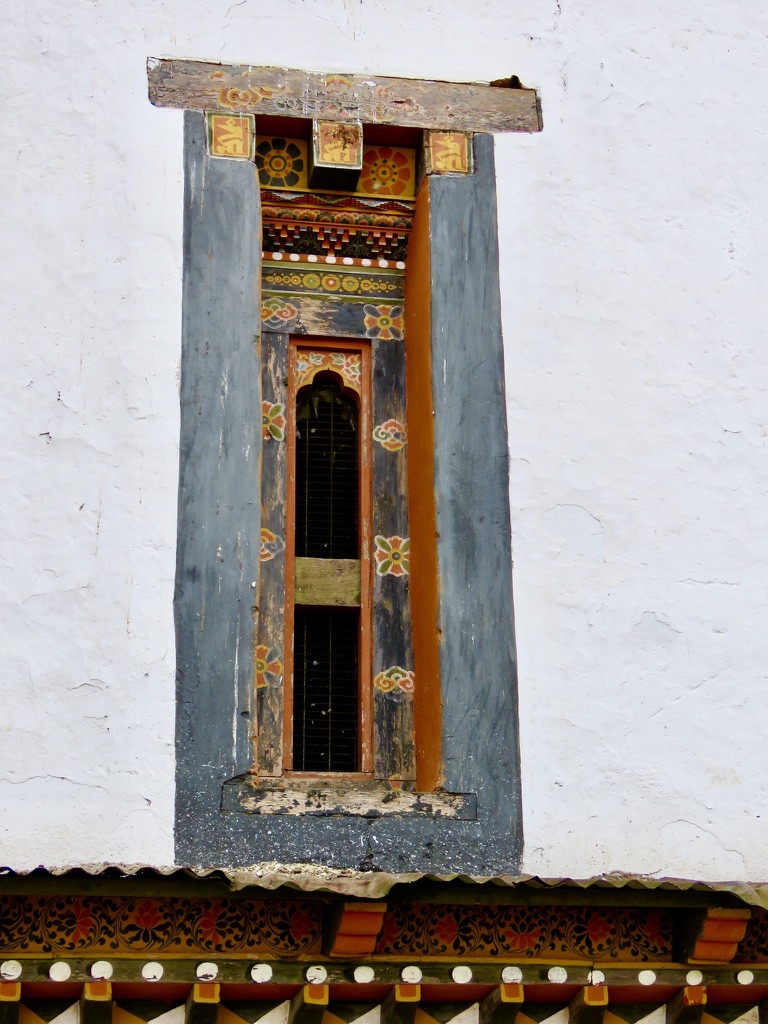
Our final stop on this interesting day was via a village nearby called Talo Village. We walked through the woods to a very old temple that sat in the midst of beautiful gardens. There were a lot of temple dogs playing on the grass and a few local people entering the temple. This temple does not allow visitors and is apparently very old which was evidenced by the painted windows and the old door. Chencho and Sonam entered to offer prayers whilst we stayed outside and played with the dogs!

A fabulous day with so much information that we needed time to absorb it all so it was back to Punakha and the comfort of our room, ginger tea and a relax. Tomorrow is another day.

PUNAKHA VALLEY , BHUTAN

DAY FOUR: KHAMSUM YULLEY NAMGYAL CHORTEN AND PUNAKHA DZONG

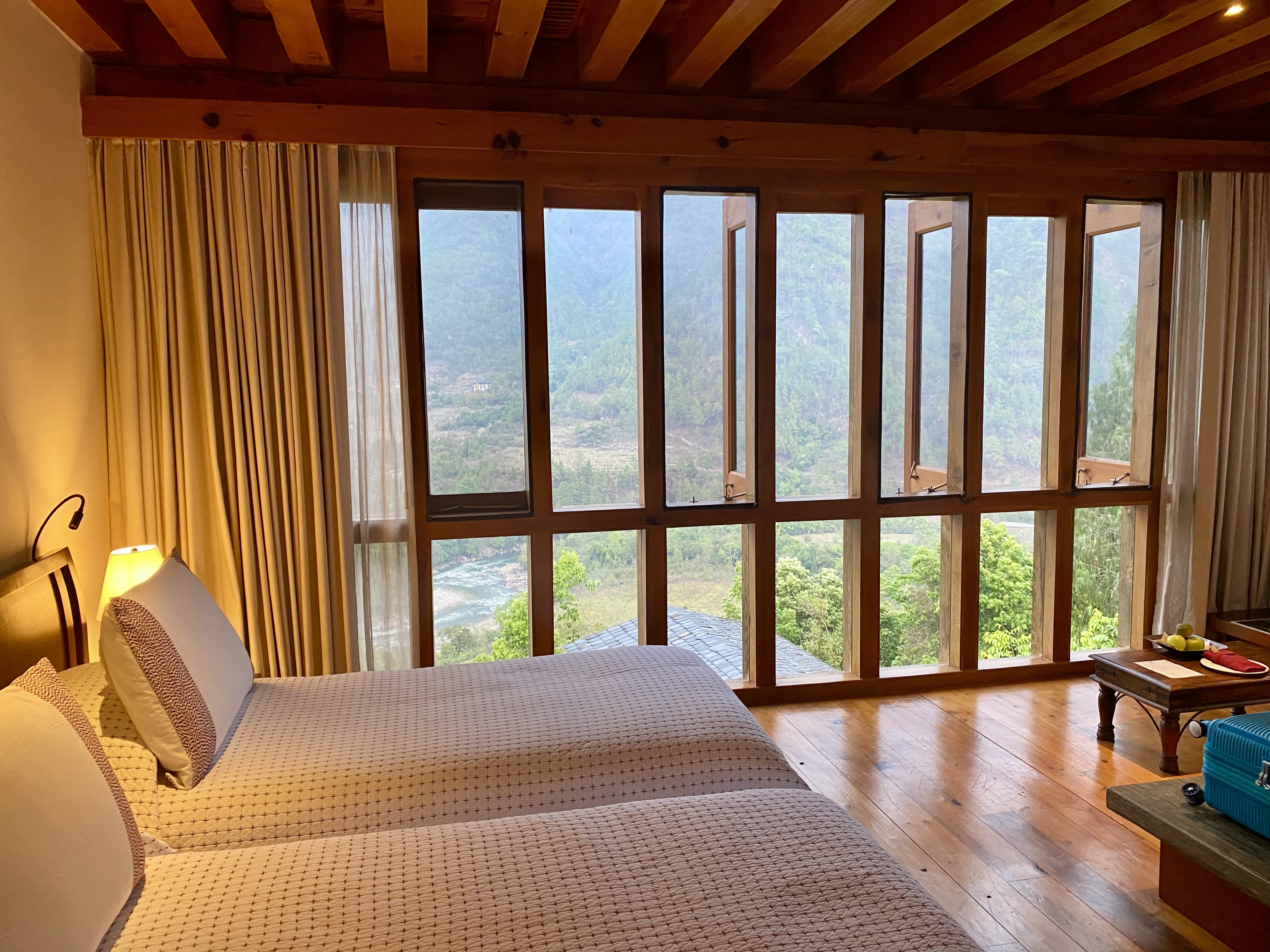
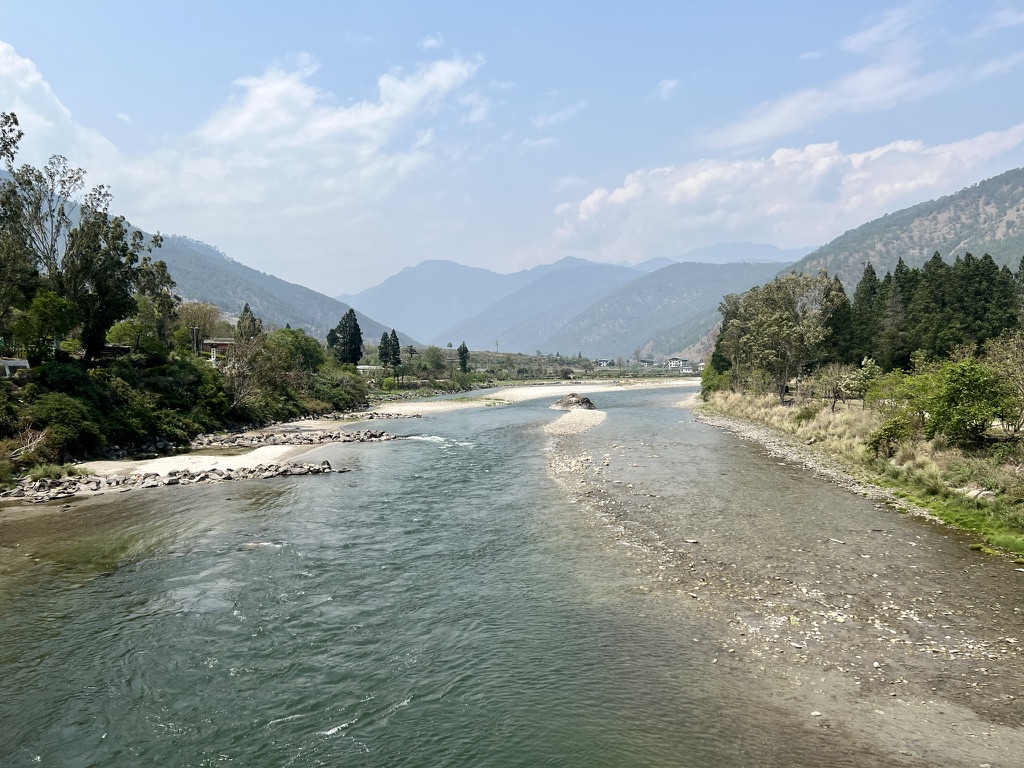
We awoke to stunning views of the valley from our hotel room. This location is absolutely divine. Quiet, serene and surrounded by tall mountains of green. The town of Punakha is at the junction of two beautiful rivers, Po and Mo Chuu which translate as Mother and Father rivers. The valley is known for rice farming – both red and white rice.

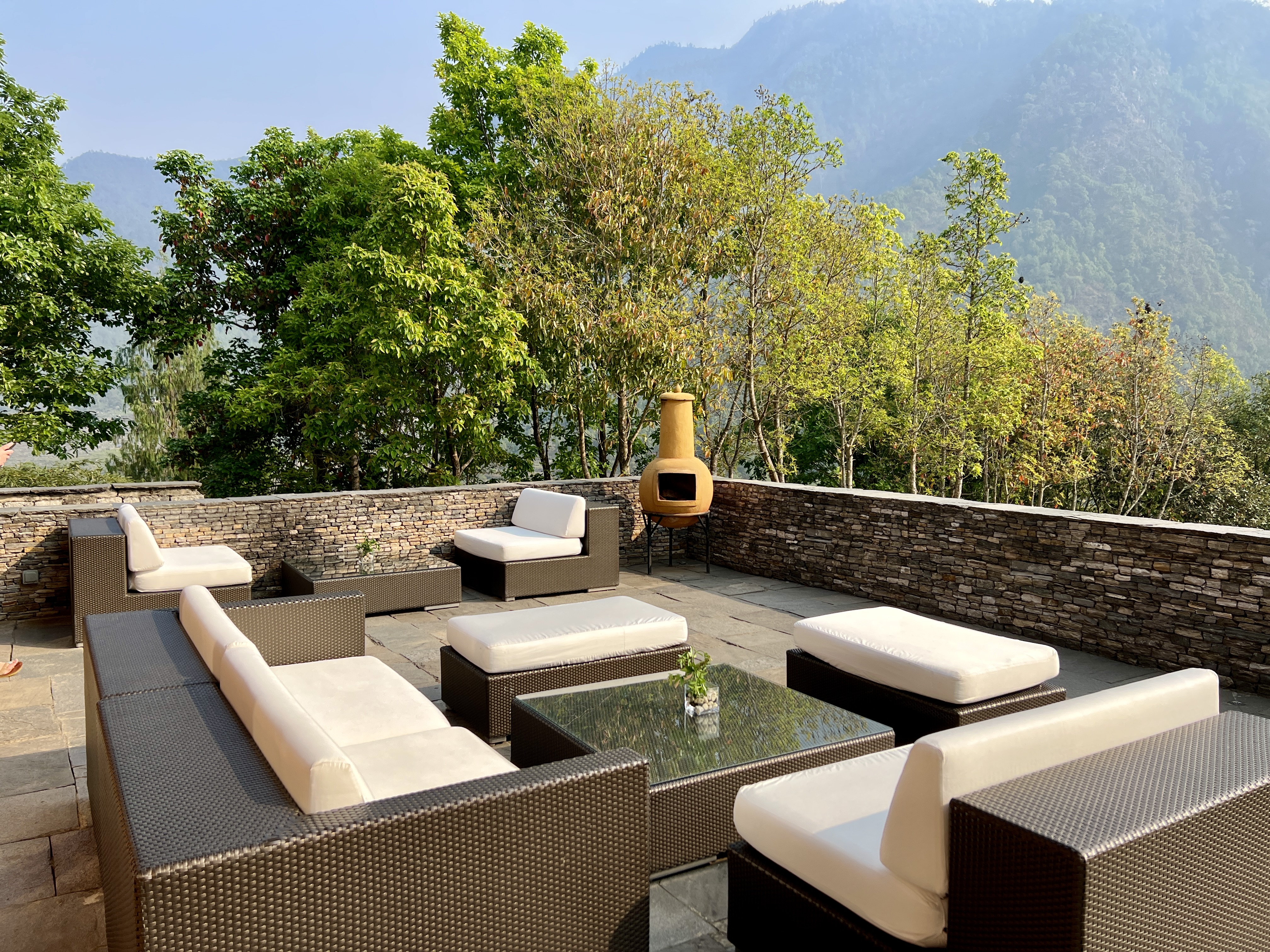
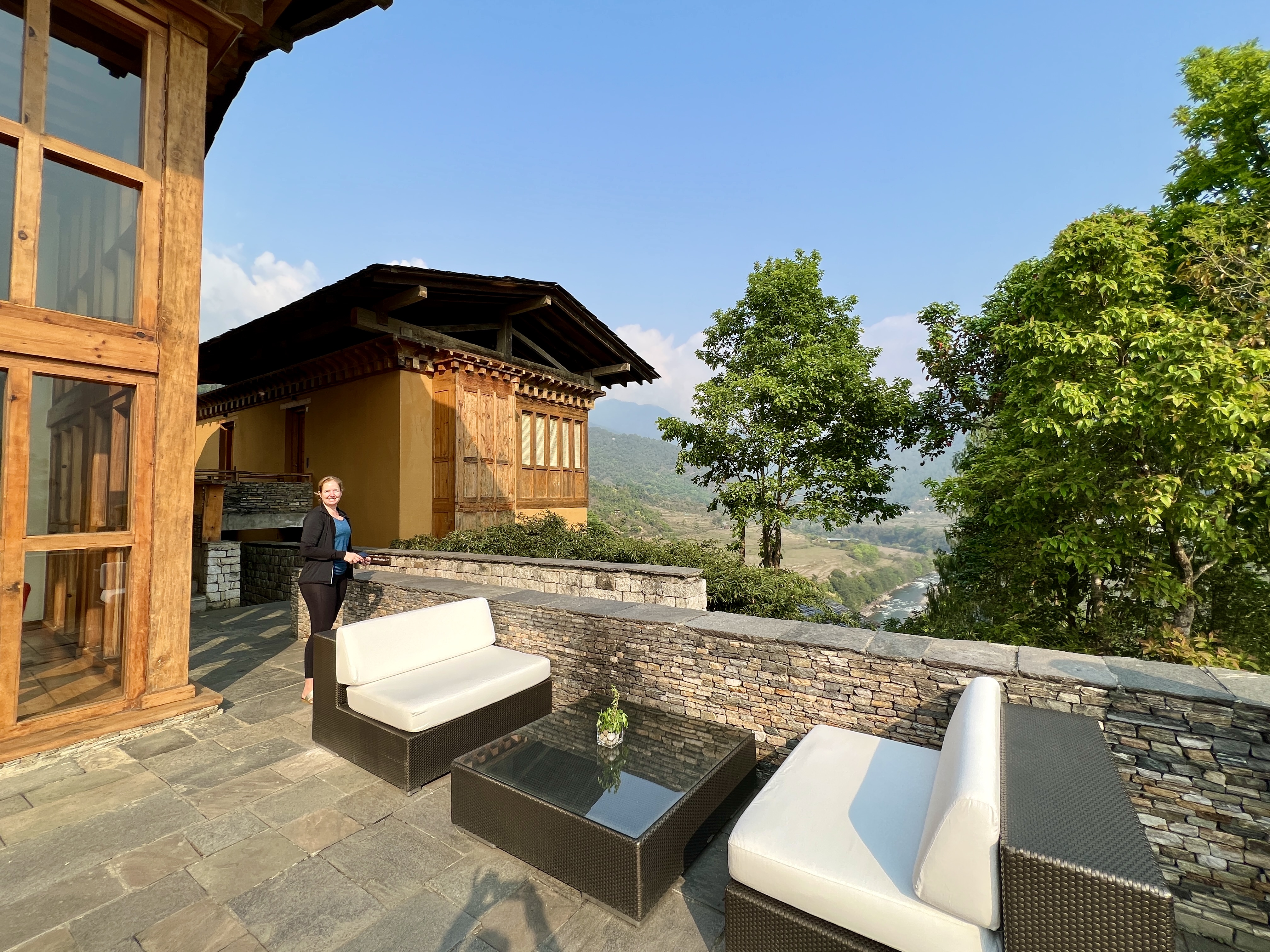
Como Uma Punakha hotel is built in the Bhutanese style but with modern comforts. A small hotel, the terrace is the focal point for visitors to enjoy the view, have drinks and or meals and to relax. It was wonderful to sit out on the terrace in the early morning, drink coffee and have breakfast whilst gazing at the mist covered mountains. As usual we were accompanied by dogs and a resident cat as well as birds of all colours.

View from our room
Our room

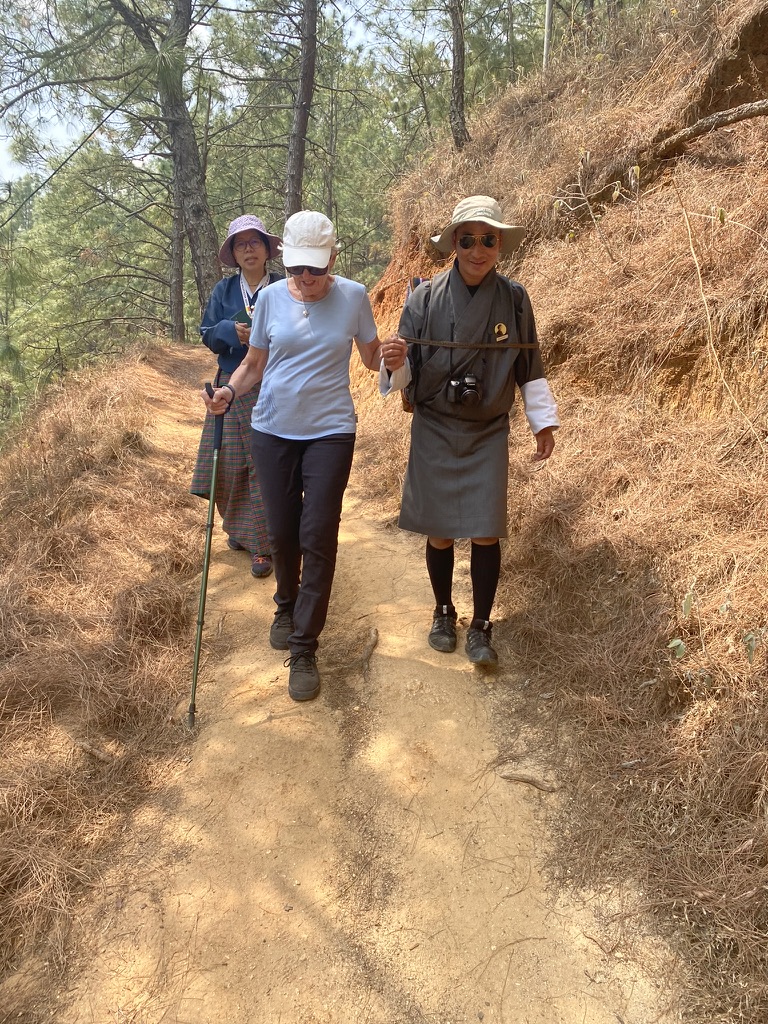
“Today we are going for another hike” said Sonam. It was to a beautiful temple built by the Queen Mother in 2004 to ward off evil spirits in Bhutan and around the world and to bring peace to all living things. “It will take about an hour going up” she said. Thank goodness for the walking poles! There is no road to the stupa and everyone – even the Queen Mother – has to walk up a narrow path through farmlands.

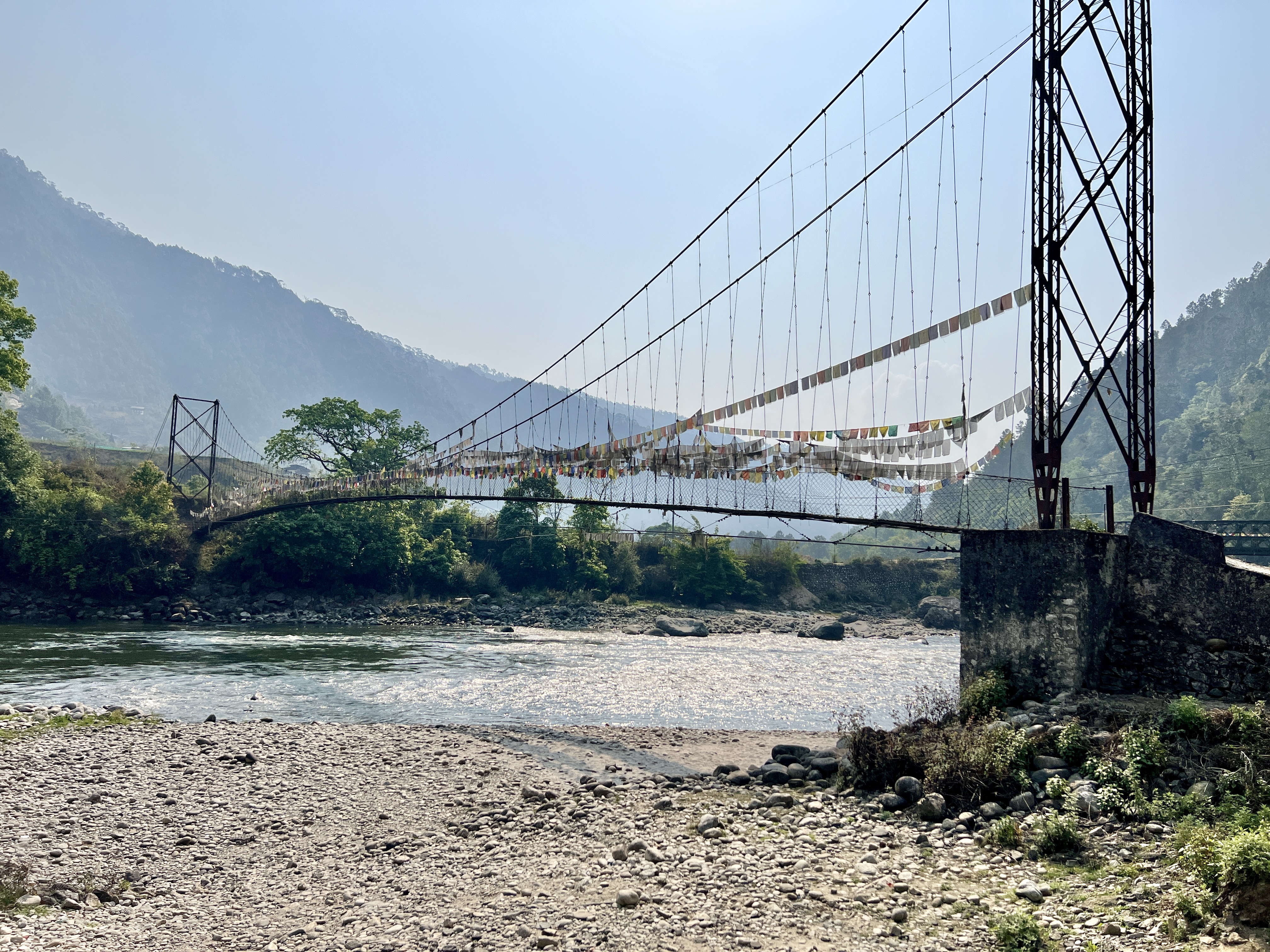
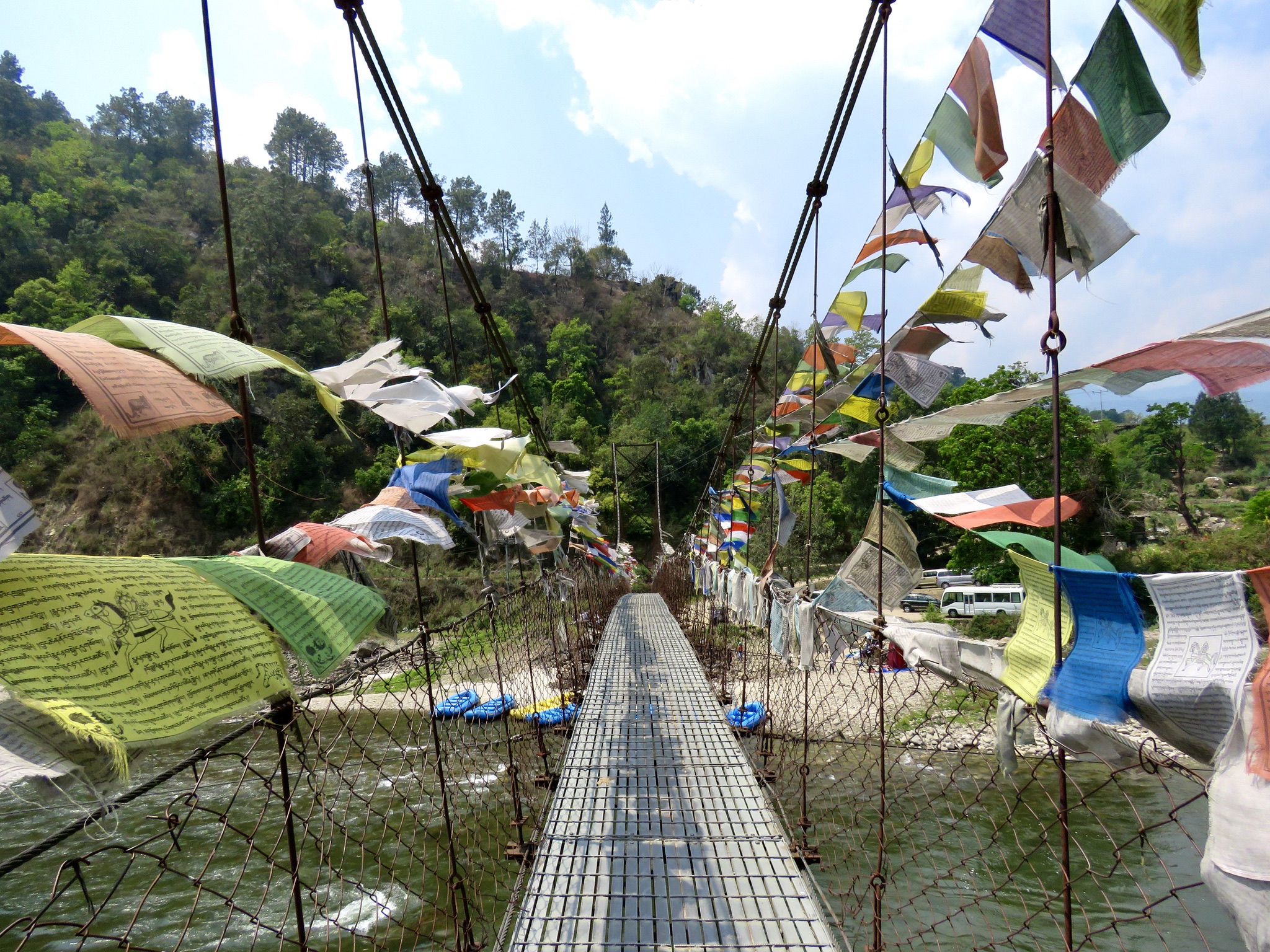
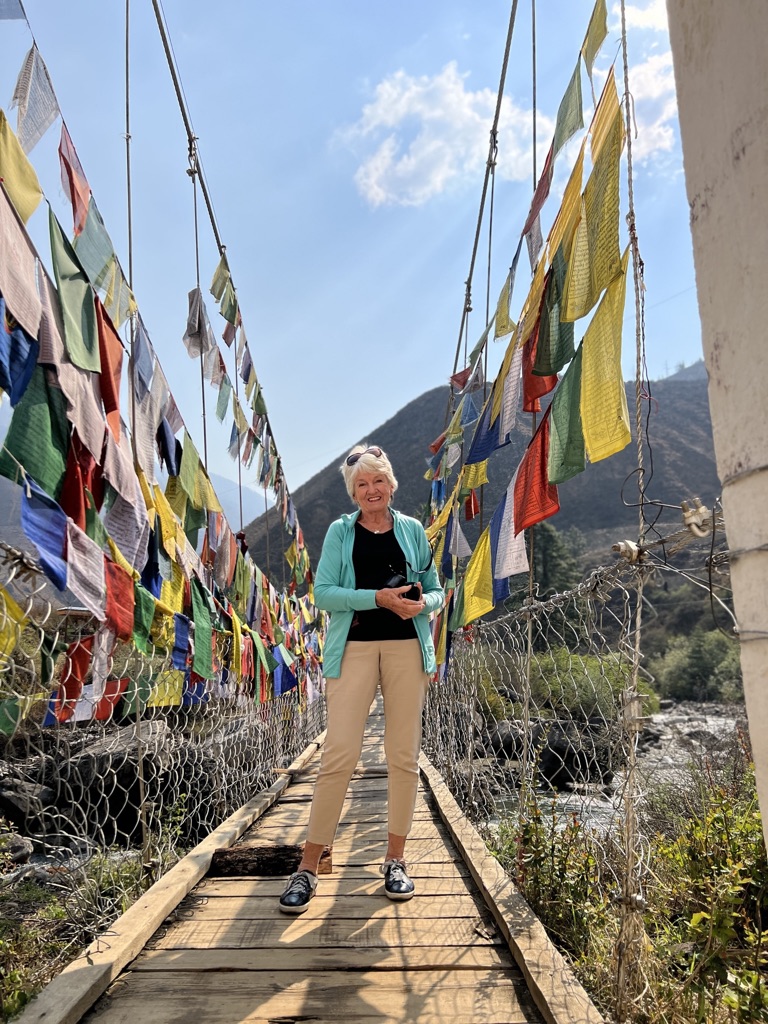
Chencho arrived with the car to take us to the river crossing where we had to walk across a suspension bridge, again adorned with hundreds of prayer flags. The bridge sways as you walk on it so it is best to look ahead and not down to the rapidly moving river below!

Once on the other side we set off along a small path and the scenery was so exquisite that several photo stops were required. We walked through acres of rice fields and other vegetables and eventually came to a rest stop with a large prayer wheel. Here Chencho produced delicious watermelon juice and ginger tea with snacks whilst we paused to take everything in.

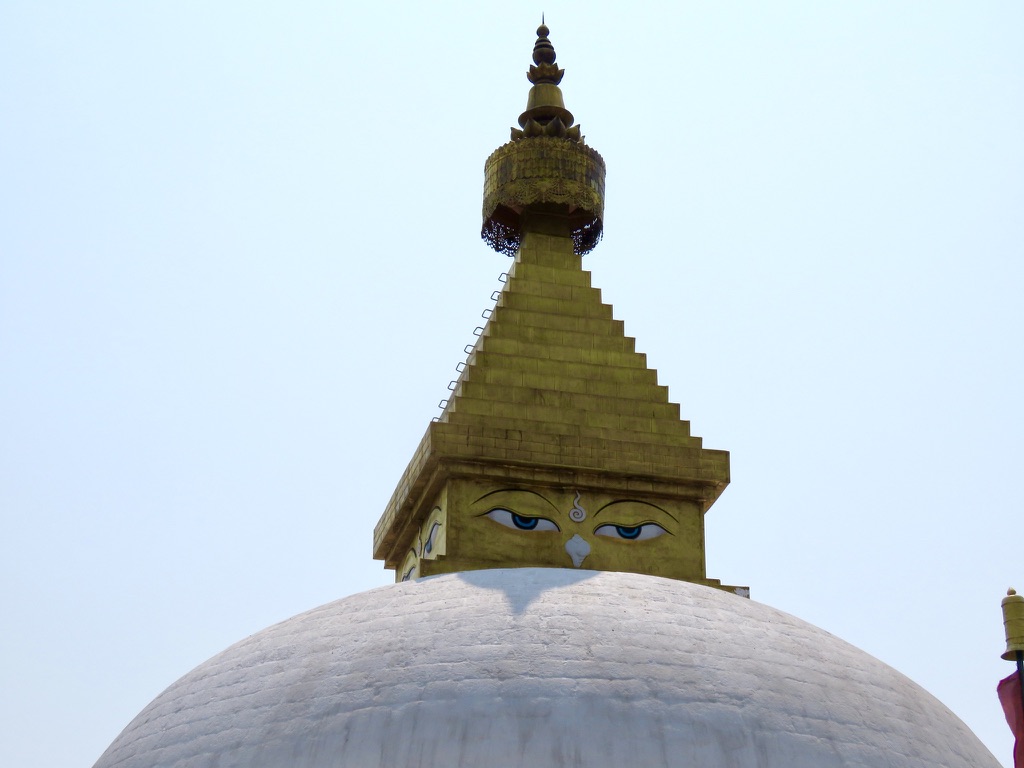
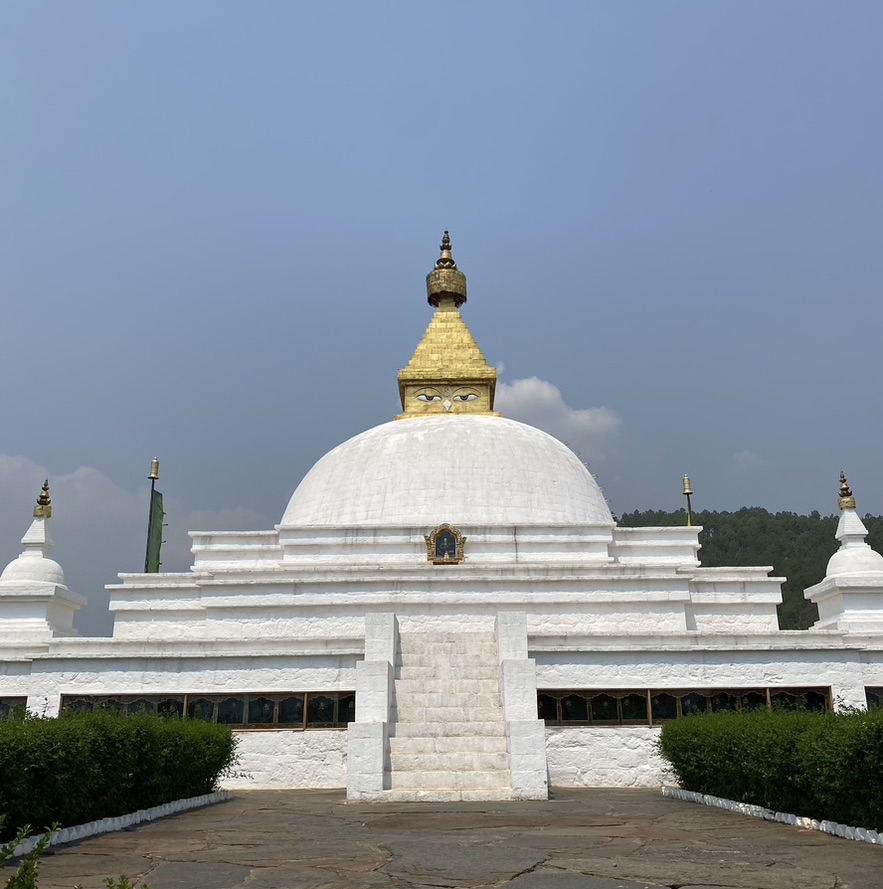
Finally we could see the beautiful stupa high on the mountainside, it’s golden roof glowing in the sunlight.

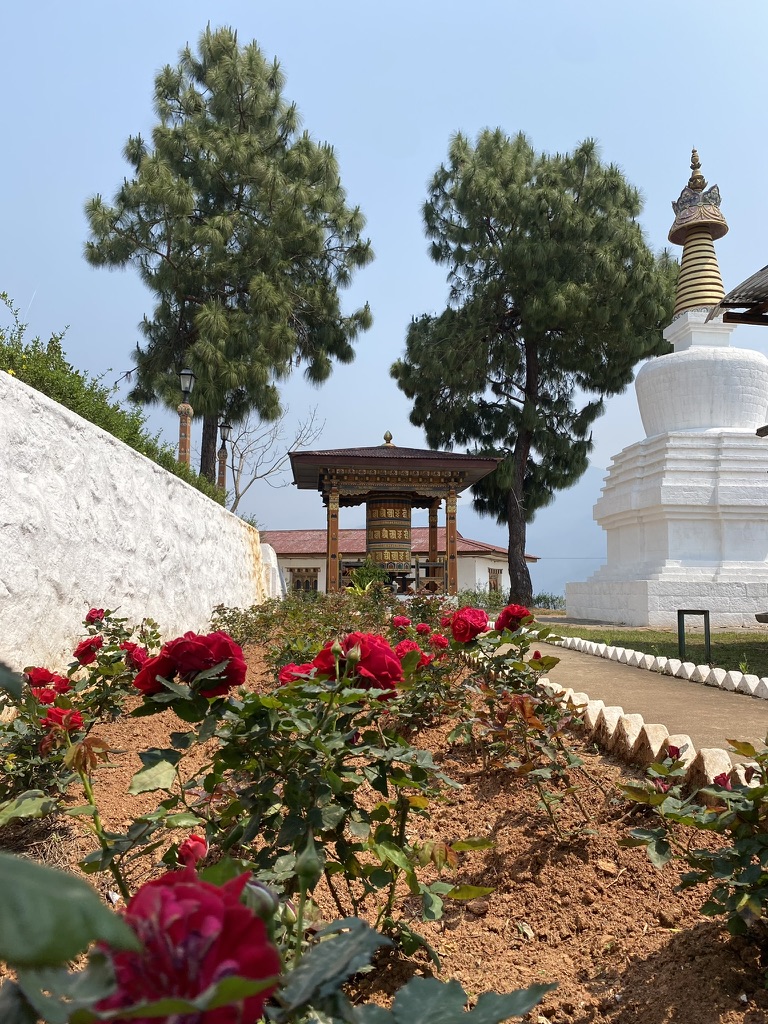
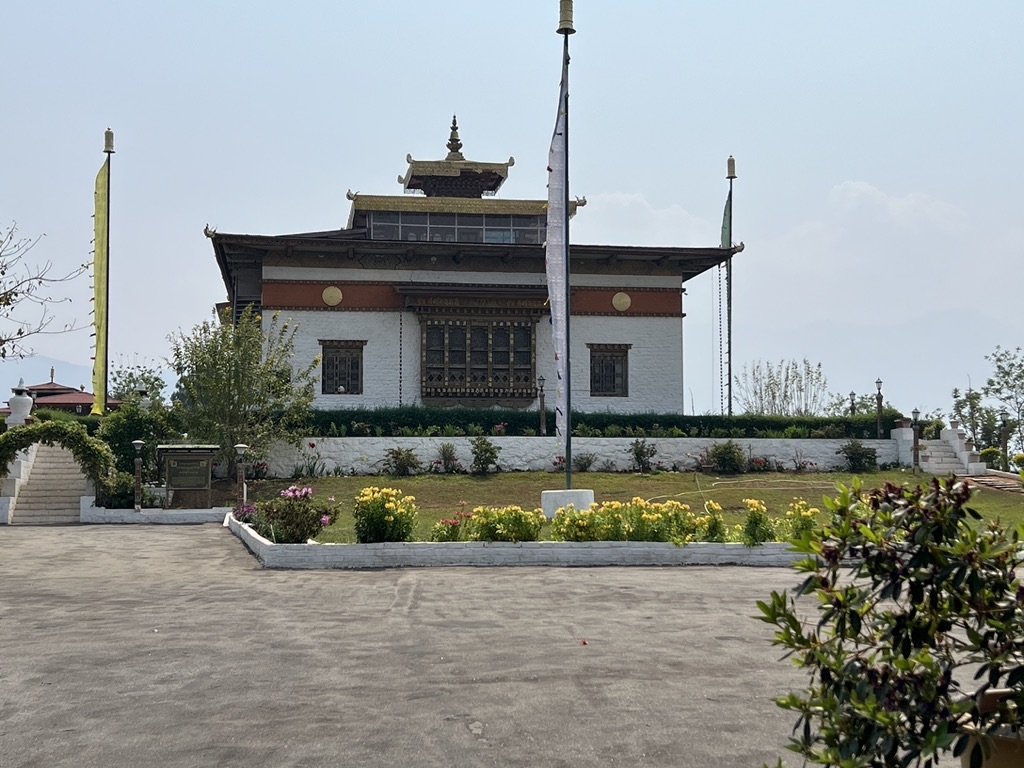
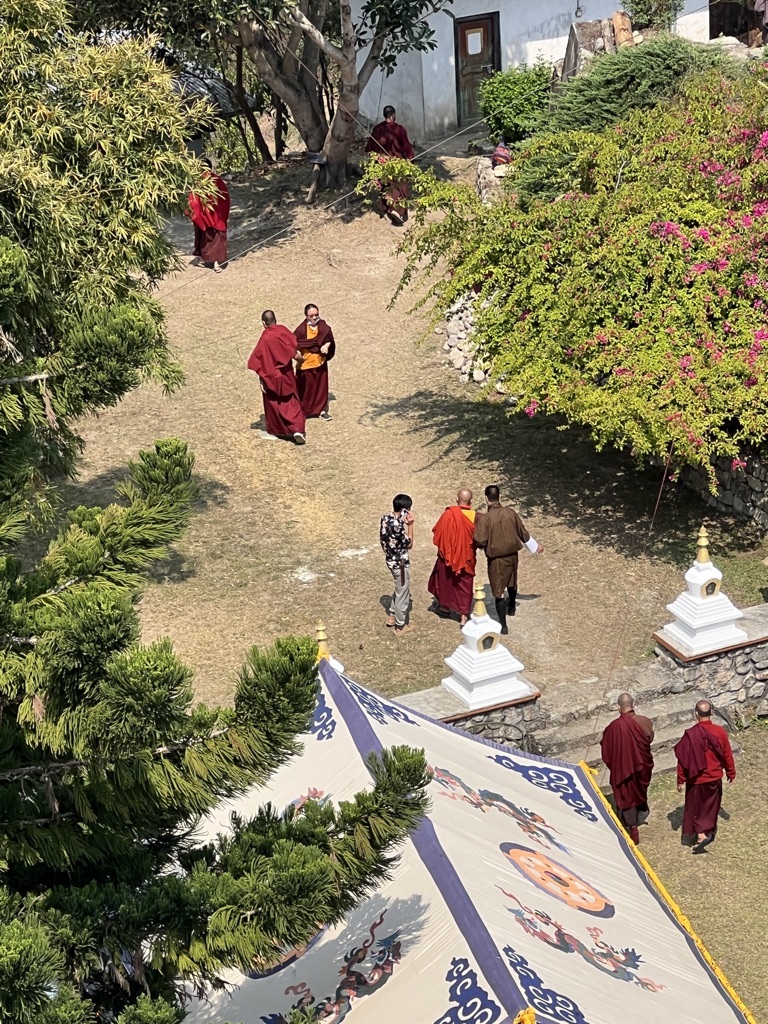
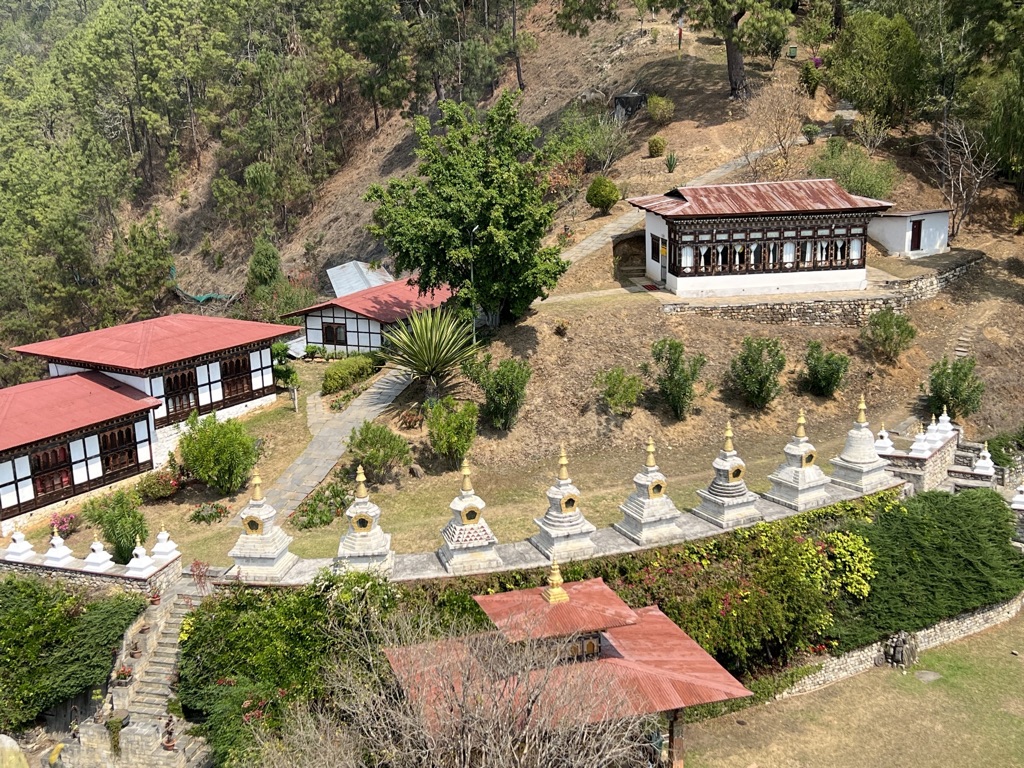
The four storey pagoda style building has a powerful presence and one can feel the peace and harmony that was the intention. Several smaller stupas surround it and from the rooftop there are spectacular views. Monks dressed in red were gathering for prayers and as we entered we heard the wonderful chanting which is very meditative and for which Tibetan monks are famous.

View from the rooftop

Going down was easier than the ascent and again we crossed the bridge with the flags promising us a safe journey.

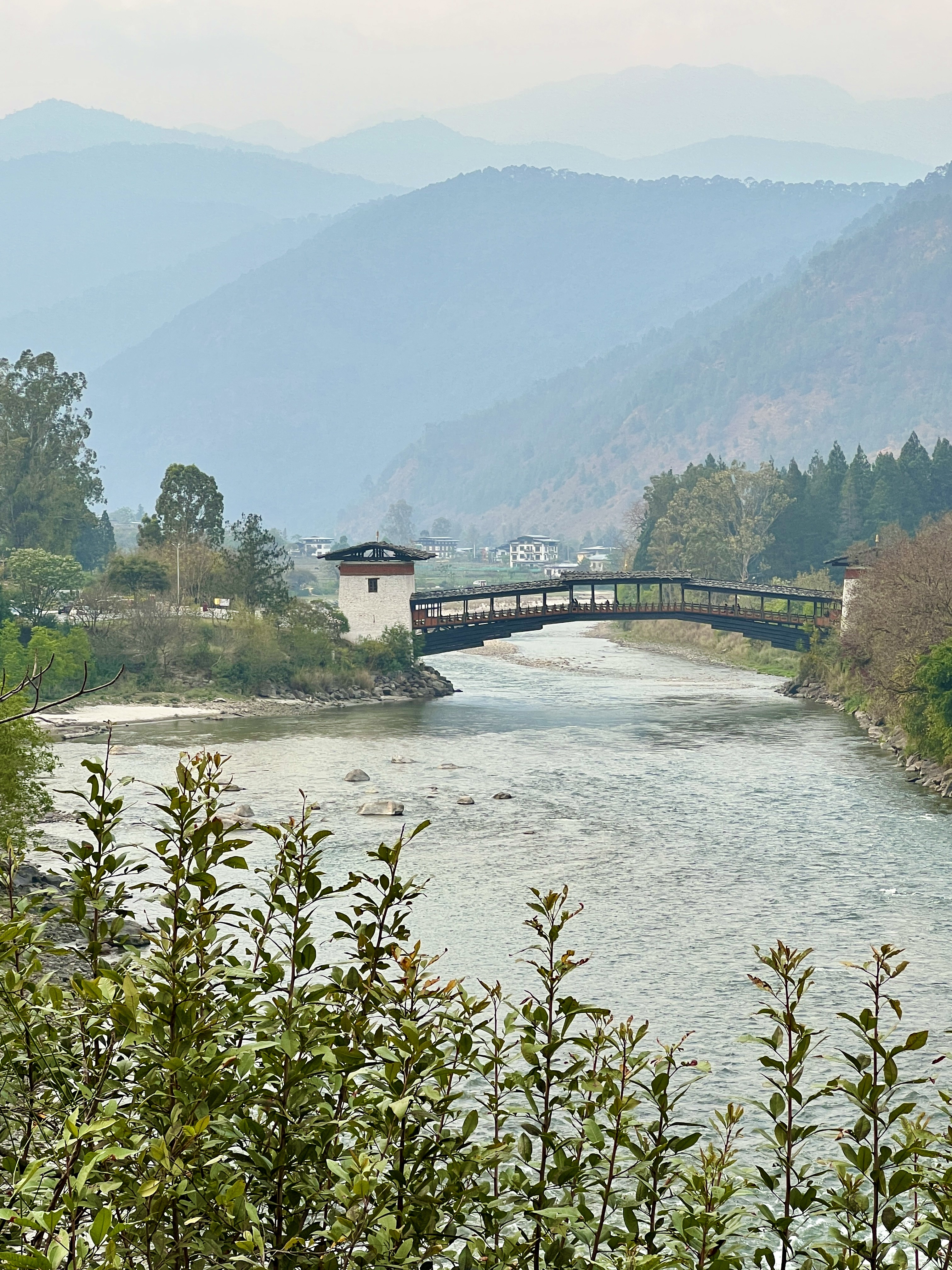
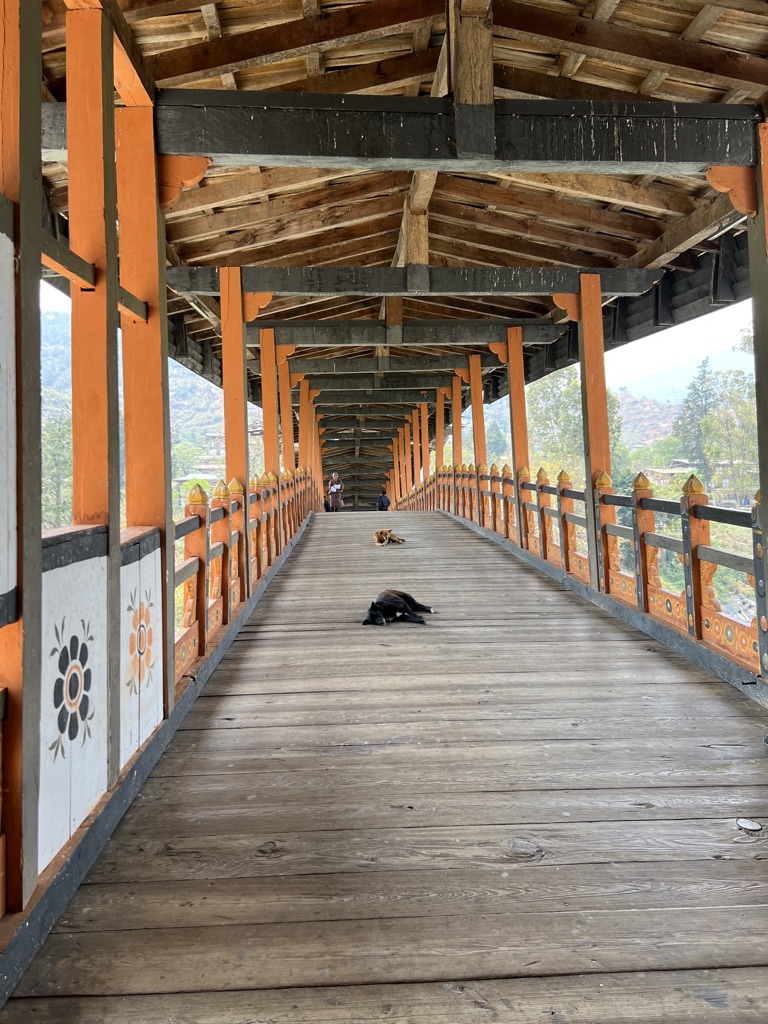
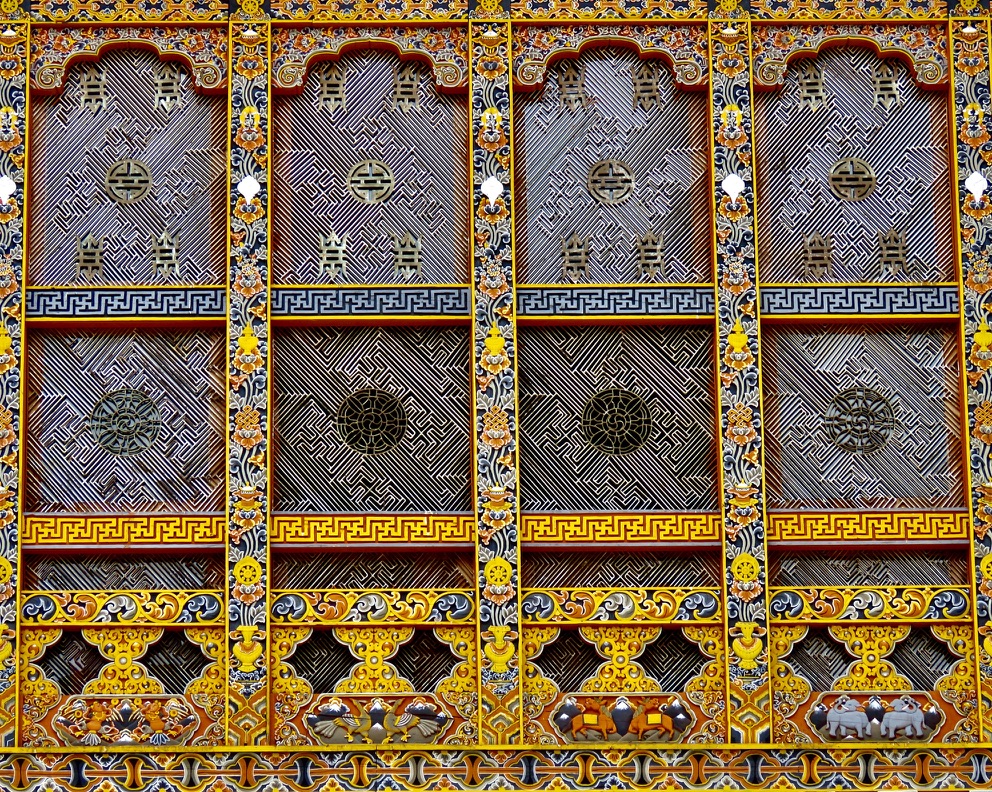
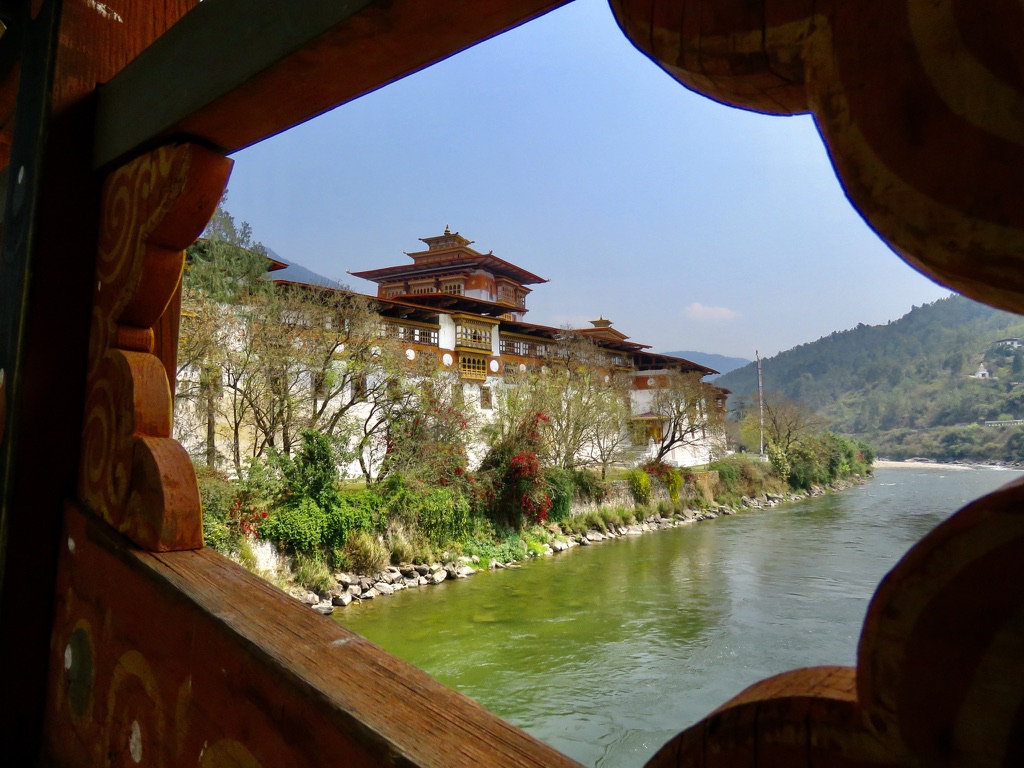
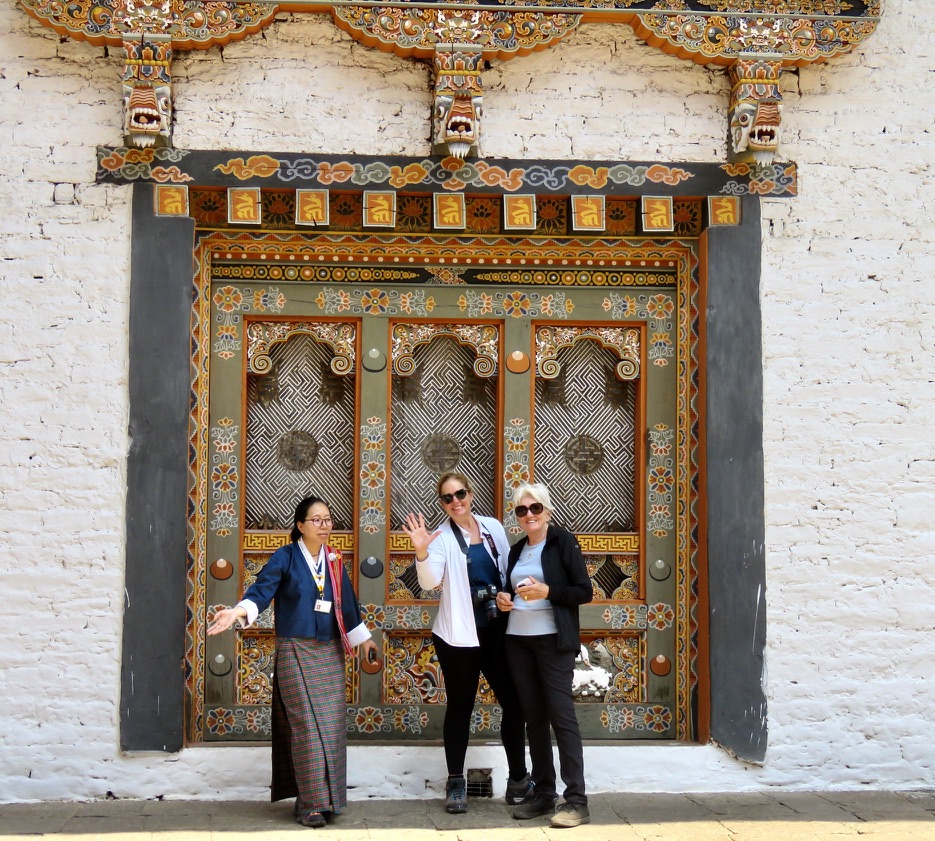
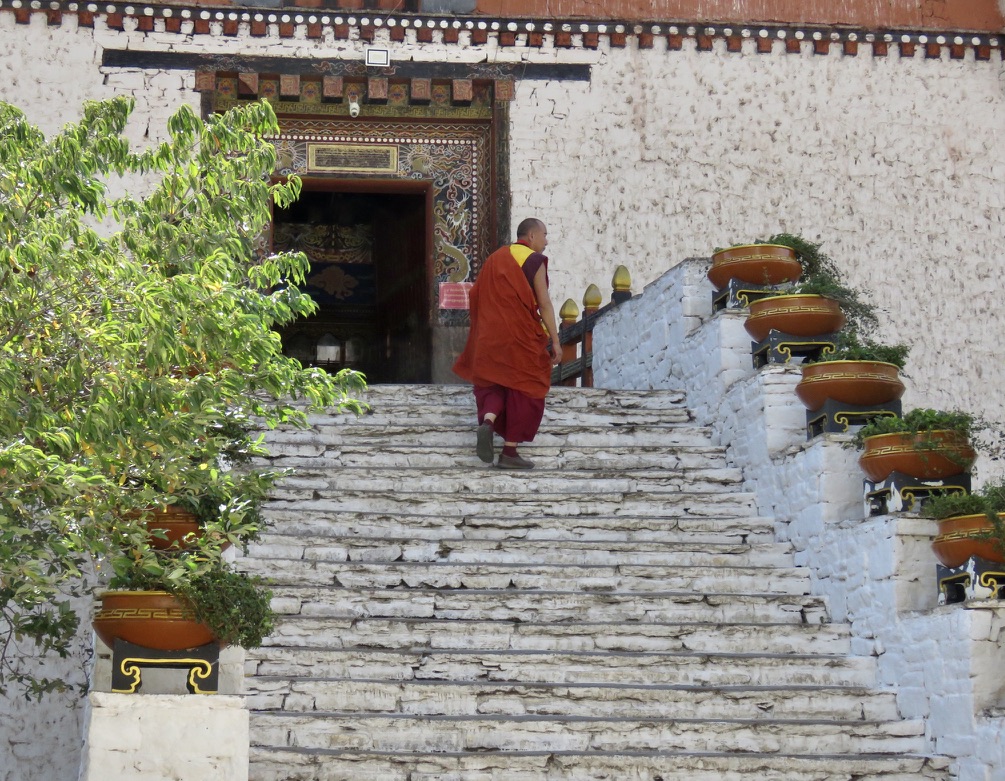
After lunch we drove to the majestic Punakha Dzong which is said to be the most beautiful in Bhutan. It is built where the two rivers meet and is the winter residence of the Head Abbot and the central monastic body. It is also where the King was crowned and it houses several very important and ancient relics. To enter the building we had to cross the wooden covered bridge. Inside we found the most beautiful buildings built in traditional style and colourful doors and windows. Monks were mingling, their red and saffron robes swirling in the breeze.

We were lucky to meet one of the chief Abbots who asked if we would like to light candles in memory of a loved one – this we did and felt very privileged and honoured. I felt this Dzong has a special significance and will always remember this place.

THIMPHU / PUNAKHA BHUTAN

DAY THREE – THE CAPITAL AND A BEAUTIFUL VALLEY

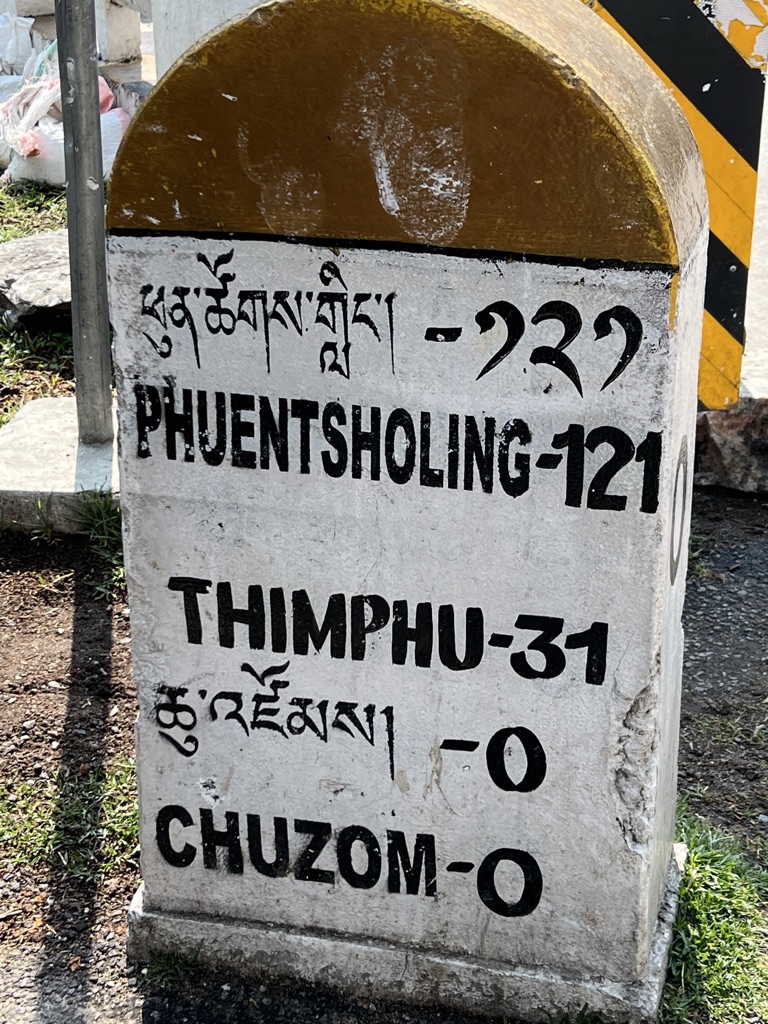
We set off early for our next stay in Punakha which is 125.6 km from Paro – approximately four hours drive away. This seems slow to us but this is due mainly to the winding roads and mountain passes. Very different road conditions to what we are used to!

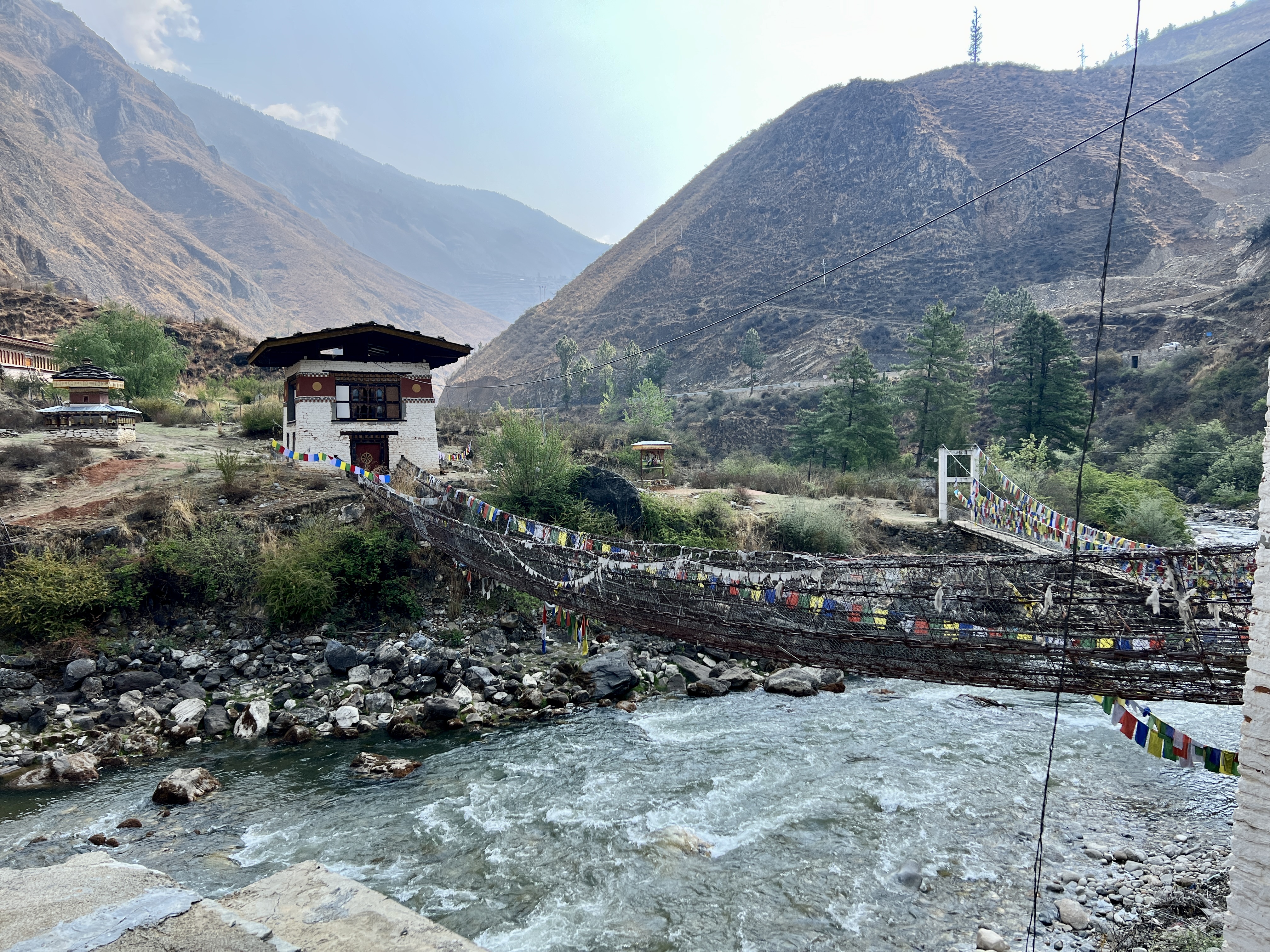
Our first stop was at Tachog Lhakang – or the Iron Chain Bridge. This remarkable structure is 600 years old and made of wood and metal and crosses the Paro Chuu river. It was built by Thangtong Gyalpo in the late 1300s, who is said to have built 108 bridges all over Tibet and Bhutan. His intent was to help pilgrims get to holy places. This is the first bridge to have ever been built in Bhutan. It is fragile now so a new wooden swinging bridge, decorated with masses of prayer flags, has been built close by for those who wish to cross the river to the temple opposite.

Next to the bridge on a hill is a private temple with a chorten housing more of the Tsa Tsa memory cones. As you cross the bridge there is a beautiful shrine depicting the Bhutanese Royal Family who are very revered in the country.

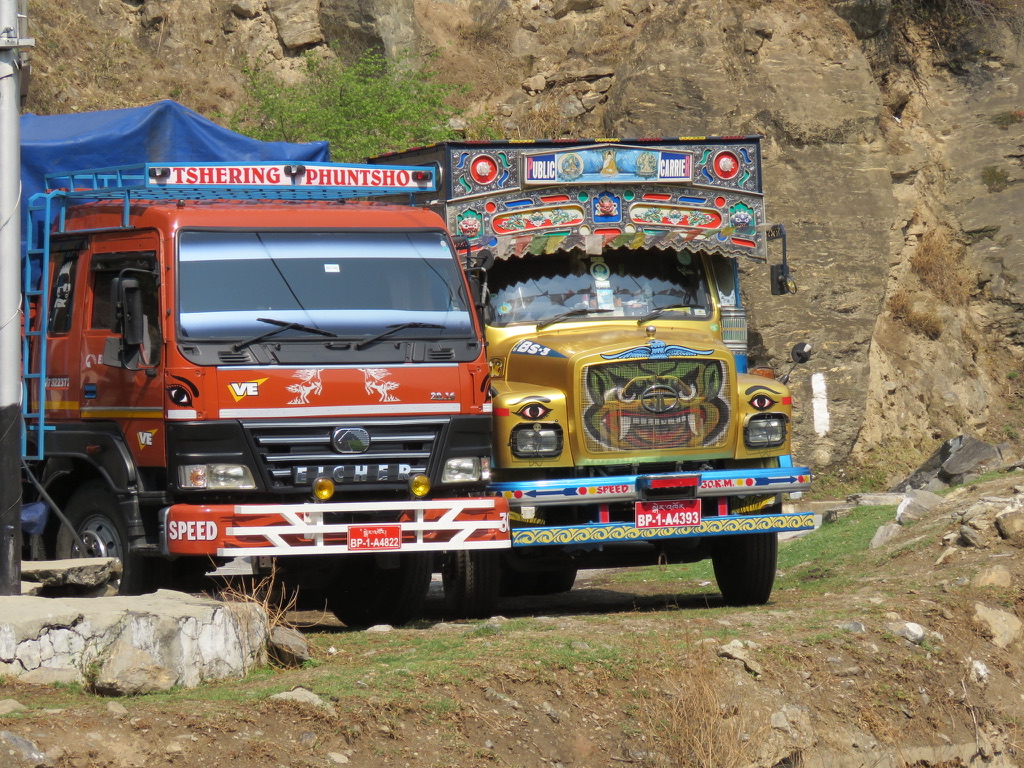
A little further on we stopped at the road junction – signposts to the border to India close by and colourful trucks about to make the journey were lined up. There were coffee shops and a little general store were open for travellers but the nearby market stall was what captivated me. The stacks of fresh fruit and vegetables, not to mention baskets of red hot chillies, had been brought in earlier that morning and according to our guide, would be gone by evening.

Here also just below the road bridge was a trio of chortens at the place where the two rivers meet – the chortens represent the three primary styles – Tibetan, Nepali and Bhutanese.

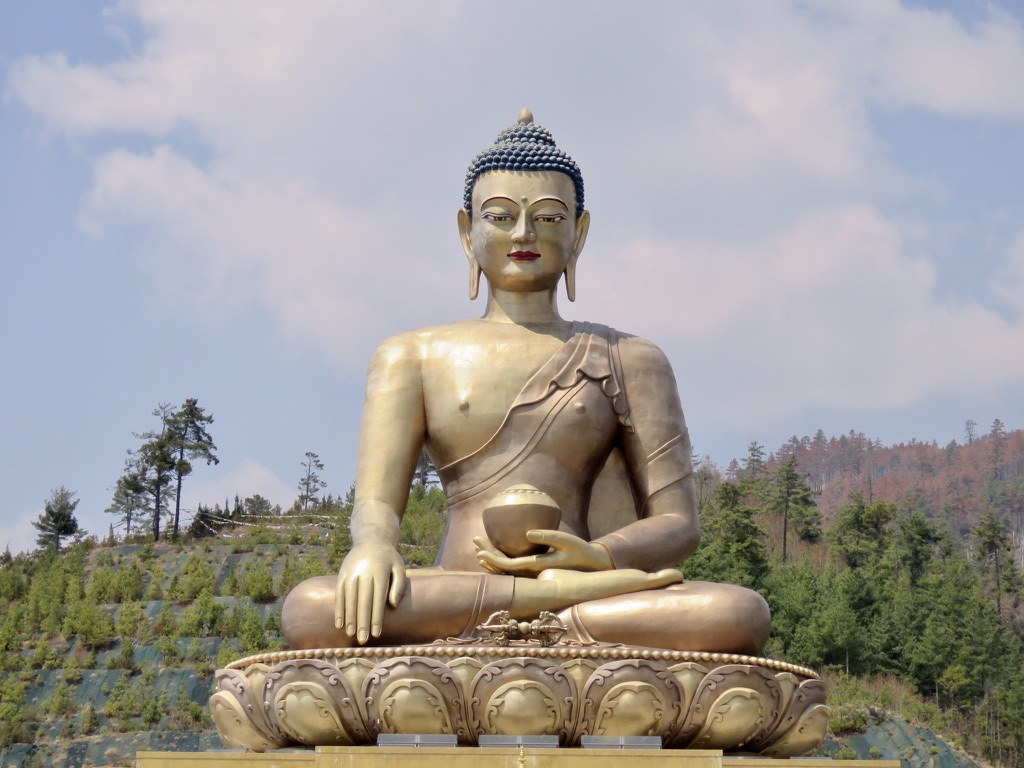
Thimphu, the capital city, is 52 kilometres from Paro and is the fifth highest capital in the world by altitude – a fact mentioned to us by Sonam as the city ranges in altitude from 2246 m to 2648m and it is not unusual to feel breathless. That fact was proved as we drove up the mountain to visit the giant Buddha Dordenma statue. This massive Buddha sits at the top of the mountain overlooking the city of Thimpu and surrounded by valleys. Said to be the largest sitting Buddha in the world it is 52 metres tall and is made of bronze and gold plated. To reach the statue and temple we had to climb what seemed to be about a thousand steps!

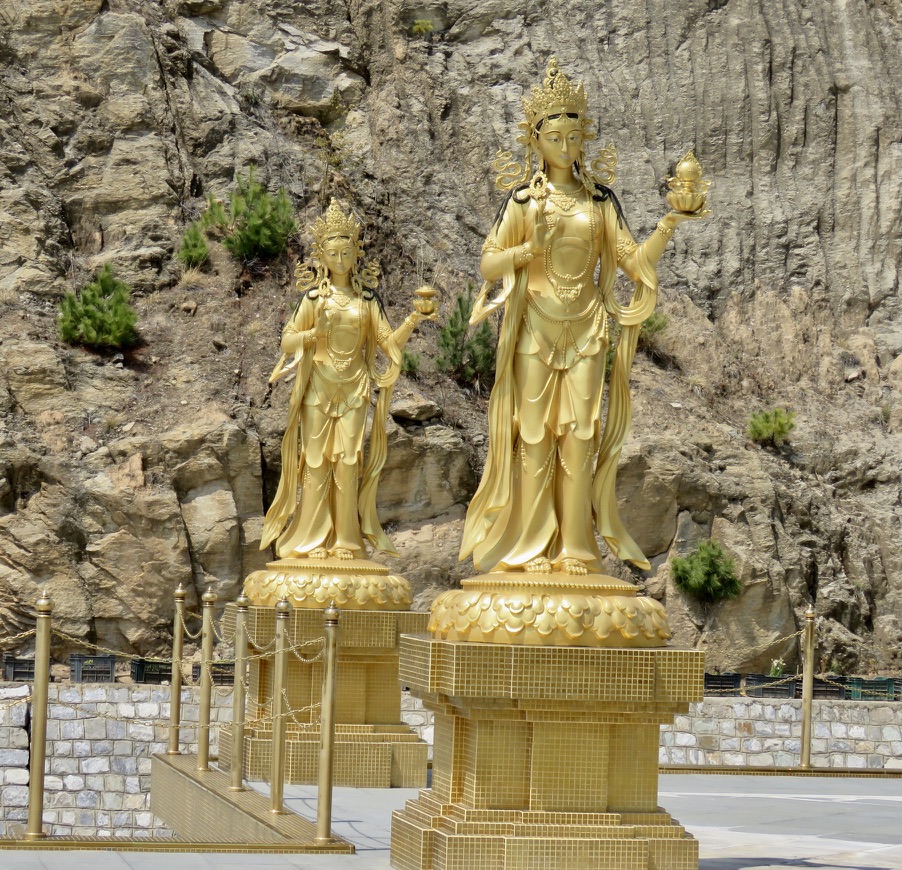
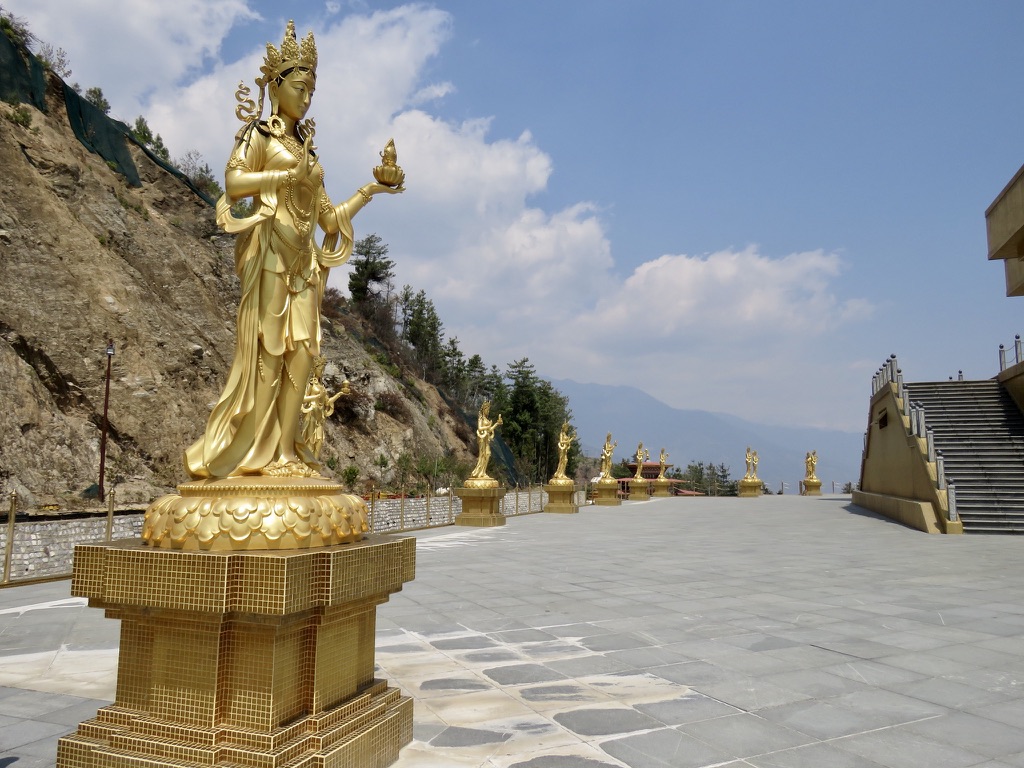
Inside the temple itself there are 100,000 smaller gold buddhas embedded along the interior walls and we were told we could buy one to put in the wall and that would guarantee many blessings. It was all overwhelming but there was a sense of peace and a strong energy all around. On the perimeter were golden goddesses and other icons pertaining to the creator.

The view of the city of Thimphu from the statue

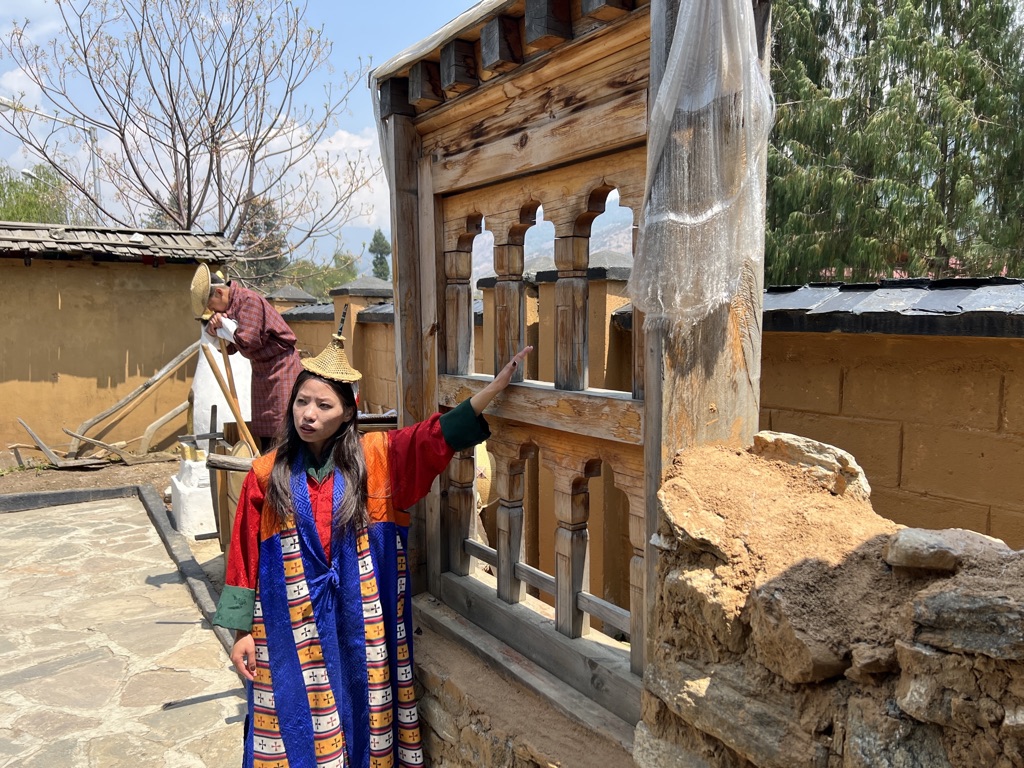
Being very interested in the traditional way of life in Bhutan, Sonam suggested we go to Simply Bhutan which is an interactive ‘living’ museum and probably the next best thing to learn about life there without having to spend months in the country. Visitors are greeted with a shot of local arra (rice spirit), before being guided through mocked-up village scenes. Along the way, you can dress up in traditional clothes, try out archery and hear songs sung by Bhutanese women as they build houses out of rammed earth.

Here we are at a traditional farmhouse where corn and chillies are dried on the roof.

Thimphu is a rapidly growing city and to date has no traffic lights however, there is one traffic policeman at the busiest intersection who guides the traffic in an almost theatrical manner on his little “stage”.

Astrology is an important part of Bhutanese life and locals rely on astrologers for advice on their health, money, luck and careers. Farmers will plant crops when the astrologers predict is the right time. The only college of astrology in the Himalayan Kingdom is Pangri Zampa and we visited there just as an important nine day festival was about to begin. Monks were busy setting up stalls and decorating the temple ready for the throngs of people who visit to pray for the wellbeing of all and peace and prosperity for the country. I also had a reading from a senior monk who spoke no English, so a lot of interpretation was required and I am still processing it all! As usual there were a few dogs around and one in particular seemed to take a liking to me and followed me everywhere. I wished I could take him home but apparently he had spiritual connections to the location of the monastery.

It was time to set off for Punakha and we drove out of town and up to the incredible Dochula Pass. One of the highest in Bhutan at 3,140 m and has amazing 360 views across the Himalayan mountains which apparently are very clearly visible in the winter months. For us, there was haze due to the many “forest fires” the farmers had started but we enjoyed the whole experience and the scenic views. It was cold but Chencho had brought flasks of home made ginger tea and delicious apple cakes which gave us some sustenance! There was a restaurant at the top and 108 chortens which are visited by locals as well as tourists. The Pass is in commemoration of Bhutanese soldiers who lost their lives for their country.

The drive down to Punakha was through forests of cypress pine, spruce and oak trees, Prayer flags were fluttering at almost every corner and small chortens by little waterfalls on the hillside had prayer wheels spinning. It was amazingly peaceful even through the road was winding and steep and probably a little scary, we felt quite calm.

The road to our hotel – Como Uma Punakha – passed by the really beautiful Punakha Dzong which we were to discover more about in the coming days.

And a warm welcome awaited us…….

PARO, BHUTAN

DAY TWO – DISCOVERING MORE

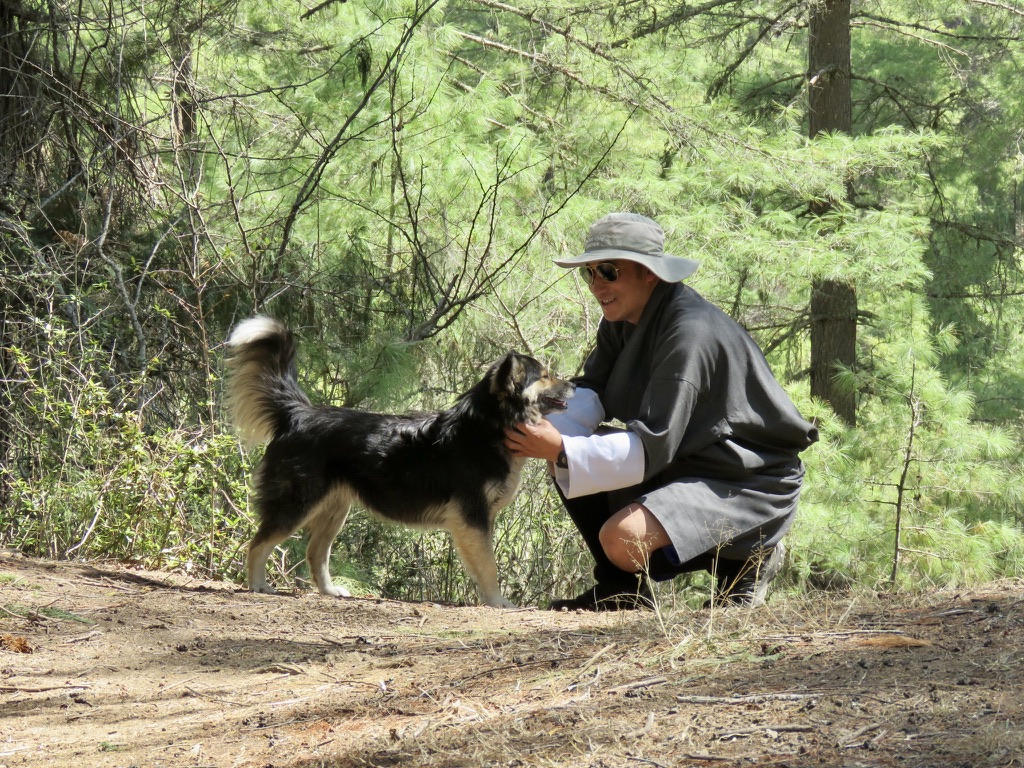
“We are going on a little hike today” announced Sonam, our guide. To say I was slightly apprehensive would be an understatement. I had heard about “hikes” in Bhutan and slogging up and down forest hills was not exactly my idea of fun. However, there was to be no discussion so off we set from the Hotel winding through the pine forests to the pretty grounds of the fortress like monastery of Zung Dzong. A little dog befriended us and showed us the way, darting off periodically to find the odd critter in the grass. The views were spectacular and as we climbed higher the whole of the town of Paro spread out before us and the snow capped Himalayas sparkled beyond.

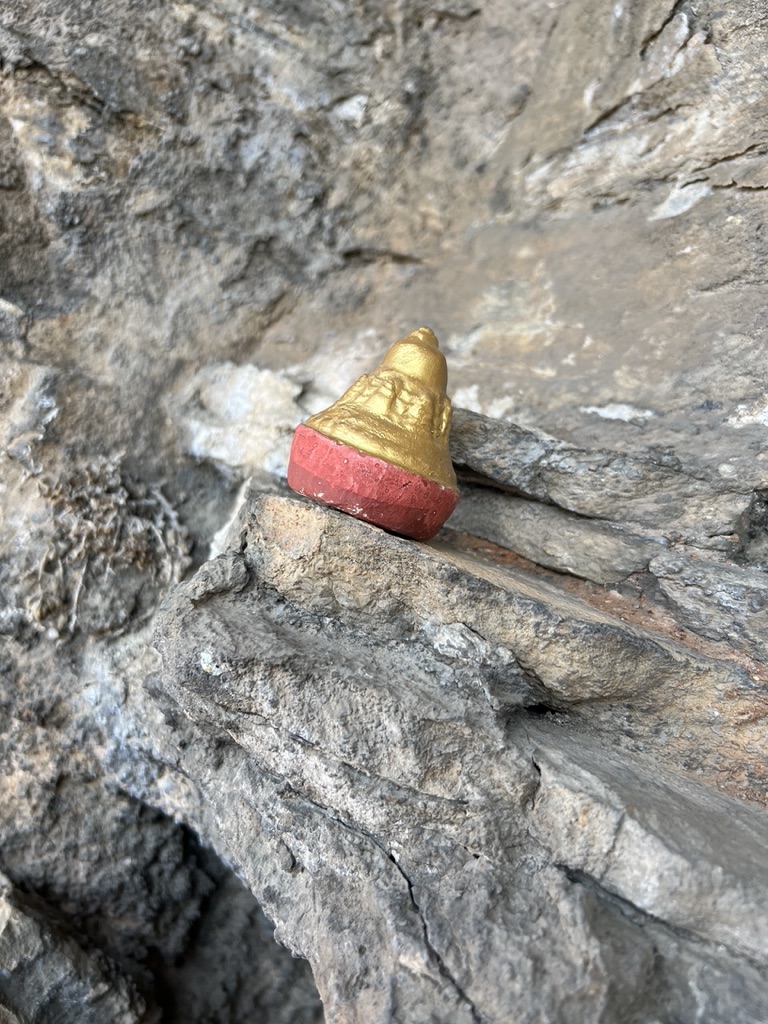
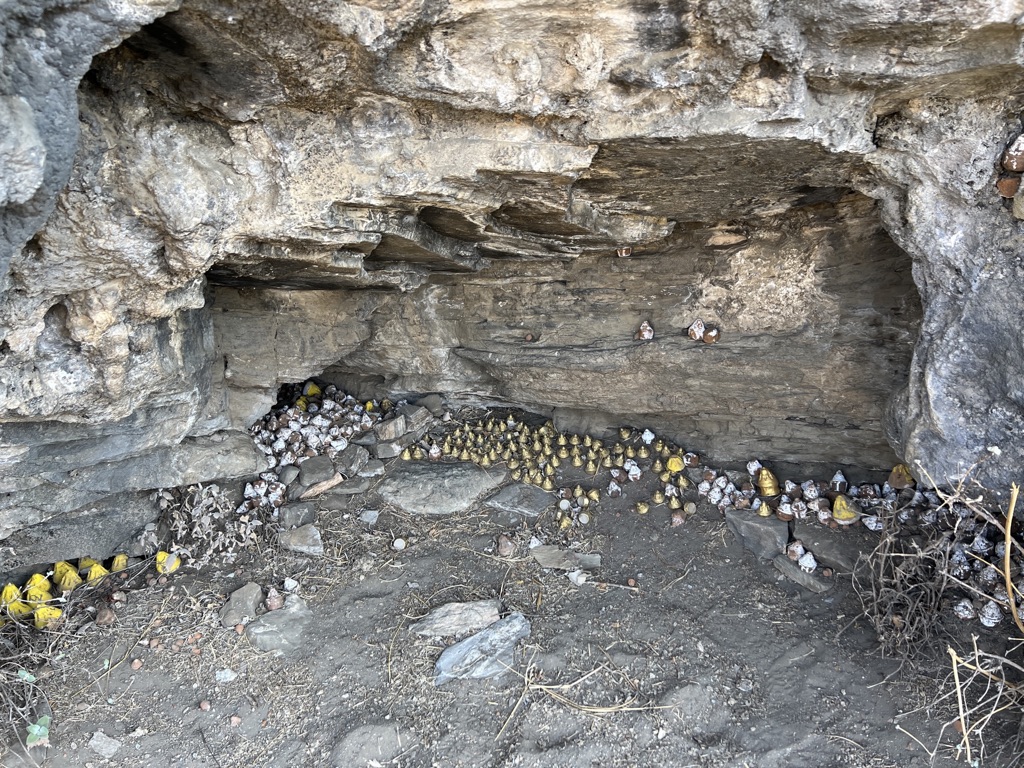
Sonam told us stories of various spiritual beliefs and traditions particularly in the mountains and we came across a little cave with a lot of cone like objects casually placed inside. These are Tsa Tsas and are commonly found in the hillsides in places sheltered from the elements. They are made by monks commissioned by bereaved families and are an expression of farewell – a memorial if you like. Inside there are often printed mantras. The cones are around 3 inches tall and are made of ash collected from the funeral pyre. Sometimes they are painted gold or red but often are just left white. I found this quite a moving tribute.

At the top of the hill we came across the monastery which was closed and is not used at the moment, however there is a monk who looks after the property. Feeling somewhat out of breath and tired from the hike, I was thrilled to find Chencho, our driver, appear with a couple of bottles of ice cold home made watermelon juice. That was so welcome! He had driven to another point at the bottom of the hill, ran up to meet us and give us refreshments and then joined us in walking down again. The little dog was still with us and gave him a welcome almost as good as we did!

Along the way colourful prayer flags fluttered in the breeze. These are hoisted for happiness, long life, prosperity, luck and merit and to offer karmic merit to all beings. Sonam told us that the benefit of prayer flags is to guide the souls of the dead from the netherworld. I rather like that belief. We saw them everywhere we went in Bhutan, in the towns, villages and on the hills. When we were leaving Sonam presented me with a roll which is a wonderful memory of our visit.

The hike had not finished – we walked across the hills to Ta Dzong which is the home of Bhutan’s National Museum. This conch shaped fortress was built in 1649 and the aim was to protect the population against assaults from Tibet and India. Sonam told us it was built entirely of stone and wood and no nails were used in the construction. It survived an earthquake in 1714 which apparently rumbled for 15 days and was converted into a museum in the 17th century.

We climbed down to the bottom of the building via a staircase which encircled the building. It was easy to see how it was a prison in those days with small cells and dungeons at the base – now filled with artifacts and so much history.

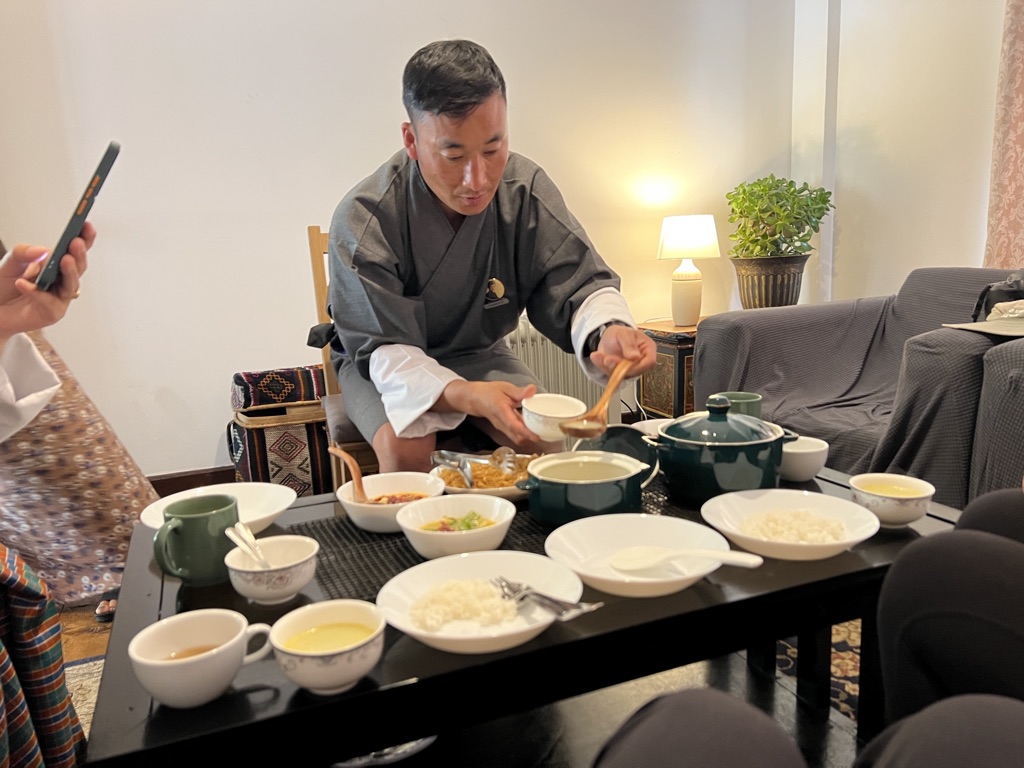
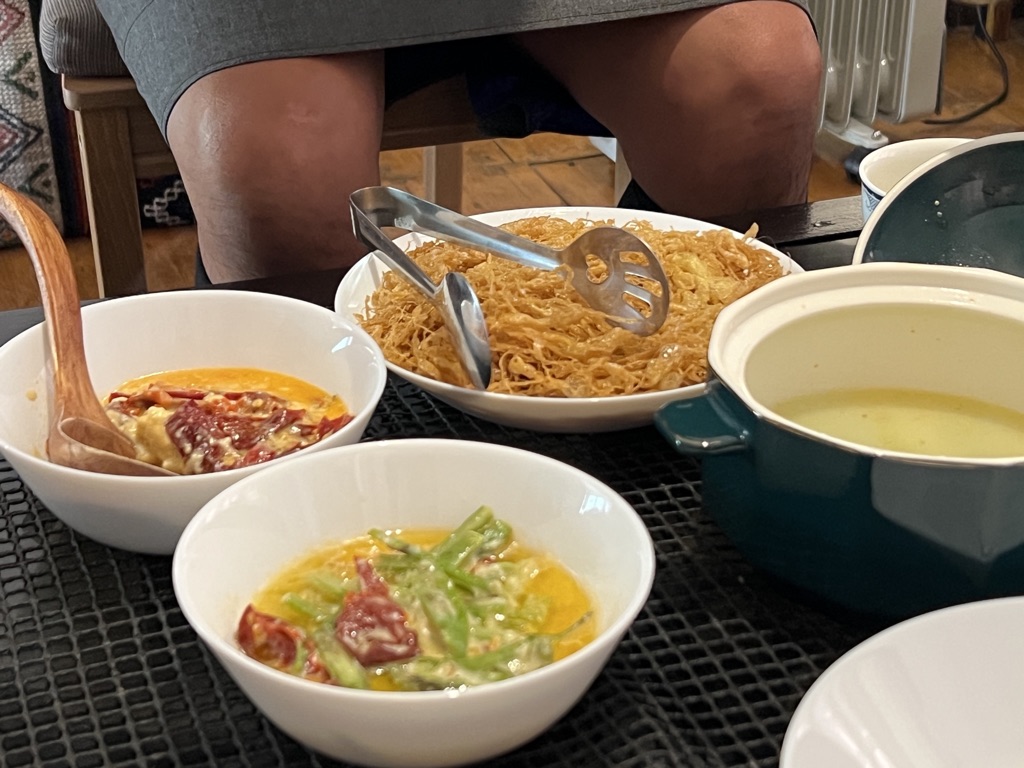
It was time for a break so we drove into Paro town for a traditional Bhutanese lunch. This was in a small restaurant in a group of shops and was owned by friends of Chencho. We were ushered into a private room at the back and sat around a rectangular table. The food was then brought in steaming hot and in bowls of various sizes. Curries, potatoes, vegetables and rice plus a delicious soup full of ginger were on offer. The most popular dish is chilli cheese made from locally produced cheese – usually from yaks – and fiery locally grown chillies. I had to pass up on that one!

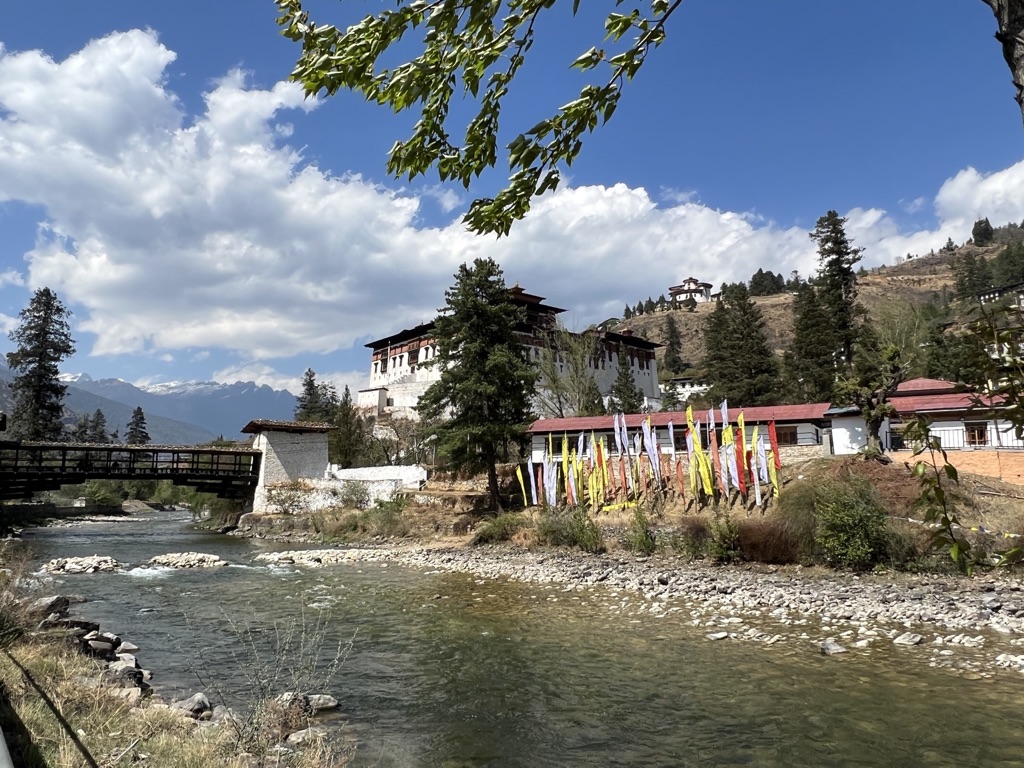
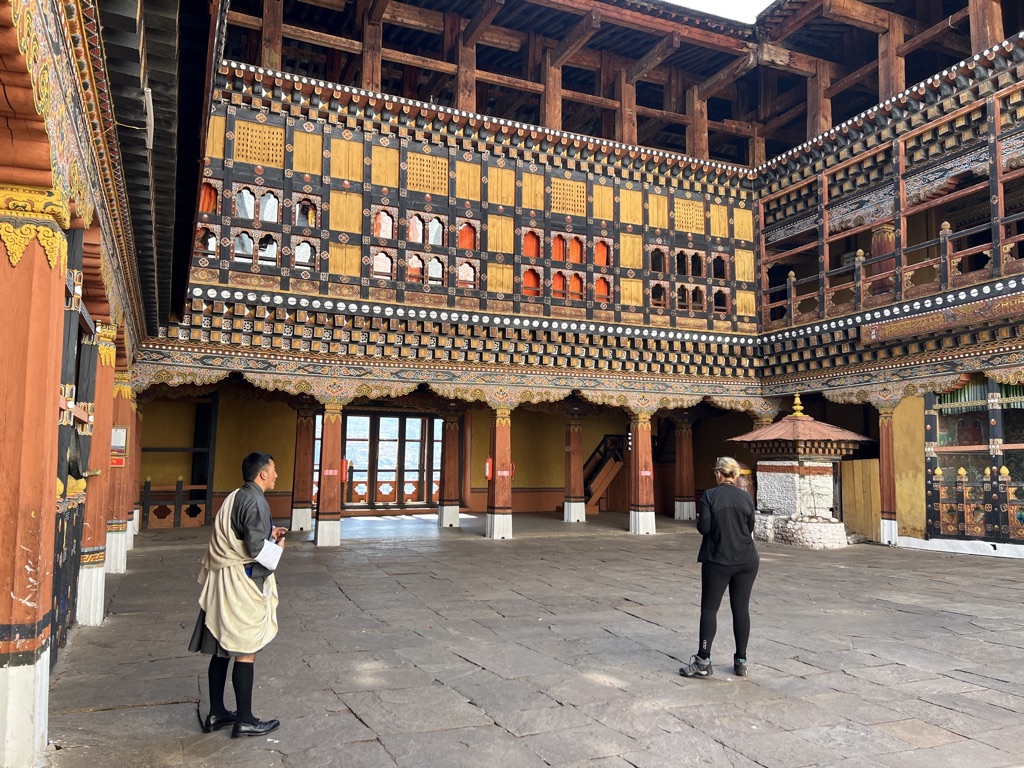
Our next visit was to Rinpung Dzong – or Paro Dzong. During the 17th and 18th century, Paro Dzong was an important bastion for the Kingdom of Bhutan against invasion from the north. At present, it houses the monastic body and government offices, and serves as the religious, military, administrative, and social centers of their district. Located on the Paro Chuu river we had to cross a covered bridge and then walked up a steep path passing monks and houses along the way.

We walked around the intricate buildings and gazed at the view of the town from up on high. There was a sense of calm everywhere and there was no noise at all except the faint murmur of monks chanting within the walls. This Dzong was the location for the filming of the movie “Little Buddha” in 1993 by Bernard Bertolucci and is the scene of many festivals and masked dances.

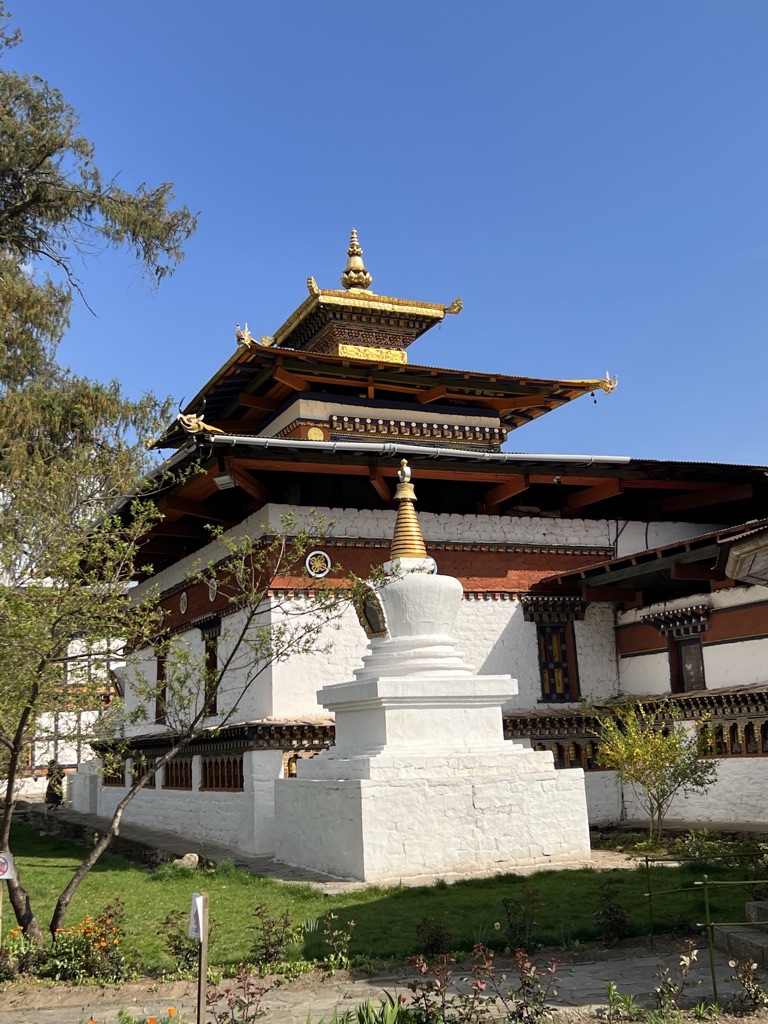
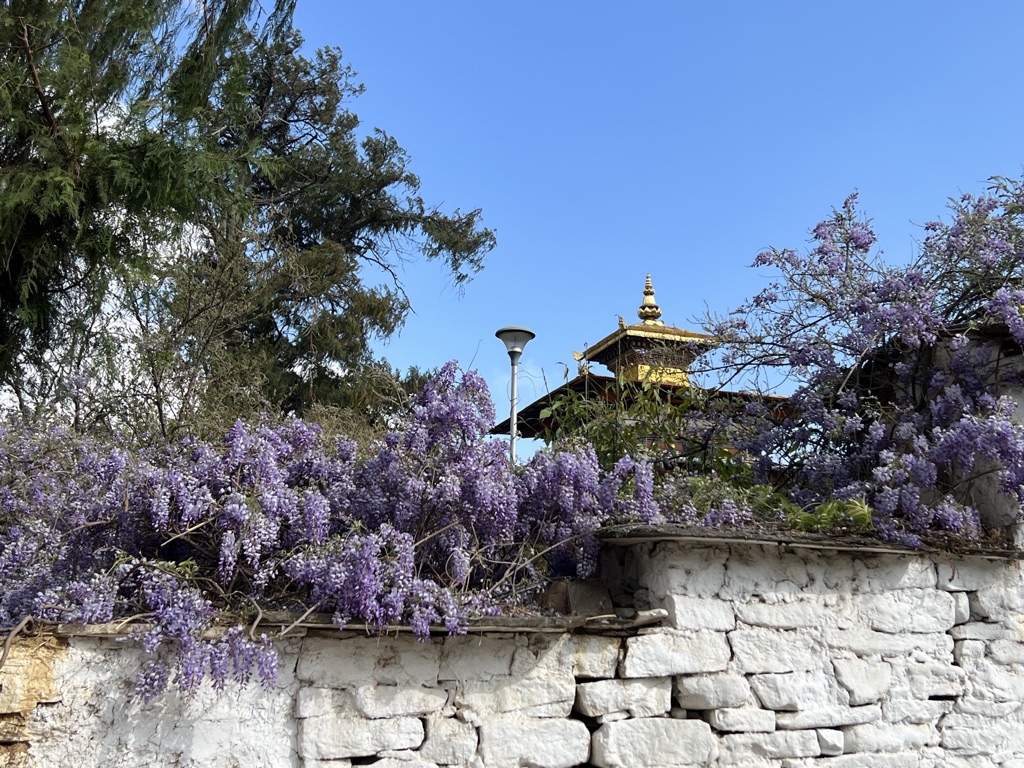
Our final visit was to the beautiful Kyichu Lhakhang temple which is a short drive a few kilometres north of Paro. This is said to be the oldest temple in Bhutan built in the 7th century. It is charming and is known for its orange tree which bears fruit all year round. We stepped inside and found the usual offerings around the Buddha images but what amused us was a little girl who was visiting with her family and was intent on taking the chocolate biscuits off the altar. When told she couldn’t she had a meltdown and the monk finally caved in! It turned out the family was well known and the father was a famous film celebrity. What surprised me was that they were all speaking in perfect English!

Here the cloisters are a contemplative place with prayer wheels and fruit trees. There are also butter lamps flickering in the dimness of the temple. We were invited to make a butter lamp offering which we did in memory of a loved one. This light offering is closely linked to transitional phases in life and is a strong belief in Tibetan Buddhism. For us it was a lovely way to end a very inspirational day.